Why You’ll Love This English Toffee
Looking for an impressive homemade treat that’s surprisingly simple to make? This English toffee recipe is your answer! With its perfect balance of buttery sweetness, crunchy nuts, and smooth chocolate, English toffee makes an elegant gift or a special addition to any dessert table. The recipe is straightforward enough for beginners but delivers results that taste like they came from a gourmet candy shop.“This recipe is a breeze to make, and with just a few easy steps, you’ll have a tasty treat that’s perfect for sharing with friends or keeping all to yourself!”What makes this English toffee special is its delightful texture contrast the crisp, brittle toffee layer breaks perfectly with each bite, while the chocolate topping adds a smooth richness. The roasted almonds provide not just a satisfying crunch but also a savory counterpoint to the sweetness. Plus, with our detailed cooking techniques, you’ll achieve professional results right in your home kitchen.
Jump to:
- Why You’ll Love This English Toffee
- Essential Ingredients for English Toffee
- Special Dietary Options
- How to Prepare the Perfect English Toffee: Step-by-Step Guide
- Important Techniques for Perfect Toffee
- Mastering English Toffee: Advanced Tips and Variations
- Pro Cooking Techniques
- Flavor Variations
- Nutritional Information and Dietary Considerations
- How to Store English Toffee: Best Practices
- FAQs: Frequently Asked Questions About English Toffee
- What is English toffee, and how is it different from regular toffee?
- Can I use nuts other than almonds when making English toffee?
- Why does my homemade English toffee turn out sticky or soft instead of hard and brittle?
- How should I store English toffee to keep it fresh?
- Is English toffee gluten-free and safe for people with dietary restrictions?
- English Toffee
- Ingredients
- Instructions
- Last Step:
- Notes
- Nutrition
- Did you make this recipe?
Essential Ingredients for English Toffee
Before getting started, gather all your ingredients. Having everything measured and ready makes the cooking process go smoothly and prevents scrambling once the sugar mixture begins to heat up.- 2 cups (240g) finely chopped roasted and salted almonds, divided
- 1 cup (200g) granulated sugar
- 2 tablespoons water
- 1 cup (226g) butter, cut into tablespoons (2 sticks)
- 1 cup (170g) milk chocolate chips
Special Dietary Options
While traditional English toffee contains butter and milk chocolate, there are ways to adapt this recipe to various dietary needs:- Vegan: Substitute dairy butter with high-quality plant-based margarine or coconut oil
- Gluten-free: This recipe is naturally gluten-free as long as all ingredients are certified gluten-free
- Lower sugar: Consider using sugar alternatives specifically designed for candy making
- Nut-free: Skip the almonds or substitute with seeds like pumpkin or sunflower for a similar crunch
How to Prepare the Perfect English Toffee: Step-by-Step Guide
Making English toffee is a rewarding process that requires attention to detail but is completely manageable for home cooks. Follow these steps carefully, and you’ll end up with beautiful, delicious toffee every time.- Line a 9×13 inch pan with parchment paper or foil and lightly spray with nonstick cooking spray.
- Sprinkle 1 cup of chopped almonds evenly over the pan.
- In a large heavy-bottomed saucepan over medium heat, combine granulated sugar and water. Cook, stirring occasionally, until the mixture begins to bubble around the edges.
- Add the butter and stir constantly until fully melted.
- Continue stirring and bring the mixture to a boil. Cook until it turns golden brown and reaches exactly 300 degrees Fahrenheit using a candy thermometer, about 10 minutes.
- Remove from heat immediately and pour evenly over the chopped almonds in the prepared pan. Spread with an offset spatula if necessary.
- Let the toffee sit for 5 minutes or until it has just hardened, then sprinkle chocolate chips on top. Allow them to warm and melt for 1 to 2 minutes, then spread chocolate evenly over toffee.
- Sprinkle the remaining 1 cup of chopped almonds on top. If chocolate chips are not fully melted, microwave the toffee for 30 seconds to finish melting.
- Refrigerate until chocolate sets, about 1 hour.
- Break into pieces to serve. Optionally, garnish with flakey sea salt.
Important Techniques for Perfect Toffee
The key to exceptional English toffee lies in properly caramelizing the sugar and butter mixture. This is where patience and precision pay off. The candy must reach exactly 300°F, known in candy-making as the hard crack stage. At this temperature, the sugar will harden into a brittle texture when cooled rather than remaining sticky or chewy.“Using a candy thermometer takes the guesswork out of candy making and ensures your English toffee reaches the perfect consistency every time.”Stir constantly during cooking to prevent the butter and sugar mixture from separating. This constant agitation helps the ingredients emulsify properly, creating that smooth, glassy finish that characterizes perfect English toffee. Having a heavy-bottomed saucepan is another crucial element. Thin or lightweight pans can cause hot spots that lead to uneven cooking or burning. A quality pan distributes heat evenly, allowing the sugar to caramelize uniformly.
Mastering English Toffee: Advanced Tips and Variations
Once you’ve mastered the basic recipe, you might want to experiment with some variations to make this classic treat your own. Here are some professional tips and flavor ideas to take your English toffee to the next level.Pro Cooking Techniques
- Use room temperature butter cut into uniform pieces for even melting
- Wipe down the sides of the pan with a wet pastry brush to prevent sugar crystallization
- Have all ingredients measured and prepared before you begin cooking
- Work quickly once the toffee reaches temperature it begins to set fast
Flavor Variations
While classic English toffee is delicious on its own, these variations offer exciting new taste experiences:- Chocolate varieties: Try dark chocolate for a richer flavor or white chocolate for a contrasting sweetness
- Nut options: Substitute pecans, walnuts, cashews, or peanuts for almonds based on your preference
- Spiced toffee: Add ½ teaspoon cinnamon or nutmeg to the butter-sugar mixture for warm notes
- Coffee toffee: Stir 1 tablespoon of instant espresso powder into the butter-sugar mixture
Nutritional Information and Dietary Considerations
While English toffee is certainly a treat enjoyed in moderation, it’s helpful to understand its nutritional profile. Here’s a breakdown of the nutritional content per serving (12 large pieces):| Nutrient | Amount Per Serving |
|---|---|
| Calories | 413 |
| Carbohydrates | 31g |
| Protein | 5g |
| Fat | 32g |
| Saturated Fat | 13g |
| Polyunsaturated Fat | 4g |
| Monounsaturated Fat | 12g |
| Trans Fat | 1g |
| Cholesterol | 41mg |
| Sodium | 122mg |
| Potassium | 222mg |
| Fiber | 3g |
| Sugar | 26g |
| Vitamin A | 473 IU |
| Calcium | 80mg |
| Iron | 1mg |
How to Store English Toffee: Best Practices
Proper storage is essential to maintain the crisp texture and fresh flavor of your homemade English toffee. Follow these guidelines to keep your treats tasting delicious:- Store in an airtight container at room temperature up to 2 weeks, separating layers with parchment or wax paper
- If the environment is warm or humid, refrigerate your toffee to prevent the chocolate from melting
- For long-term storage, freeze in airtight containers or freezer bags for up to 3 months
- When ready to enjoy frozen toffee, thaw at room temperature while still wrapped to prevent moisture buildup

FAQs: Frequently Asked Questions About English Toffee
What is English toffee, and how is it different from regular toffee?
English toffee is a buttery, crunchy candy made by cooking sugar and butter to the hard crack stage (around 300°F), then often topped with chocolate and nuts like almonds. Unlike some regular or American toffee which may not include nuts or chocolate, English toffee traditionally features these ingredients, giving it a richer texture and flavor. The nutty and chocolate toppings distinguish English toffee from simpler toffee varieties.
Can I use nuts other than almonds when making English toffee?
Yes, you can replace almonds with other nuts such as pecans, walnuts, cashews, or peanuts based on your preference. Mixing different nuts or omitting them altogether is also common, and the toffee remains tasty. When substituting, toast the nuts lightly for enhanced flavor and sprinkle them over the hot toffee before the chocolate sets.
Why does my homemade English toffee turn out sticky or soft instead of hard and brittle?
Sticky or soft toffee usually means the sugar mixture was not heated to the correct temperature. English toffee must reach the hard crack stage, approximately 300°F (150°C), to develop its signature brittle texture. Using a candy thermometer and cooking slowly ensures the sugar fully caramelizes and hardens properly once cooled.
How should I store English toffee to keep it fresh?
Store English toffee in an airtight container at room temperature to maintain its crispness for up to two weeks. To extend shelf life, wrap pieces individually in parchment paper and keep them in the refrigerator or freezer for up to three months. Thaw frozen toffee at room temperature while still wrapped to prevent moisture buildup.
Is English toffee gluten-free and safe for people with dietary restrictions?
Traditional English toffee is naturally gluten-free since it primarily contains butter, sugar, nuts, and chocolate without wheat ingredients. However, always check labels on additional toppings or chocolate for any gluten-containing additives. For those with nut allergies, toffee can be made without nuts but may lose some texture and flavor characteristics.
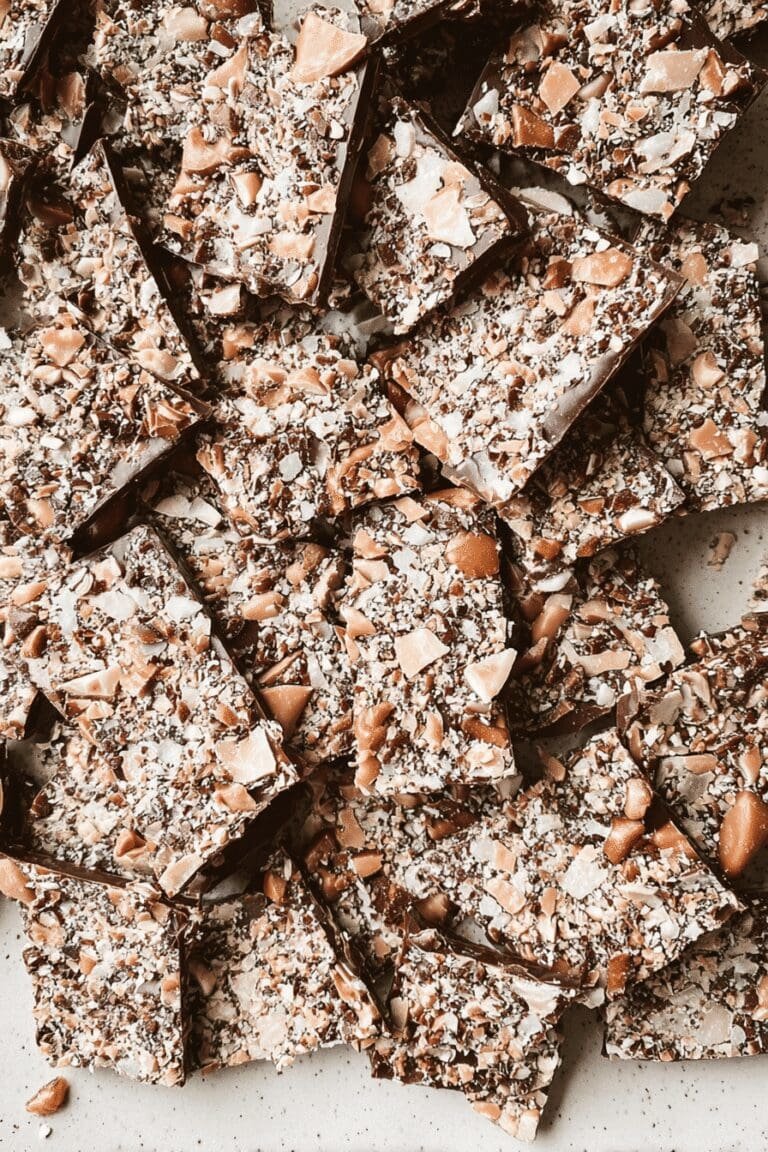
English Toffee
🍬 Discover the joy of making perfectly crispy and rich English toffee at home with this easy recipe.
🌰 Combining roasted almonds with smooth milk chocolate creates a classic treat everyone will love.
- Total Time: 35 minutes
- Yield: 12 large pieces
Ingredients
– 2 cups (240g) finely chopped roasted and salted almonds, divided
– 1 cup (200g) granulated sugar
– 2 tablespoons water
– 1 cup (226g) butter, cut into tablespoons (2 sticks)
– 1 cup (170g) milk chocolate chips
Instructions
1- Line a 9×13 inch pan with parchment paper or foil and lightly spray with nonstick cooking spray.
2- Sprinkle 1 cup of chopped almonds evenly over the pan.
3- In a large heavy-bottomed saucepan over medium heat, combine granulated sugar and water. Cook, stirring occasionally, until the mixture begins to bubble around the edges.
4- Add the butter and stir constantly until fully melted.
5- Continue stirring and bring the mixture to a boil. Cook until it turns golden brown and reaches exactly 300 degrees Fahrenheit using a candy thermometer, about 10 minutes.
6- Remove from heat immediately and pour evenly over the chopped almonds in the prepared pan. Spread with an offset spatula if necessary.
7- Let the toffee sit for 5 minutes or until it has just hardened, then sprinkle chocolate chips on top. Allow them to warm and melt for 1 to 2 minutes, then spread chocolate evenly over toffee.
8- Sprinkle the remaining 1 cup of chopped almonds on top. If chocolate chips are not fully melted, microwave the toffee for 30 seconds to finish melting.
9- Refrigerate until chocolate sets, about 1 hour.
10- Break into pieces to serve. Optionally, garnish with flakey sea salt.
Last Step:
Please leave a rating and comment letting us know how you liked this recipe! This helps our business to thrive and continue providing free, high-quality recipes for you.Notes
🌡️ Use a candy thermometer to reach the precise hard crack stage at 300°F for perfect crispiness.
🍳 Stir constantly during cooking to prevent separation of butter and sugar.
🌰 Substitute almonds with pecans, walnuts, cashews, or peanuts for variety.
- Prep Time: 10 minutes
- Cook Time: 25 minutes
- Category: Candy
- Method: Cooking on stovetop
- Cuisine: American
- Diet: Gluten-Free
Nutrition
- Serving Size: 1 large piece
- Calories: 413 kcal
- Sugar: 26 g
- Sodium: 122 mg
- Fat: 32 g
- Saturated Fat: 13 g
- Unsaturated Fat: 16 g
- Trans Fat: 1 g
- Carbohydrates: 31 g
- Fiber: 3 g
- Protein: 5 g
- Cholesterol: 41 mg