Why You’ll Love This Lemon Poppy Seed Rolls
There’s something magical about starting your day with the bright, zesty flavor of lemon combined with the delightful crunch of poppy seeds. These homemade lemon poppy seed breakfast rolls are more than just a treat they’re an experience that transforms your morning routine into something special. The aroma that fills your kitchen while these rolls bake is absolutely heavenly, promising a breakfast that feels both indulgent and refreshing.
Perfect for Busy Mornings
What makes these rolls absolutely fantastic is how incredibly manageable they are to prepare. Despite their bakery-quality appearance, they require minimal effort thanks to the make-ahead option that allows you to prepare the dough the night before. This means you can wake up to an already-prepared dough that just needs a final rise before baking, making your morning routine smoother without sacrificing that special something. The recipe comes together with straightforward steps that even baking novices can follow successfully.
A Healthier Indulgence
While these rolls are certainly a treat, they offer some redeeming nutritional qualities too. Poppy seeds aren’t just there for their texture they pack a surprising nutritional punch with essential minerals like calcium, iron, and magnesium. The lemon zest not only provides vibrant flavor but also brings antioxidants and vitamin C to the table. Compared to heavier pastries loaded with sugar and fat, these lemon poppy seed rolls offer a lighter option that still satisfies your morning sweet tooth.
Incredibly Versatile
Another reason to love these rolls is their adaptability. The recipe is wonderfully flexible, making it easy to accommodate various dietary preferences without compromising on taste. Whether you need gluten-free options, want to reduce sugar content, or are following a plant-based diet, these lemon poppy seed rolls can be modified to meet your needs. This versatility ensures that everyone at your table can enjoy the delightful combination of lemon and poppy seeds, regardless of dietary restrictions.
Unforgettable Flavor Profile
The standout feature of these rolls is, without a doubt, their exceptional flavor profile. The bright, citrusy notes from fresh lemon zest perfectly balance the subtle, nutty crunch from poppy seeds, creating an experience that’s both refreshing and comforting. Unlike many breakfast pastries that lean heavily on sweetness, these rolls offer complexity with their tangy citrus notes balanced by rich buttery layers. The cream cheese glaze adds the perfect finishing touch, providing creamy tartness that ties all the flavors together harmoniously.
Jump to:
- Why You’ll Love This Lemon Poppy Seed Rolls
- Perfect for Busy Mornings
- A Healthier Indulgence
- Incredibly Versatile
- Unforgettable Flavor Profile
- Essential Ingredients for Lemon Poppy Seed Rolls
- Ingredients for the Dough
- Ingredients for the Filling
- Ingredients for the Glaze
- Ingredient Substitutions Guide
- How to Prepare the Perfect Lemon Poppy Seed Rolls: Step-by-Step Guide
- Activating the Yeast
- Creating the Dough
- Kneading the Dough
- First Rise
- Preparing the Filling and Glaze
- Shaping the Rolls
- Cutting the Rolls
- Second Rise and Refrigeration
- Baking the Rolls
- Finishing and Serving
- Dietary Substitutions to Customize Your Lemon Poppy Seed Rolls
- Dairy-Free Alternatives
- Gluten-Free Modifications
- Lower-Sugar Options
- Egg-Free Variations
- Mastering Lemon Poppy Seed Rolls: Advanced Tips and Variations
- Professional Techniques for Perfect Texture
- Flavor Variations to Explore
- Beautiful Presentation Ideas
- Advanced Make-Ahead Strategies
- How to Store Lemon Poppy Seed Rolls: Best Practices
- Room Temperature Storage
- Refrigeration Methods
- Freezing Techniques
- Reviving Day-Old Rolls
- FAQs: Frequently Asked Questions About Lemon Poppy Seed Rolls
- Can I use a sourdough starter instead of instant yeast for lemon poppy seed rolls?
- How do I make lemon poppy seed rolls gluten-free?
- What should I do if my yeast doesn’t activate when mixed with milk?
- Can I make lemon poppy seed rolls without cream cheese icing?
- How long do lemon poppy seed rolls stay fresh after baking?
- Lemon Poppy Seed Rolls
- Ingredients
- Instructions
- Last Step:
- Notes
- Nutrition
- Did you make this recipe?
Essential Ingredients for Lemon Poppy Seed Rolls
Creating delicious lemon poppy seed breakfast rolls starts with gathering high-quality ingredients. Each component plays a crucial role in building those irresistible layers of flavor and texture that make these rolls so special. Here’s everything you’ll need to bring this delightful recipe to life:
Ingredients for the Dough
- 1 cup whole milk warmed to about 105 110 degrees F
- 1 package active dry yeast (2 ¼ teaspoons)
- 1/3 cup granulated sugar
- 4 1/3 cups all-purpose flour plus extra for dusting
- 3 tablespoons poppy seeds
- 1 teaspoon kosher salt
- ½ cup unsalted butter at room temperature cut into chunks
- 3 large eggs beaten to combine
Ingredients for the Filling
- ½ cup unsalted butter at room temperature
- Zest of two lemons (about 2 ½ tablespoons)
- ¾ cup granulated sugar
Ingredients for the Glaze
- 4 ounces cream cheese at room temperature
- ¼ cup unsalted butter at room temperature
- Zest of two lemons (about 2 ½ tablespoons)
- 1 ½ cups powdered sugar sifted if clumpy
- Pinch of kosher salt
- 1 tablespoon poppy seeds
- 2 tablespoons fresh lemon juice
Ingredient Substitutions Guide
For those with dietary restrictions or preferences, here’s a helpful guide to making substitutions while still maintaining the delicious character of these rolls:
| Original Ingredient | Substitution | Notes |
|---|---|---|
| All-purpose flour | Gluten-free 1-to-1 blend | Add xanthan gum if not included in your blend |
| Unsalted butter | Coconut oil or vegan butter | Melt coconut oil before using |
| Whole milk | Almond, soy, or oat milk | Warm plant-based milk to same temperature |
| Eggs | Flax eggs or commercial egg replacer | 1 flax egg = 1 tbsp ground flax + 3 tbsp water |
How to Prepare the Perfect Lemon Poppy Seed Rolls: Step-by-Step Guide
Creating these delightful lemon poppy seed breakfast rolls is a rewarding experience that fills your home with irresistible aromas and your plate with something truly special. Follow this comprehensive guide to ensure your rolls turn out perfectly every single time. Remember that the key to great rolls is patience during the rising process and attention to detail in each step.
Activating the Yeast
The first step in creating perfect lemon poppy seed rolls is properly activating your yeast. Begin by warming 1 cup of whole milk to approximately 105-110 degrees Fahrenheit this temperature is ideal as it’s warm enough to activate the yeast but not so hot that it kills it. Pour the warmed milk into a large mixing bowl and sprinkle the active dry yeast over it along with a pinch of sugar. Stir gently to combine, then let the mixture sit for about 5 minutes. You should see the mixture become foamy and bubbly, which indicates that your yeast is active and ready to work its magic in your rolls.
Creating the Dough
While your yeast is activating, you can start preparing the dry ingredients. In the bowl of a stand mixer, combine the remaining 1/3 cup of granulated sugar, 4 1/3 cups of all-purpose flour, 3 tablespoons of poppy seeds, and 1 teaspoon of kosher salt. Mix these dry ingredients briefly to ensure even distribution.
Once your yeast mixture is foamy, add it to the dry ingredients along with the chunks of unsalted butter and the beaten eggs. Mix on low speed with the dough hook attachment until a shaggy dough forms. Scrape down the sides of the bowl to ensure all ingredients are incorporated.
Kneading the Dough
Now it’s time to develop the gluten in your dough. Increase the mixer speed to medium and knead for about 3 minutes. Pause to scrape the bowl again, then continue kneading for 5 more minutes. The dough should form a cohesive ball and pull away from the sides of the mixer. If the dough seems too sticky, add small amounts of additional flour, about a tablespoon at a time, until it reaches the right consistency.
Turn the dough out onto a lightly floured surface and knead by hand for a minute or two until it becomes smooth. Proper kneading is essential for developing the gluten network that gives the rolls their soft yet sturdy structure.
First Rise
Place the kneaded dough in a lightly greased bowl, turning it once to coat all sides with oil. Cover the bowl with plastic wrap or a clean kitchen towel and set it in a warm, draft-free spot to rise. Let the dough proof for about 1 hour, or until it has almost doubled in size. This first rise is crucial for developing flavor and texture in your finished rolls.
Preparing the Filling and Glaze
While the dough is rising, you can prepare both the filling and the glaze. For the filling, combine ½ cup of softened unsalted butter with the zest of two lemons (about 2 ½ tablespoons) and ¾ cup of granulated sugar. Mix until the ingredients are well combined and fragrant.
For the glaze, thoroughly soften 4 ounces of cream cheese, then beat it with ¼ cup of softened unsalted butter until completely smooth. Add another 2 ½ tablespoons of lemon zest, followed by 1 ½ cups of sifted powdered sugar, a pinch of kosher salt, and 1 tablespoon of poppy seeds. Finally, stir in 2 tablespoons of fresh lemon juice until the glaze is smooth and creamy. Set both the filling and glaze aside until needed.
Shaping the Rolls
Once the dough has completed its first rise, punch it down gently to release the air. Turn it out onto a lightly floured surface and roll it into a 14×20-inch rectangle. The dough should be of even thickness throughout to ensure uniform baking.
Spread the prepared lemon butter filling evenly over the stretched dough, leaving a small border around the edges. Starting from one long edge, roll the dough up tightly into a log. The tightness of the roll will help ensure that your finished rolls have beautiful, distinct spirals.
Cutting the Rolls
For perfectly clean cuts, a piece of unflavored dental floss works wonders. Slide a piece of dental floss under the dough log, cross the ends over the top, and pull tight to slice through the dough without compressing it. Divide the log into 12 equal rolls.
Second Rise and Refrigeration
Arrange the cut rolls in a greased 9×13-inch baking pan, leaving some space between them for expansion. Cover the pan with plastic wrap or a clean kitchen towel. At this point, you have two options:
For an overnight option: refrigerate the covered pan for up to 12 hours. The overnight refrigeration actually develops more flavor and allows for a stress-free morning bake.
For a quicker option: let the rolls rise at room temperature for about 30 minutes before proceeding to bake.
Baking the Rolls
If you refrigerated your rolls overnight, remove them from the refrigerator and let them come to room temperature. Allow them to proof for an additional 45 minutes to 1 hour until noticeably puffy. When ready to bake, preheat your oven to 350 degrees Fahrenheit.
Bake the rolls uncovered for 25-30 minutes, or until they’re golden brown and cooked through. You can test for doneness by gently tapping the top of a roll it should spring back when touched.
Finishing and Serving
Remove the rolls from the oven and let them rest in the pan for about 10 minutes. While they’re still warm, spread half of the prepared cream cheese glaze over the top, allowing it to soak into the rolls slightly. Let the rolls cool for an additional 15-20 minutes, then apply the remaining glaze. Serve the rolls warm for the best taste and texture.
The secret to bakery-quality lemon poppy seed rolls is the double glaze application. Applying half the glaze while the rolls are still warm allows it to melt into every crevice, while the second application adds that picture-perfect finish that makes these rolls absolutely irresistible.

Dietary Substitutions to Customize Your Lemon Poppy Seed Rolls
One of the best things about baking at home is the ability to customize recipes to suit your dietary needs and preferences. These lemon poppy seed rolls are wonderfully adaptable, allowing for various substitutions while maintaining their delicious character. Whether you’re following a specific diet or accommodating guests with restrictions, here are some effective substitutions to consider.
Dairy-Free Alternatives
For those avoiding dairy, these rolls can easily be made completely plant-based without sacrificing tenderness or flavor. Replace the butter in both the dough and filling with high-quality vegan butter or refined coconut oil (refined has a neutral flavor that won’t compete with the lemon). Swap the whole milk for an unsweetened plant-based alternative like almond, soy, or oat milk. Make sure to warm your plant-based milk to the same 105-110°F range as you would dairy milk for proper yeast activation. For the glaze, use vegan cream cheese or create a simple lemon glaze with powdered sugar, lemon juice, and plant milk instead of the cream cheese mixture.
Gluten-Free Modifications
Fans with gluten sensitivities can still enjoy these delightful rolls with some careful substitutions. Replace all-purpose flour with a high-quality gluten-free 1-to-1 baking blend designed to mimic regular flour in yeast applications. Many of these blends already contain xanthan gum, which helps provide structure, but if yours doesn’t, add about 1 teaspoon per cup of flour used. Be aware that gluten-free doughs often behave differently they might be sticker and may require less rising time. Keep a close eye during the first rise and proceed to shaping once the dough has increased by about 75% rather than doubled.
Lower-Sugar Options
If you’re looking to reduce the sugar content without compromising flavor, there are several effective approaches. For the dough, you can reduce the granulated sugar to just 2 tablespoons, as this is primarily food for the yeast rather than for sweetness. In the filling, consider using a natural sugar alternative like erythritol or a blend designed for baking. For the glaze, decrease the powdered sugar and increase the cream cheese and lemon juice slightly to maintain that tangy creaminess with less sweetness. Remember that reducing sugar may slightly affect the browning during baking, so watch the rolls carefully to prevent over-baking.
Egg-Free Variations
For those avoiding eggs, whether due to allergies or dietary choices, these rolls can still achieve that rich, tender texture. Each egg in the recipe can be replaced with one flax egg (1 tablespoon ground flaxseed mixed with 3 tablespoons water, allowed to sit for 5 minutes until gelatinous). Alternatively, commercial egg replacers work well in this recipe, with most packages providing specific instructions for use in yeast doughs. Keep in mind that egg-free versions might have a slightly different texture but will still be delicious and satisfying.
Mastering Lemon Poppy Seed Rolls: Advanced Tips and Variations
Once you’ve mastered the basic lemon poppy seed roll recipe, you might want to elevate your baking game with these professional tips and creative variations. These insights will help you achieve bakery-quality results at home and put your own unique spin on this already fantastic recipe.
Professional Techniques for Perfect Texture
Creating the ideal roll is all about technique. The most crucial factor is dough temperature throughout the process. When mixing, aim for a finished dough temperature between 75-78°F for optimal yeast activity and gluten development. In cooler environments, this might mean using slightly warmer liquids; in warmer kitchens, cooler ingredients may be necessary.
Another pro technique is the windowpane test to check gluten development. Take a small piece of dough and stretch it gently between your fingers. If you can see light through it without it tearing, your gluten is properly developed. If it tears easily, continue kneading for a few more minutes and test again.
For an exceptionally tender crumb, consider using the tangzhong method a Japanese technique where a portion of the flour and liquid are cooked into a paste before being added to the dough. This pre-gelatinized starch helps the rolls retain moisture, keeping them soft for days. Simply whisk 3 tablespoons of flour with ½ cup of milk until smooth and cook over medium heat until thickened, then cool before incorporating with your other ingredients.
Flavor Variations to Explore
While the classic lemon poppy seed combination is undeniably delicious, these rolls lend themselves well to flavor experimentation. Consider these delightful variations:
- Blueberry Lemon: Add ½ cup of dried blueberries to the filling along with the lemon sugar for a fruity twist reminiscent of favorite muffins.
- Lavender Infusion: Steep 1 teaspoon of dried culinary lavender in the warm milk for 10 minutes before using, straining out the buds. The floral notes complement the lemon beautifully.
- Coconut Lemon: Replace half the butter in the filling with coconut oil and add ¼ cup of shredded coconut to the filling mixture.
- Cardamom Spice: Add 1 teaspoon of ground cardamom to the dry ingredients for a warm, aromatic note that pairs wonderfully with citrus.
Beautiful Presentation Ideas
These rolls are showstoppers on their own, but with a few simple presentation touches, they become truly Instagram-worthy. After glazing, garnish with thin strips of candied lemon peel for an elegant finish. Alternatively, a light dusting of edible gold or pearl dust adds a sophisticated sparkle perfect for special occasions.
For serving, arrange the rolls on a wooden board or cake stand with fresh lemon slices and sprigs of lavender or rosemary. The contrast between the golden rolls, white glaze, and greenery creates a visually appealing presentation that hints at the delicious flavors within.
Advanced Make-Ahead Strategies
Beyond the basic overnight refrigeration, try these advanced make-ahead techniques for ultimate convenience. Once baked and cooled, these rolls freeze beautifully for up to one month. Simply wrap the entire pan tightly in plastic wrap followed by aluminum foil. Thaw overnight in the refrigerator, then refresh in a 350°F oven for 10 minutes to restore that fresh-baked quality.
For the ultimate make-ahead approach, prepare and shape the rolls, then freeze them before the second rise. When ready to enjoy, transfer the frozen rolls to the refrigerator the night before, let them come to room temperature in the morning, and continue with the final rise and baking as directed. This method gives you fresh homemade rolls with minimal day-of effort.
How to Store Lemon Poppy Seed Rolls: Best Practices
As any home baker knows, the fruits of your labor are precious, and proper storage ensures you can enjoy your lemon poppy seed rolls at their best for as long as possible. These rolls contain moisture-rich ingredients that require specific storage techniques to maintain their texture and flavor. Here’s how to keep them fresh and delicious.
Room Temperature Storage
For short-term storage (up to 2 days), room temperature is ideal. Place the cooled rolls in an airtight container or cover the baking pan tightly with plastic wrap. Keep them in a cool, dry place away from direct sunlight or heat sources. The cream cheese glaze will soften slightly at room temperature, which many people find delightful, but if you prefer a firmer glaze, store the rolls unglazed and apply the glaze just before serving.
Refrigeration Methods
When you need to keep your rolls for 3-5 days, refrigeration is the way to go. First, ensure the rolls are completely cooled to prevent condensation, which can make them soggy. Store in an airtight container, placing parchment paper between layers if stacking. Before serving refrigerated rolls, allow them to come to room temperature for at least 30 minutes, then warm briefly in a 300°F oven for about 5 minutes to restore their soft texture.
Freezing Techniques
For longer storage, freezing is your best option, and these rolls freeze remarkably well. You have two options: freezing after baking or freezing before baking. For freezing baked rolls:
- Allow rolls to cool completely.
- Apply only half the glaze (the first layer) if using.
- Place the entire pan in the freezer uncovered for about 2 hours until the rolls are firm.
- Wrap tightly in plastic wrap followed by aluminum foil.
- Label with the contents and date (they’ll keep for up to 1 month).
To serve, thaw overnight in the refrigerator, then warm in a 350°F oven for 10-15 minutes until heated through. Apply the remaining glaze after warming.
Reviving Day-Old Rolls
Even with proper storage, rolls are always best on the day they’re made. But don’t worry if yours have lost some of their freshness they can be revived! The best method is to place them in a steamer basket over simmering water for 2-3 minutes, which rehydrates without making them soggy. Alternatively, spritz lightly with water and warm in a 350°F oven for 5-7 minutes. For a special treat, slice day-old rolls in half and toast them in butter in a skillet until golden brown, creating a delightful crispy exterior while warming the tender interior.
For those who cherish every last crumb, slightly stale lemon poppy seed rolls can be transformed into bread pudding or used as a base for a luxurious breakfast trifle layered with lemon curd and fresh berries, ensuring none of your baking efforts go to waste.
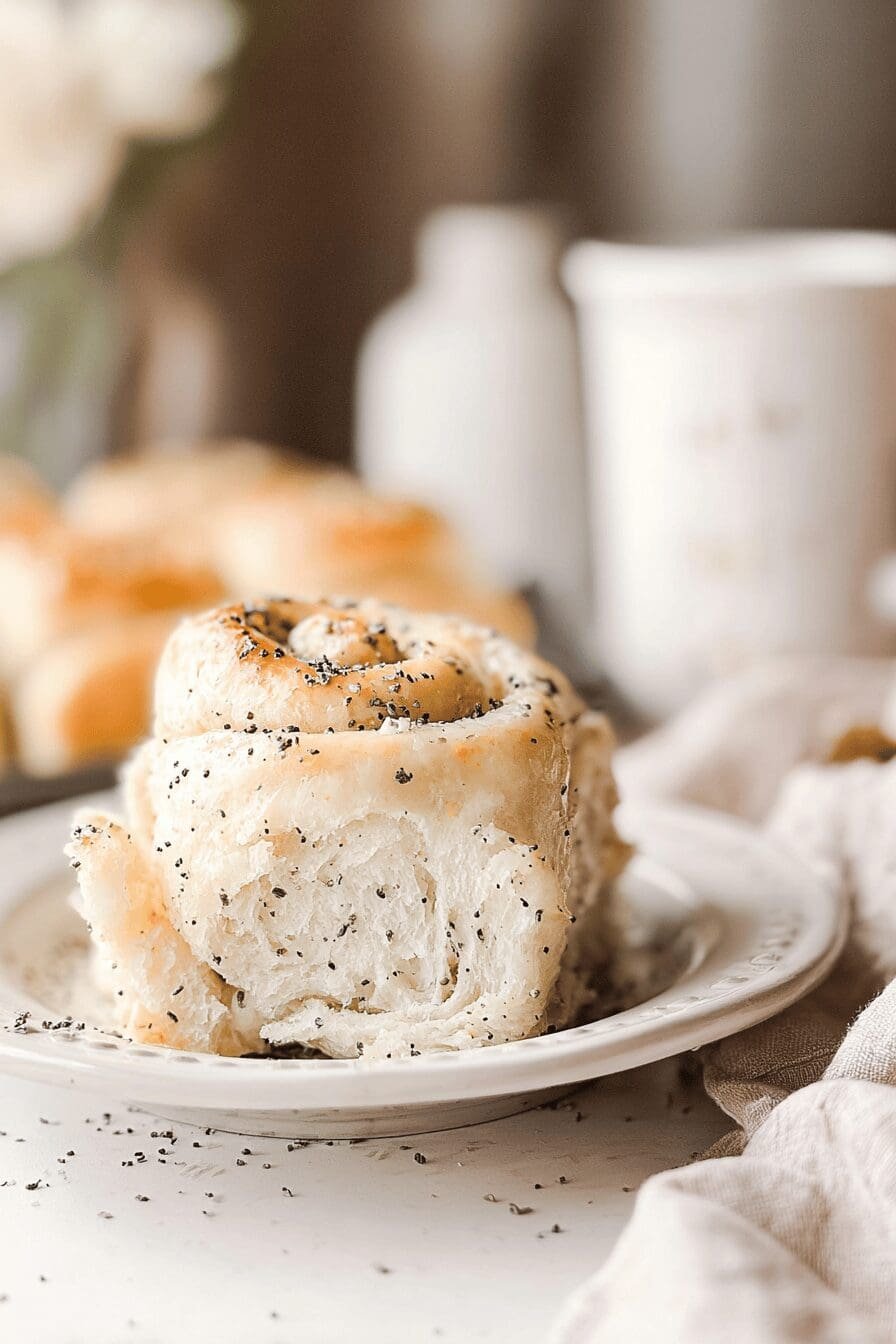
FAQs: Frequently Asked Questions About Lemon Poppy Seed Rolls
Can I use a sourdough starter instead of instant yeast for lemon poppy seed rolls?
Yes, you can substitute a sourdough starter for instant yeast in this recipe. However, since sourdough fermentation times and activity levels vary, you’ll need to adjust the rising time and starter quantity based on your experience. Generally, use about 20-30% starter based on flour weight and plan for longer proofing to develop the dough properly.
How do I make lemon poppy seed rolls gluten-free?
You can replace regular flour with a gluten-free 1-to-1 baking blend like Bob’s Red Mill or Cup4Cup. Because gluten-free dough behaves differently, the texture will be softer and may require a shorter rise. Adding xanthan gum if your blend lacks it can improve elasticity and help the rolls hold together.
What should I do if my yeast doesn’t activate when mixed with milk?
If your yeast fails to foam or bubble, discard the mixture and start anew using fresh yeast. Stir the yeast, warm milk (about 100-110°F), and a pinch of sugar together thoroughly to encourage activation. Keep the mixture in a warm, draft-free spot for 5-10 minutes until bubbly before adding to the dough.
Can I make lemon poppy seed rolls without cream cheese icing?
Absolutely. For a lighter topping, try a simple lemon glaze made by mixing powdered sugar with lemon juice until smooth. This offers a bright, tangy finish that complements the rolls without the richness of cream cheese. You can also use honey or a vanilla glaze depending on your preference.
How long do lemon poppy seed rolls stay fresh after baking?
These rolls are best enjoyed fresh on the day they’re baked. Stored in an airtight container at room temperature, they remain soft for up to three days. To refresh, warm them slightly or toast before serving to restore softness and enhance flavors. For longer storage, freezing the rolls for up to one month is an option.
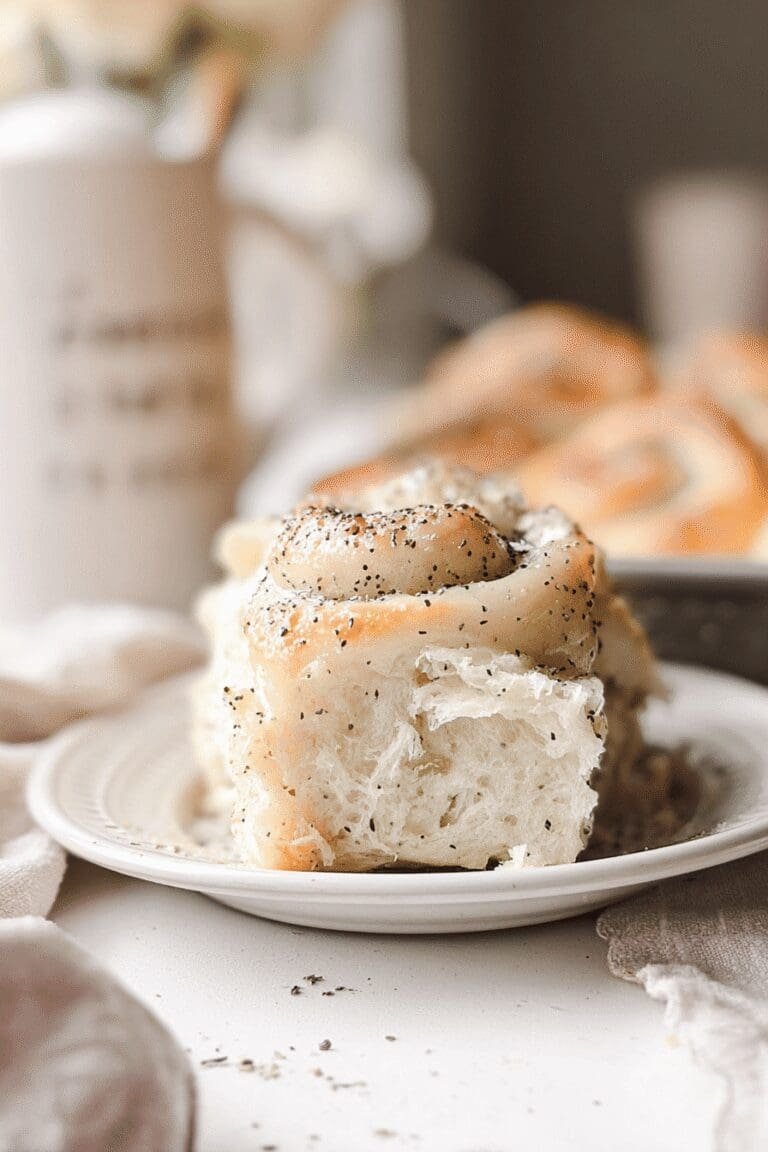
Lemon Poppy Seed Rolls
🍋 These Lemon Poppy Seed Breakfast Rolls bring a fresh and zesty start to your morning with bright lemon flavor and crunchy poppy seeds.
🥐 Soft, buttery, and filled with a sweet lemon sugar mixture, they’re perfect for a comforting breakfast or brunch treat.
- Total Time: 2 hours 25 minutes plus overnight rest
- Yield: 12 rolls
Ingredients
– 1 cup whole milk warmed to about 105 110 degrees F
– 1 package active dry yeast (2 ¼ teaspoons)
– 1/3 cup granulated sugar
– 4 1/3 cups all-purpose flour plus extra for dusting
– 3 tablespoons poppy seeds
– 1 teaspoon kosher salt
– ½ cup unsalted butter at room temperature cut into chunks
– 3 large eggs beaten to combine
– ½ cup unsalted butter at room temperature
– Zest of two lemons (about 2 ½ tablespoons)
– ¾ cup granulated sugar
– 4 ounces cream cheese at room temperature
– ¼ cup unsalted butter at room temperature
– Zest of two lemons (about 2 ½ tablespoons)
– 1 ½ cups powdered sugar sifted if clumpy
– Pinch of kosher salt
– 1 tablespoon poppy seeds
– 2 tablespoons fresh lemon juice
– Gluten-free 1-to-1 blend for all-purpose flour
– Coconut oil or vegan butter for unsalted butter
– Almond, soy, or oat milk for whole milk
– Flax eggs or commercial egg replacer for eggs
Instructions
1-Activating the Yeast: The first step in creating perfect lemon poppy seed rolls is properly activating your yeast. Begin by warming 1 cup of whole milk to approximately 105-110 degrees Fahrenheit this temperature is ideal as it’s warm enough to activate the yeast but not so hot that it kills it. Pour the warmed milk into a large mixing bowl and sprinkle the active dry yeast over it along with a pinch of sugar. Stir gently to combine, then let the mixture sit for about 5 minutes. You should see the mixture become foamy and bubbly, which indicates that your yeast is active and ready to work its magic in your rolls.
2-Creating the Dough: While your yeast is activating, you can start preparing the dry ingredients. In the bowl of a stand mixer, combine the remaining 1/3 cup of granulated sugar, 4 1/3 cups of all-purpose flour, 3 tablespoons of poppy seeds, and 1 teaspoon of kosher salt. Mix these dry ingredients briefly to ensure even distribution.
Once your yeast mixture is foamy, add it to the dry ingredients along with the chunks of unsalted butter and the beaten eggs. Mix on low speed with the dough hook attachment until a shaggy dough forms. Scrape down the sides of the bowl to ensure all ingredients are incorporated.
3-Kneading the Dough: Now it’s time to develop the gluten in your dough. Increase the mixer speed to medium and knead for about 3 minutes. Pause to scrape the bowl again, then continue kneading for 5 more minutes. The dough should form a cohesive ball and pull away from the sides of the mixer. If the dough seems too sticky, add small amounts of additional flour, about a tablespoon at a time, until it reaches the right consistency.
Turn the dough out onto a lightly floured surface and knead by hand for a minute or two until it becomes smooth. Proper kneading is essential for developing the gluten network that gives the rolls their soft yet sturdy structure.
4-First Rise: Place the kneaded dough in a lightly greased bowl, turning it once to coat all sides with oil. Cover the bowl with plastic wrap or a clean kitchen towel and set it in a warm, draft-free spot to rise. Let the dough proof for about 1 hour, or until it has almost doubled in size. This first rise is crucial for developing flavor and texture in your finished rolls.
5-Preparing the Filling and Glaze: While the dough is rising, you can prepare both the filling and the glaze. For the filling, combine ½ cup of softened unsalted butter with the zest of two lemons (about 2 ½ tablespoons) and ¾ cup of granulated sugar. Mix until the ingredients are well combined and fragrant.
For the glaze, thoroughly soften 4 ounces of cream cheese, then beat it with ¼ cup of softened unsalted butter until completely smooth. Add another 2 ½ tablespoons of lemon zest, followed by 1 ½ cups of sifted powdered sugar, a pinch of kosher salt, and 1 tablespoon of poppy seeds. Finally, stir in 2 tablespoons of fresh lemon juice until the glaze is smooth and creamy. Set both the filling and glaze aside until needed.
6-Shaping the Rolls: Once the dough has completed its first rise, punch it down gently to release the air. Turn it out onto a lightly floured surface and roll it into a 14×20-inch rectangle. The dough should be of even thickness throughout to ensure uniform baking.
Spread the prepared lemon butter filling evenly over the stretched dough, leaving a small border around the edges. Starting from one long edge, roll the dough up tightly into a log. The tightness of the roll will help ensure that your finished rolls have beautiful, distinct spirals.
7-Cutting the Rolls: For perfectly clean cuts, a piece of unflavored dental floss works wonders. Slide a piece of dental floss under the dough log, cross the ends over the top, and pull tight to slice through the dough without compressing it. Divide the log into 12 equal rolls.
8-Second Rise and Refrigeration: Arrange the cut rolls in a greased 9×13-inch baking pan, leaving some space between them for expansion. Cover the pan with plastic wrap or a clean kitchen towel. At this point, you have two options:
For an overnight option: refrigerate the covered pan for up to 12 hours. The overnight refrigeration actually develops more flavor and allows for a stress-free morning bake.
For a quicker option: let the rolls rise at room temperature for about 30 minutes before proceeding to bake.
9-Baking the Rolls: If you refrigerated your rolls overnight, remove them from the refrigerator and let them come to room temperature. Allow them to proof for an additional 45 minutes to 1 hour until noticeably puffy. When ready to bake, preheat your oven to 350 degrees Fahrenheit.
Bake the rolls uncovered for 25-30 minutes, or until they’re golden brown and cooked through. You can test for doneness by gently tapping the top of a roll it should spring back when touched.
10-Finishing and Serving: Remove the rolls from the oven and let them rest in the pan for about 10 minutes. While they’re still warm, spread half of the prepared cream cheese glaze over the top, allowing it to soak into the rolls slightly. Let the rolls cool for an additional 15-20 minutes, then apply the remaining glaze. Serve the rolls warm for the best taste and texture.
Last Step:
Please leave a rating and comment letting us know how you liked this recipe! This helps our business to thrive and continue providing free, high-quality recipes for you.Notes
⏳ Overnight refrigeration develops flavor but can be skipped with a 30-minute rise.
❄️ Rolls freeze well unbaked up to 1 month; thaw overnight before baking.
🍊 Meyer lemon or orange zest can substitute classic lemon zest for different flavor nuances.
- Prep Time: 2 hours plus overnight refrigeration
- Bake time: 25 minutes
- Cook Time: 25 minutes
- Category: Breakfast
- Method: Baking
- Cuisine: American
- Diet: Vegetarian
Nutrition
- Serving Size: 1 roll