Why You’ll Love This Turkey Gravy
This turkey gravy recipe combines ease and deliciousness, perfect for home cooks wanting a smooth and flavorful sauce to complement their meals. You’ll appreciate how this simple approach delivers a rich, savory turkey gravy that enhances everything from roasted turkey to sides like mashed potatoes. With its straightforward method, it’s ideal for busy parents and food enthusiasts alike, making holiday dinners or weeknight suppers a breeze.
One key reason to try this turkey gravy is its simplicity in preparation. This turkey gravy is designed for quick assembly just whisk pan drippings and stock with a little flour or cornstarch, simmer for 5 10 minutes, and you have flavorful poultry gravy in under 20 minutes. The straightforward steps and minimal hands-on time make it an easy turkey gravy for weeknights or holiday meals; the recipe scales and reheats well. Plus, the process includes optional giblets for added depth, like simmering the neck, heart, and gizzards for an hour to boost flavor.
Health benefits are another draw, as this turkey gravy relies on real turkey drippings and low-sodium broth for satisfying taste with controlled salt and fat. By relying on real turkey drippings and low-sodium broth, this turkey gravy delivers satisfying flavor with controlled salt and saturated fat. You can lighten the sauce further by using skimmed turkey stock or a roux made with olive oil or cornstarch, turning it into a lower-calorie, heart-friendlier gravy without sacrificing taste. Nutritional highlights include just 25 calories per serving, with 3 g of carbohydrates and 1 g of protein, making it a smart choice for diet-conscious individuals.
Its versatility shines through in how it adapts to various needs, such as swapping flour for cornstarch to create a gluten-free turkey gravy. This gravy adapts to many dietary needs swap wheat flour for cornstarch or a gluten-free flour to make a gluten-free turkey gravy, or use mushroom stock and plant-based butter to create a vegan-friendly poultry gravy. It’s also easy to adjust salt, herbs, and thickness to suit different cuisines and preferences. Distinctive flavor comes from caramelized pan drippings, concentrated stock, and aromatics like onion, garlic, and thyme, along with umami boosters that add depth without overwhelming the taste.
What sets this gravy apart is its caramelized pan drippings, concentrated stock, and a balance of aromatics (onion, garlic, thyme) and umami boosters like soy or miso for depth. The result is a rich, savory turkey gravy that enhances roasted turkey, mashed potatoes, and stuffing. For an internal link to more ideas, check out our best smoothie recipes for pairing with lighter meals. Overall, this recipe yields about 15 servings, so it’s great for parties or family gatherings, and you can double the quantities for larger groups as needed.
Jump to:
- Why You’ll Love This Turkey Gravy
- Essential Ingredients for Turkey Gravy
- How to Prepare the Perfect Turkey Gravy: Step-by-Step Guide
- First Steps: Get Ready and Start with Giblets
- Building the Base
- Cooking and Thicken the Gravy
- Dietary Substitutions to Customize Your Turkey Gravy
- Protein and Main Component Alternatives
- Vegetable, Sauce, and Seasoning Modifications
- Mastering Turkey Gravy: Advanced Tips and Variations
- How to Store Turkey Gravy: Best Practices
- FAQs: Frequently Asked Questions About Turkey Gravy
- What are giblets and how do I use them in turkey gravy?
- What are turkey drippings and why are they important for making gravy?
- How do I make turkey gravy without using giblets?
- How can I store and reheat leftover turkey gravy safely?
- Does the liver affect the taste of giblet gravy and can I leave it out?
- Turkey Gravy
- Ingredients
- Instructions
- Last Step:
- Notes
- Nutrition
- Did you make this recipe?
Essential Ingredients for Turkey Gravy
Gathering the right ingredients is key to making a smooth and flavorful turkey gravy. Below is a comprehensive list of all ingredients needed for this recipe, based on the details provided. I’ve extracted and organized them clearly, ensuring every item and measurement from the prompt is included for accuracy.
- 1/2 cup flour
- 4 cups chicken broth (or turkey broth or vegetable broth)
- Salt, to taste
- Pepper, to taste
- Giblets and neck of uncooked turkey (optional; used as whole parts)
- 1 cup turkey pan drippings (for concentrated flavor base; use the browned juices from the roasting pan)
- 3 cups low-sodium turkey stock or chicken stock (provides liquid and body; adjust salt to taste)
- 3 tablespoons unsalted butter (adds silkiness; use olive oil for a lighter version)
- 3 tablespoons all-purpose flour (or 2 tbsp cornstarch as a thickener for classic gravy; substitute for gluten-free)
- 1 small shallot, finely minced (builds savory depth)
- 1 clove garlic, smashed (enhances umami)
- 1 teaspoon soy sauce or 1 teaspoon white miso (optional; for umami boost)
- 1/2 teaspoon freshly ground black pepper (balances flavors)
- 1 teaspoon fresh thyme leaves or 1/2 teaspoon dried thyme (herbal lift)
- 1/4 cup heavy cream (optional; for richer gravy; omit or use milk for lighter sauce)
For special dietary options, consider these adjustments: Vegan options include using 1 cup mushroom or vegetable stock plus 2 tablespoons olive oil instead of drippings. For gluten-free versions, swap all-purpose flour for cornstarch or a gluten-free flour (2 tbsp cornstarch per 3 tbsp flour). Low-calorie tweaks involve using low-sodium broth, reducing butter to 1 tbsp, and skipping heavy cream for a healthier twist.
How to Prepare the Perfect Turkey Gravy: Step-by-Step Guide
First Steps: Get Ready and Start with Giblets
To begin making this turkey gravy, prepare your ingredients in advance for smooth execution. Start by placing the neck, heart, and gizzards from the turkey in a medium saucepan discard the liver if you want to avoid a strong flavor. Cover them with water, bring to a boil, and simmer for 1 hour until cooked through, as this adds extra flavor from the giblets.
After simmering, remove the giblets with a slotted spoon and set aside, saving some cooking liquid for thinning if needed. Remove the meat from the turkey neck, discard the bone, and finely dice the giblets and reserved meat. While the turkey rests after roasting, pour the drippings from the pan into a large bowl and let the fat separate, then skim off most of it.
Building the Base
Once your mise en place is ready, remove the roasted turkey from the pan and let it rest. Skim off large solids from the pan drippings and reserve 1 cup of the mixture. Measure out 3 cups of low-sodium turkey or chicken stock, finely mince 1 small shallot and 1 clove of garlic, and have 3 tablespoons of unsalted butter and 3 tablespoons flour ready.
First Step: Prepare your mise en place as described, and pre-measuring speeds up the process. If using giblets, they’ve already been simmered for that rich base. Second Step: Deglaze the roasting pan over medium-high heat, adding 1/2 cup of stock to scrape up the browned bits, then reduce for 2 3 minutes.
Cooking and Thicken the Gravy
Third Step: In a medium saucepan, melt the butter over medium heat, add shallot and garlic, and cook until translucent. Stir in thyme and pepper, plus soy sauce if desired. Fourth Step: For the roux, reduce heat and whisk in flour, cooking for 1 2 minutes; for gluten-free, use a cornstarch slurry.
Fifth Step: Gradually whisk in the remaining stock, bring to a simmer, and cook for 8 12 minutes until thickened. Stir in the diced giblets at this stage for added texture. Sixth Step: Strain for smoothness, adjust consistency with reserved liquid, and season with salt and pepper.
Final Step: Serve warm, and remember, this method yields about 15 servings with prep time of 10 minutes and cooking time of 10 minutes plus giblet simmering. For an external link to more gravy ideas, visit a classic turkey gravy guide for inspiration.

Dietary Substitutions to Customize Your Turkey Gravy
Protein and Main Component Alternatives
If you’re short on turkey drippings, swap in roasted chicken drippings or concentrated chicken stock for a similar flavor profile. For deeper taste, reduced beef stock works, though it shifts from traditional turkey gravy. Vegan options include mushroom stock and miso to mimic savory depth.
For low-sodium diets, use unsalted homemade stock and add herbs or acid for flavor. The recipe’s nutritional info shows just 18 mg sodium per serving, making it adaptable. If using leftover turkey juices, swap them one-to-one for drippings.
Vegetable, Sauce, and Seasoning Modifications
Adapt vegetables like swapping shallot for onion or adding carrot for sweetness. Use coconut aminos instead of soy for a lower-sodium option, and opt for coconut milk in place of cream for vegan versions. Spice it up with paprika for a Southwestern twist or rosemary for Mediterranean flair.
To keep it gluten-free, use cornstarch. The tips highlight that adding butter is optional for gloss, and for plant-based, choose margarine. This ensures the gravy stays flavorful while meeting dietary needs, with about 25 kcal per serving.
Mastering Turkey Gravy: Advanced Tips and Variations
Pro cooking techniques can take your turkey gravy to the next level. Deglaze with wine early to add complexity, then reduce for concentrated flavor. For a clear finish, skim solids and strain through a fine sieve; emulsify with butter off the heat for gloss.
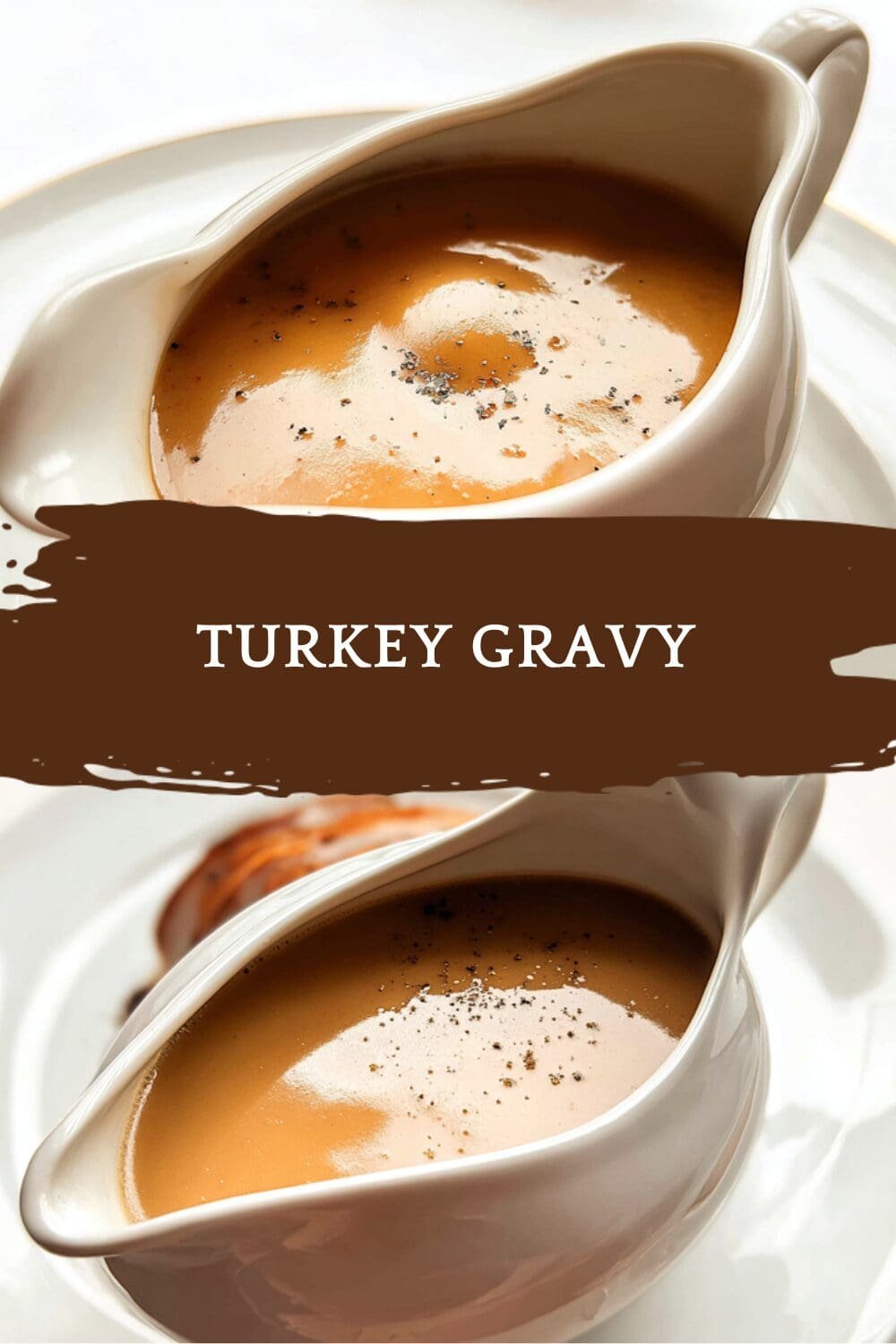
Flavor variations include adding mushrooms and sherry for an earthy twist or Dijon and tarragon for a French style. Vegan adaptations use sesame oil and miso for umami. Presentation tips involve serving in a warmed boat with garnishes like thyme.
Make-ahead options let you prepare up to 3 days in advance and freeze for up to 3 months. The recipe’s preparation time is about 20 minutes active plus simmering, making it convenient for busy hosts. For internal linking, see our easy cocktail recipes for pairing ideas at gatherings.
How to Store Turkey Gravy: Best Practices
Proper storage keeps your turkey gravy fresh and safe. After cooling quickly in shallow containers for no more than 1 hour, refrigerate in an airtight container for 3 4 days. Skim off excess fat before storing, but keep it if you plan to reheat and re-emulsify.
For freezing, use portion-sized containers or ice cube trays, and it lasts up to 3 months. Reheat thawed gravy over low heat, whisking to recombine, and ensure it reaches 165°F. Meal prep tips include making stock reductions ahead for ease.
The original tips mention storing in a sealed container for 2-3 days and reheating with broth, aligning with this advice for up to 4 days in the fridge.
FAQs: Frequently Asked Questions About Turkey Gravy
What are giblets and how do I use them in turkey gravy?
Giblets are the neck, heart, liver, and gizzards found inside a turkey’s cavity. To use them for gravy, rinse the giblets and simmer them in water for about an hour until tender. Chop the cooked giblets and add them to your gravy for extra flavor and texture. You can also omit the liver if you prefer a milder taste, as it can add a strong flavor.
What are turkey drippings and why are they important for making gravy?
Turkey drippings are the juices, fat, and browned bits left in the roasting pan after cooking the turkey. These drippings provide rich flavor and body to your gravy. After cooking, skim off excess fat, then use the remaining liquid as the base for your gravy, combining it with flour and broth to achieve a thick, savory sauce.
How do I make turkey gravy without using giblets?
To make turkey gravy without giblets, simply skip adding them and use the drippings alone as your base. After roasting your turkey, pour the drippings into a bowl, skim off most of the fat, then whisk in flour to create a roux. Gradually add broth or water, stirring until thickened, then season with salt and pepper.
How can I store and reheat leftover turkey gravy safely?
Store leftover turkey gravy in an airtight container in the refrigerator for 2 to 3 days. When reheating, warm the gravy slowly over low to medium heat on the stove, adding a splash of broth or water to adjust the consistency if needed. Stir frequently until heated through to prevent it from burning or separating.
Does the liver affect the taste of giblet gravy and can I leave it out?
Yes, the liver can add a strong, sometimes slightly bitter flavor to giblet gravy that not everyone enjoys. If you prefer a milder taste, you can leave the liver out and use only the neck, heart, and gizzards. The liver can be reserved for other recipes like pâté or sauces.

Turkey Gravy
🦃 This turkey gravy recipe ensures a smooth and flavorful sauce that perfectly complements your roasted turkey.
✨ Using drippings and seasoned giblets enhances richness and depth for a classic homemade gravy experience.
- Total Time: 20 minutes plus giblet simmering
- Yield: About 15 servings
Ingredients
– 1/2 cup flour
– 4 cups chicken broth (or turkey broth or vegetable broth)
– Salt, to taste
– Pepper, to taste
– Giblets and neck of uncooked turkey (optional; used as whole parts)
– 1 cup turkey pan drippings for concentrated flavor base (use the browned juices from the roasting pan)
– 3 cups low-sodium turkey stock or chicken stock (provides liquid and body; adjust salt to taste)
– 3 tablespoons unsalted butter (adds silkiness; use olive oil for a lighter version)
– 3 tablespoons all-purpose flour (or 2 tbsp cornstarch as a thickener for classic gravy; substitute for gluten-free)
– 1 small shallot, finely minced (builds savory depth)
– 1 clove garlic, smashed (enhances umami)
– 1 teaspoon soy sauce or 1 teaspoon white miso (optional; for umami boost)
– 1/2 teaspoon freshly ground black pepper (balances flavors)
– 1 teaspoon fresh thyme leaves or 1/2 teaspoon dried thyme (herbal lift)
– 1/4 cup heavy cream (optional; for richer gravy; omit or use milk for lighter sauce)
Instructions
1-First Steps: To begin making this turkey gravy, prepare your ingredients in advance for smooth execution. Start by placing the neck, heart, and gizzards from the turkey in a medium saucepan discard the liver if you want to avoid a strong flavor. Cover them with water, bring to a boil, and simmer for 1 hour until cooked through, as this adds extra flavor from the giblets.
2-After simmering, remove the giblets with a slotted spoon and set aside, saving some cooking liquid for thinning if needed. Remove the meat from the turkey neck, discard the bone, and finely dice the giblets and reserved meat. While the turkey rests after roasting, pour the drippings from the pan into a large bowl and let the fat separate, then skim off most of it.
3-Building the Base: Once your mise en place is ready, remove the roasted turkey from the pan and let it rest. Skim off large solids from the pan drippings and reserve 1 cup of the mixture. Measure out 3 cups of low-sodium turkey or chicken stock, finely mince 1 small shallot and 1 clove of garlic, and have 3 tablespoons of unsalted butter and 3 tablespoons flour ready.
4-First Step: Prepare your mise en place as described, and pre-measuring speeds up the process. If using giblets, they’ve already been simmered for that rich base.
5-Second Step: Deglaze the roasting pan over medium-high heat, adding 1/2 cup of stock to scrape up the browned bits, then reduce for 2 3 minutes.
6-Third Step: In a medium saucepan, melt the butter over medium heat, add shallot and garlic, and cook until translucent. Stir in thyme and pepper, plus soy sauce if desired.
7-Fourth Step: For the roux, reduce heat and whisk in flour, cooking for 1 2 minutes; for gluten-free, use a cornstarch slurry.
8-Fifth Step: Gradually whisk in the remaining stock, bring to a simmer, and cook for 8 12 minutes until thickened. Stir in the diced giblets at this stage for added texture.
9-Sixth Step: Strain for smoothness, adjust consistency with reserved liquid, and season with salt and pepper.
10-Final Step: Serve warm, and remember, this method yields about 15 servings with prep time of 10 minutes and cooking time of 10 minutes plus giblet simmering. For an external link to more gravy ideas, visit a classic turkey gravy guide for inspiration.
Last Step:
Please leave a rating and comment letting us know how you liked this recipe! This helps our business to thrive and continue providing free, high-quality recipes for you.Notes
🦃 Remove giblets from turkey before cooking and refrigerate until use.
🍖 Skim fat from drippings to avoid greasy gravy.
🥄 Whisk flour into warm drippings gradually to prevent lumps, optionally add butter for flavor.
- Prep Time: 10 minutes
- Simmering time for giblets: 1 hour
- Cook Time: 10 minutes
- Category: Sauce
- Method: Simmering and whisking
- Cuisine: American
- Diet: Gluten-Free option with flour substitute
Nutrition
- Serving Size: 1/4 cup
- Calories: 25 kcal
- Sugar: 0 g
- Sodium: 18 mg
- Fat: 0 g
- Saturated Fat: 0 g
- Unsaturated Fat: 0 g
- Trans Fat: 0 g
- Carbohydrates: 3 g
- Fiber: 0 g
- Protein: 1 g
- Cholesterol: 0 mg