Why You’ll Love This Scrambled Eggs With Cottage Cheese
As someone who loves whipping up quick meals in the kitchen, I often turn to simple recipes that pack a punch of nutrition without taking forever. Scrambled eggs with cottage cheese stand out as a go-to option because they’re easy to make and deliver amazing benefits for busy days. Let me share why this dish has become a favorite in my routine.
- Ease of preparation: This recipe comes together in under 10 minutes, making it perfect for mornings when you’re rushing out the door. You only need a few basic ingredients and a single pan, so there’s minimal cleanup involved. I find that scrambled eggs with cottage cheese let me enjoy a homemade meal without the hassle, keeping things straightforward and stress-free.
- Health benefits: Packed with protein from both eggs and cottage cheese, this dish helps keep you full and energized all morning. Eggs offer essential vitamins like B12 and selenium, while cottage cheese adds calcium and probiotics for gut health. I always choose this for a nutritious boost that supports my active lifestyle without overloading on calories.
- Versatility: You can tweak this scrambled eggs with cottage cheese recipe to fit any meal or diet, from adding veggies for extra fiber to making it dairy-free with simple swaps. It’s great for breakfast, lunch, or even a light dinner, and adapts easily to what you have on hand. I love how it works for kids, adults, and anyone watching their intake.
- Distinctive flavor: The creamy texture from cottage cheese gives scrambled eggs a unique, tangy twist that makes every bite more exciting. It blends in smoothly without overpowering the eggs, creating a fluffy result that’s far from ordinary. Personally, I enjoy how it adds a fresh note that elevates a basic dish into something special every time.
This approach to scrambled eggs with cottage cheese not only saves time but also makes healthy eating fun and accessible. Whether you’re a student grabbing a quick bite or a working professional prepping ahead, these perks make it a smart choice for everyday meals.
Jump to:
- Why You’ll Love This Scrambled Eggs With Cottage Cheese
- Essential Ingredients for Scrambled Eggs With Cottage Cheese
- Special Dietary Options
- How to Prepare the Perfect Scrambled Eggs With Cottage Cheese: Step-by-Step Guide
- First Step: Gather and Prep Your Ingredients
- Second Step: Heat Your Pan
- Third Step: Cook the Eggs Slowly
- Fourth Step: Check for Doneness
- Final Step: Serve and Enjoy
- Dietary Substitutions to Customize Your Scrambled Eggs With Cottage Cheese
- Protein and Main Component Alternatives
- Vegetable, Sauce, and Seasoning Modifications
- Mastering Scrambled Eggs With Cottage Cheese: Advanced Tips and Variations
- Pro Cooking Techniques
- Flavor Variations
- Presentation Tips
- Make-Ahead Options
- How to Store Scrambled Eggs With Cottage Cheese: Best Practices
- Refrigeration Guidelines
- Freezing Options
- Reheating Tips
- Meal Prep Considerations
- FAQs: Frequently Asked Questions About Scrambled Eggs With Cottage Cheese
- Why add cottage cheese to scrambled eggs?
- How do you make scrambled eggs with cottage cheese?
- What makes scrambled eggs with cottage cheese different?
- Can you add vegetables or other ingredients to this dish?
- Are scrambled eggs with cottage cheese healthy?
- Scrambled Eggs With Cottage Cheese
- Ingredients
- Instructions
- Last Step:
- Notes
- Nutrition
- Did you make this recipe?
Essential Ingredients for Scrambled Eggs With Cottage Cheese
Getting the right ingredients is key to nailing scrambled eggs with cottage cheese, and I always stock up on fresh, simple items for the best results. This section breaks down everything you need, with exact measurements to make your cooking smooth and precise. Let’s go through them one by one, including why they work so well.
- 2-3 large eggs – These form the base of the dish, providing rich protein and a silky texture when scrambled.
- 1/4 to 1/3 cup cottage cheese per person – Adds extra creaminess and protein, helping to make the eggs fluffy and nutritious without extra fat.
- A small amount of butter or oil (about 1 teaspoon) – Keeps the eggs from sticking and adds a hint of flavor; use just enough for a light coating in the pan.
- 1/4 teaspoon salt – Enhances the overall taste and balances the mild tang of the cottage cheese.
- 1/4 teaspoon black pepper – Brings a subtle spice that complements the eggs and adds depth to the dish.
- Optional add-ins like spinach or tomatoes (1/2 cup chopped) – These boost vitamins and make the meal more colorful, though they’re not essential for the basic version.
Special Dietary Options
For those with specific needs, here are easy adjustments to keep your scrambled eggs with cottage cheese on track.
- Vegan: Swap eggs for a plant-based egg substitute like tofu (1/2 cup mashed per person) and use a dairy-free cottage cheese alternative made from cashews to maintain that creamy feel.
- Gluten-free: This recipe is naturally gluten-free, but double-check any add-ins like sauces to ensure they’re free from hidden gluten.
- Low-calorie: Opt for low-fat cottage cheese and skip the butter or oil, using a non-stick pan instead to cut down on fats while keeping the dish light.
Table 1: Quick Nutritional Overview of Key Ingredients
| Ingredient | Quantity | Key Benefit |
|---|---|---|
| Large eggs | 2-3 | High in protein for sustained energy |
| Cottage cheese | 1/4 to 1/3 cup | Boosts calcium and creaminess |
| Butter or oil | 1 teaspoon | Prevents sticking with minimal calories |
Remember, using these ingredients for scrambled eggs with cottage cheese helps create a balanced meal that’s both tasty and adaptable.
How to Prepare the Perfect Scrambled Eggs With Cottage Cheese: Step-by-Step Guide
I love sharing how to make scrambled eggs with cottage cheese because it’s one of those recipes that turns out great every time with just a few steps. Start by gathering your ingredients to set yourself up for success. This guide will walk you through the process, including tips for adjusting based on what you have in your kitchen.
First Step: Gather and Prep Your Ingredients
Begin by cracking 2-3 large eggs into a bowl and adding 1/4 to 1/3 cup of cottage cheese per person. Whisk them together until the mixture is evenly combined, which takes about 30 seconds. This step ensures the cottage cheese blends in for a creamy texture, and you can add salt and pepper here for flavor. If you’re making this for a family, double the amounts to serve more, adapting for dietary needs like low-sodium options.
Second Step: Heat Your Pan
Next, place a non-stick skillet on the stove and set it to medium-low heat. Add about 1 teaspoon of butter or oil to the pan and let it melt, which should take around 1 minute. This gentle heat is key to avoiding overcooked eggs, and for variations, you could use olive oil if you’re aiming for a heart-healthy twist. Stir the oil around to coat the pan evenly before pouring in your egg mixture.
Third Step: Cook the Eggs Slowly
Pour the whisked eggs into the heated pan and let them sit for about 20 seconds to start setting. Use a spatula to gently stir the eggs, scraping from the bottom to create soft curds, which takes 2-3 minutes total. The cottage cheese will melt into the eggs, adding moisture, and this is a great point to mix in veggies if you want a nutrient-packed version that’s still quick to prepare.
Fourth Step: Check for Doneness
Keep stirring until the eggs are softly set but still a bit creamy, usually around 4-5 minutes on medium-low. Avoid high heat to prevent the cottage cheese from becoming watery, and taste a small bit to adjust seasoning. For a low-calorie adaptation, stop cooking a little earlier for a runnier texture that fits various preferences.
Final Step: Serve and Enjoy
Once done, remove the pan from the heat and transfer the scrambled eggs with cottage cheese to plates immediately. Garnish with fresh herbs if you like, and serve hot for the best flavor. This whole process takes less than 10 minutes, making it ideal for busy parents or students. Pair it with toast for a complete meal that’s easy to customize.
To learn more about healthy breakfast ideas on our site, check out our related posts. Also, for deeper insights, visit this resource on nutritional benefits.

Dietary Substitutions to Customize Your Scrambled Eggs With Cottage Cheese
Protein and Main Component Alternatives
If you need to swap things up, try using Greek yogurt in place of cottage cheese for a similar creamy effect with a bit more tang. For egg-free versions, mashed tofu works well as the main base, keeping the dish high in protein. I often suggest plant pasando-based options like lentils for added variety, ensuring it fits vegan diets without losing that satisfying feel.
Vegetable, Sauce, and Seasoning Modifications
Swap in seasonal veggies like kale instead of spinach for a nutrient boost, or use herbs such as basil for a fresh twist. For sauces, a dash of hot sauce can add spice, while low-sodium seasonings help with dietary restrictions. These changes make scrambled eggs with cottage cheese adaptable to different tastes and times of year.
Mastering Scrambled Eggs With Cottage Cheese: Advanced Tips and Variations
Pro Cooking Techniques
To get the fluffiest results, use a silicone spatula for gentle stirring that prevents breaking up the curds too much. Another tip is to let the eggs rest for a moment in the pan before mixing, which builds layers of texture. For make-ahead meals, cook in batches and store portions for later.
Flavor Variations
Experiment with smoked paprika for a smoky flavor or add cheese varieties for extra richness. You can also mix in nuts for crunch, creating endless combinations. These tweaks keep scrambled eggs with cottage cheese exciting and personalized.
Presentation Tips
Serve on colorful plates to make the dish pop, and top with microgreens for a fresh look. It’s all about making your meal visually appealing.
Make-Ahead Options
Prep the egg mixture the night before and refrigerate it for quick mornings. This strategy works great for busy schedules, ensuring you still get a nutritious start.
How to Store Scrambled Eggs With Cottage Cheese: Best Practices
Storing your scrambled eggs with cottage cheese properly keeps them safe and tasty for later. Let’s cover the basics for different situations. First, cool the eggs quickly after cooking to lock in freshness.
Refrigeration Guidelines
For short-term storage, place leftovers in an airtight container and chill within two hours. They last up to 3 days in the fridge, so label them for easy tracking. This method works well for meal prep, maintaining the dish’s creamy texture.
Freezing Options
If you want to freeze, portion the eggs into freezer-safe bags and remove as much air as possible. They can stay good for up to a month, but thaw them overnight in the fridge first. Freezing helps with batch cooking for those extra busy weeks.
Reheating Tips
To reheat, use a microwave on low power for 1-2 minutes, stirring halfway through. This keeps the eggs moist and prevents them from drying out. Always check for safety before eating stored meals.
Meal Prep Considerations
Plan your storage around your schedule, like prepping on Sundays for the week. These practices make scrambled eggs with cottage cheese a versatile option for any routine.

FAQs: Frequently Asked Questions About Scrambled Eggs With Cottage Cheese
Why add cottage cheese to scrambled eggs?
Adding cottage cheese to scrambled eggs significantly boosts the protein content, making the meal more filling and satisfying. It also creates a uniquely creamy, moist texture without needing extra butter or cream. The cottage cheese melts slightly during cooking, blending its mild tang with the rich egg flavor, resulting in a fluffier and more nutritious scramble than traditional eggs alone.
How do you make scrambled eggs with cottage cheese?
Whisk 2-3 large eggs in a bowl with 1/4 to 1/3 cup of cottage cheese per person until well combined. Season with salt and pepper. Heat a non-stick skillet over medium-low heat and add a small amount of butter or oil. Pour in the egg mixture and cook gently, stirring slowly with a spatula, until the eggs are softly set but still slightly creamy. Avoid overcooking to prevent the cottage cheese from becoming watery. Serve immediately.
What makes scrambled eggs with cottage cheese different?
The key difference is the texture and moisture level. Cottage cheese adds small curds throughout the scramble, creating a creamy, almost custard-like consistency that regular scrambled eggs lack. It also introduces a subtle tangy flavor that complements the eggs’ richness. This combination results in a dish that feels richer and more substantial while being lower in fat than versions made with heavy cream.
Can you add vegetables or other ingredients to this dish?
Absolutely! Sautéed onions, bell peppers, spinach, or mushrooms are excellent additions. Stir them into the skillet before adding the egg mixture. Fresh herbs like chives, dill, or parsley enhance the flavor. For extra protein, consider diced ham or smoked salmon. Add-ins like shredded cheese or a dash of hot sauce also work well. Ensure any vegetables are cooked and excess moisture is removed before adding the eggs to prevent a watery scramble.
Are scrambled eggs with cottage cheese healthy?
Yes, this dish is a very healthy breakfast option. Eggs provide high-quality protein and essential nutrients like choline and vitamin D. Cottage cheese adds even more protein and calcium, promoting muscle maintenance and bone health. Together, they create a low-carb meal that keeps you full longer, aiding in weight management. Using minimal added fat keeps the calorie count moderate, making it a balanced, nutrient-dense choice.
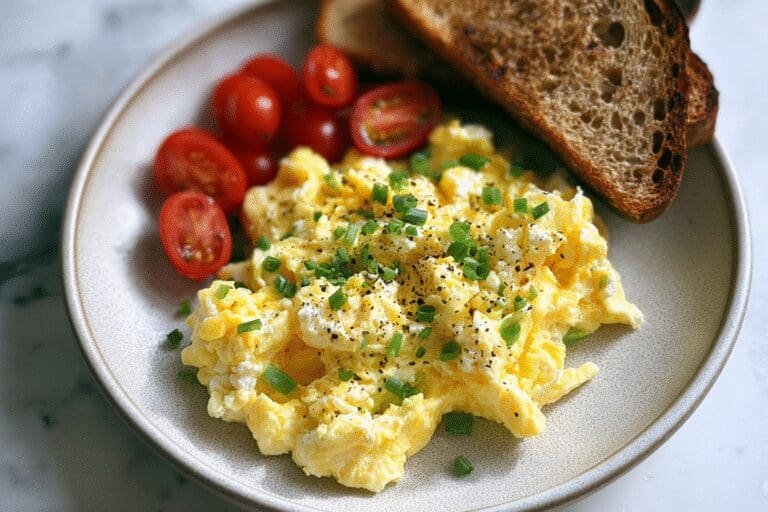
Scrambled Eggs With Cottage Cheese
🥚 These protein-packed cottage cheese scrambled eggs deliver an impressive protein boost to start your day, helping you feel fuller longer while supporting muscle recovery and growth, making them perfect for fitness enthusiasts and busy professionals alike.🧀 The creamy texture from cottage cheese creates a uniquely moist and flavorful scramble that’s both satisfying and nutritious, offering a delicious way to increase your daily protein intake without the dryness often found in traditional egg dishes.
- Total Time: 13 minutes
- Yield: 2–3 servings 1x
Ingredients
2–3 large eggs for base of the dish
1/4 to 1/3 cup cottage cheese per person for creaminess and protein
1 teaspoon butter or oil to prevent sticking
1/4 teaspoon salt for flavor enhancement
1/4 teaspoon black pepper for subtle spice
1/2 cup chopped spinach or tomatoes for vitamins
Instructions
1-First Step: Gather and Prep Your Ingredients Begin by cracking 2-3 large eggs into a bowl and adding 1/4 to 1/3 cup of cottage cheese per person. Whisk them together until the mixture is evenly combined, which takes about 30 seconds. This step ensures the cottage cheese blends in for a creamy texture, and you can add salt and pepper here for flavor. If you’re making this for a family, double the amounts to serve more, adapting for dietary needs like low-sodium options.
2-Second Step: Heat Your Pan Next, place a non-stick skillet on the stove and set it to medium-low heat. Add about 1 teaspoon of butter or oil to the pan and let it melt, which should take around 1 minute. This gentle heat is key to avoiding overcooked eggs, and for variations, you could use olive oil if you’re aiming for a heart-healthy twist. Stir the oil around to coat the pan evenly before pouring in your egg mixture.
3-Third Step: Cook the Eggs Slowly Pour the whisked eggs into the heated pan and let them sit for about 20 seconds to start setting. Use a spatula to gently stir the eggs, scraping from the bottom to create soft curds, which takes 2-3 minutes total. The cottage cheese will melt into the eggs, adding moisture, and this is a great point to mix in veggies if you want a nutrient-packed version that’s still quick to prepare.
4-Fourth Step: Check for Doneness Keep stirring until the eggs are softly set but still a bit creamy, usually around 4-5 minutes on medium-low. Avoid high heat to prevent the cottage cheese from becoming watery, and taste a small bit to adjust seasoning. For a low-calorie adaptation, stop cooking a little earlier for a runnier texture that fits various preferences.
5-Final Step: Serve and Enjoy Once done, remove the pan from the heat and transfer the scrambled eggs with cottage cheese to plates immediately. Garnish with fresh herbs if you like, and serve hot for the best flavor. This whole process takes less than 10 minutes, making it ideal for busy parents or students. Pair it with toast for a complete meal that’s easy to customize.
Last Step:
Please leave a rating and comment letting us know how you liked this recipe! This helps our business to thrive and continue providing free, high-quality recipes for you.Notes
🥚 For the creamiest texture, use low heat and be patient – high heat will cause the cottage cheese to separate and make the eggs watery instead of creamy and delicious.
🧀 Choose small curd cottage cheese for better mixing and texture, and consider blending it briefly if you prefer a smoother consistency in your scrambled eggs.
⏰ Make extra portions for meal prep – these scrambled eggs reheat surprisingly well in the microwave and maintain their protein content and most of their texture for up to 3 days when stored properly.
- Prep Time: 5 minutes
- Cook Time: 8 minutes
- Category: Breakfast
- Method: Stovetop
- Cuisine: American
- Diet: High Protein
Nutrition
- Serving Size: 1 serving
- Calories: 280
- Sugar: 4g
- Sodium: 520mg
- Fat: 16g
- Saturated Fat: 7g
- Unsaturated Fat: 7g
- Trans Fat: 0g
- Carbohydrates: 8g
- Fiber: 1g
- Protein: 28g
- Cholesterol: 345mg