Why You’ll Love This Beef Bulgogi
Beef Bulgogi stands out as a staple in Korean barbecue traditions, offering flavors that bring excitement to any meal. With its tender beef and a marinade full of savory and sweet notes, this dish wins over home cooks and families alike. You’ll appreciate how it comes together with minimal effort, making it ideal for busy weeknights or quick dinners.
This recipe highlights ease of preparation, cooking up in minutes for a fast meal that still tastes amazing. It packs health benefits from ingredients like garlic and ginger, which add vitamins and antioxidants to support a balanced diet. Plus, its versatility lets you tweak it for different tastes, whether you’re adding it to rice or veggies for a hearty plate.
Key Features of Beef Bulgogi
- Simple Steps: Mix the marinade and let it rest, then cook in a hot pan for a quick dinner.
- Nutrient-Rich: Lean beef paired with fresh ginger and garlic makes it a smart choice for health-conscious eaters.
- Adaptable Options: Easily switch proteins or seasonings to fit dietary needs, keeping the authentic Korean taste.
Discover more about pairing this savory dish with desserts on our site, like our chocolate eclair cake recipe that complements bold flavors with something sweet.
Jump to:
- Why You’ll Love This Beef Bulgogi
- Key Features of Beef Bulgogi
- Essential Ingredients for Beef Bulgogi
- Main Ingredients List
- How to Prepare the Perfect Beef Bulgogi: Step-by-Step Guide
- Cooking in Batches
- Dietary Substitutions to Customize Your Beef Bulgogi
- Mastering Beef Bulgogi: Advanced Tips and Variations
- Flavor Boosts
- How to Store Beef Bulgogi: Best Practices
- Long-Term Storage Tips
- FAQs: Frequently Asked Questions About Beef Bulgogi
- What cuts of beef work best for making bulgogi?
- What can I use instead of Asian pear in bulgogi marinade?
- How do I cook bulgogi if I don’t have a grill pan?
- What traditional side dishes should I serve with bulgogi?
- What is gochujang and how is it used in bulgogi?
- Beef Bulgogi
- Ingredients
- Instructions
- Last Step:
- Notes
- Nutrition
- Did you make this recipe?
Essential Ingredients for Beef Bulgogi
Gathering the right ingredients is key to making an authentic Korean beef bulgogi recipe that bursts with flavor. This section covers everything you need, focusing on precise measurements for easy shopping and prep. Start with high-quality beef and fresh items to get that perfect marinade and tender result.
Main Ingredients List
- 1 ½ pounds (about 680 grams) boneless rib eye steak
- ½ small pear, peeled and coarsely grated
- ¼ cup (60 ml) reduced sodium soy sauce
- 2 tablespoons (about 25 grams) brown sugar
- 2 tablespoons (30 ml) toasted sesame oil
- 3 cloves garlic, minced
- 1 tablespoon freshly grated ginger
- 1 tablespoon gochujang (Korean red pepper paste)
- 2 tablespoons (30 ml) vegetable oil, divided
- 2 thinly sliced green onions
- 1 teaspoon (about 5 grams) sesame seeds
For more ideas on enhancing your cooking routine, check out our Baileys chocolate truffles recipe, which can add a fun twist to your meal endings.
How to Prepare the Perfect Beef Bulgogi: Step-by-Step Guide
Cooking beef bulgogi starts with prepping the meat, which ensures tenderness and absorbs the marinade well. Follow these steps to create an authentic beef bulgogi that’s full of Korean barbecue charm. This method keeps things straightforward, even if you’re new to such recipes.
First, wrap the steak in plastic wrap and freeze it for 30 minutes to make slicing easier. Then, slice the steak across the grain into ¼-inch thick pieces for the best texture. In a bowl, combine the soy sauce, brown sugar, sesame oil, garlic, ginger, and gochujang to form the marinade.
Next, place the sliced steak into a sealable bag with the marinade, turning it occasionally for even coverage. Let it marinate for at least 2 hours or overnight in the fridge for deeper flavors. When ready, heat a cast iron grill pan over medium-high heat with 1 tablespoon of vegetable oil.
Cooking in Batches
Cook the steak in batches to avoid overcrowding, using about 2-3 minutes per side until it’s charred and done. Add the remaining oil for the next batch to keep the pan hot. Once cooked, serve right away with green onions and sesame seeds on top.
Total prep time is around 2 hours and 45 minutes, including marinating, with just 15 minutes of actual cooking. This fits well for a beef bulgogi marinade recipe that doesn’t take all day but delivers great results.

Dietary Substitutions to Customize Your Beef Bulgogi
Beef bulgogi is versatile, letting you adjust for various diets while keeping its Korean barbecue essence. Swap ingredients based on your needs, and the dish stays tasty and authentic. These changes make it simple to enjoy for everyone at the table.
For protein swaps, use thinly sliced chicken breast or firm tofu in place of beef. If you’re avoiding gluten, opt for tamari instead of soy sauce to maintain that umami depth. Add grated pear or apple for natural sweetness, which also tenderizes the meat just like in traditional recipes.
| Original Ingredient | Substitution Option |
|---|---|
| Boneless rib eye steak | Thinly sliced chicken or tofu |
| Reduced sodium soy sauce | Tamari for gluten-free |
| Brown sugar | Maple syrup for natural sweetening |
This approach helps with how to cook beef bulgogi in a way that’s inclusive and full of flavor.
Mastering Beef Bulgogi: Advanced Tips and Variations
Once you’re comfortable with the basics, try advanced tips to elevate your beef bulgogi. Use paper-thin slices for authenticity, which you can achieve by freezing the meat first. Opt for Korean or Bosc pear in the marinade to add subtle sweetness and help tenderize the beef.
Pro techniques include cooking in batches to promote caramelization and avoid steaming. Baste the meat with marinade during cooking for extra flavor, and remember you can freeze the marinated bulgogi before or after cooking for up to 2 months. For variations, add gochujang for a spicy kick or experiment with herbs.
When making beef bulgogi, the key is in the details like using reduced sodium soy sauce to control salt levels and letting flavors develop overnight.
Flavor Boosts
- Grate fresh ginger for a warm, complex taste that pairs well with garlic.
- Incorporate sesame seeds and green onions for a fresh garnish that enhances presentation.
- Try adding pear juice as suggested in authentic beef bulgogi cooking tips for tender, sweet results.
Check out the external resource for more ideas on perfecting this dish.
How to Store Beef Bulgogi: Best Practices
Proper storage keeps your beef bulgogi fresh and tasty for later meals. After cooking, let it cool before placing it in the fridge to avoid any risks. This simple step ensures you can enjoy Korean barbecue flavors throughout the week without worry.
Store cooked beef bulgogi in an airtight container in the refrigerator for up to 3 days. For longer keep, freeze it in sealed bags after removing excess marinade to maintain texture. Reheat gently over low heat to keep it moist and flavorful, making it easy for meal prep.
Long-Term Storage Tips
- Cool the bulgogi completely before freezing to lock in freshness.
- Use portion-sized bags for easy thawing and reheating.
- Aim to use within 1-2 months for the best taste in your beef bulgogi marinade recipe.
Learn more about health aspects, including gochujang benefits, from this helpful site.
FAQs: Frequently Asked Questions About Beef Bulgogi
What cuts of beef work best for making bulgogi?
The most popular cuts for bulgogi are ribeye and top sirloin because they are tender and flavorful. For a more affordable option, flank steak or skirt steak also work well; just slice the meat thinly against the grain to help tenderize it. These cuts soak up the marinade effectively and cook quickly, making them ideal for this dish.
What can I use instead of Asian pear in bulgogi marinade?
If you don’t have Asian pear, Fuji apple is the most common substitute as it also adds sweetness and helps tenderize the meat. Alternatively, you can use grated apple, kiwi, or even a bit of sugar combined with a touch of pineapple juice to mimic the tenderizing effect.
How do I cook bulgogi if I don’t have a grill pan?
If you don’t have a grill pan, you can cook bulgogi in a regular skillet or frying pan over medium-high heat. Use a well-seasoned cast iron or non-stick pan to achieve a good sear. Stir frequently to cook the thinly sliced meat evenly, and avoid overcrowding the pan to retain a nice caramelized texture.
What traditional side dishes should I serve with bulgogi?
Bulogi pairs perfectly with steamed white rice and Korean side dishes like kimchi, lightly pickled cucumbers, perilla leaves, and ssamjang (a spicy soy-based dipping sauce). These sides complement the savory and sweet flavors of bulgogi and offer a balanced, authentic Korean BBQ experience.
What is gochujang and how is it used in bulgogi?
Gochujang is a fermented Korean red chili paste that adds mild heat, sweetness, and depth of flavor. While not always included in traditional bulgogi marinade, some variations use it to add a spicy kick. You can find gochujang in most Asian grocery stores, typically in a red tub, and it also works well as a dipping sauce when served alongside bulgogi.
Beef Bulgogi
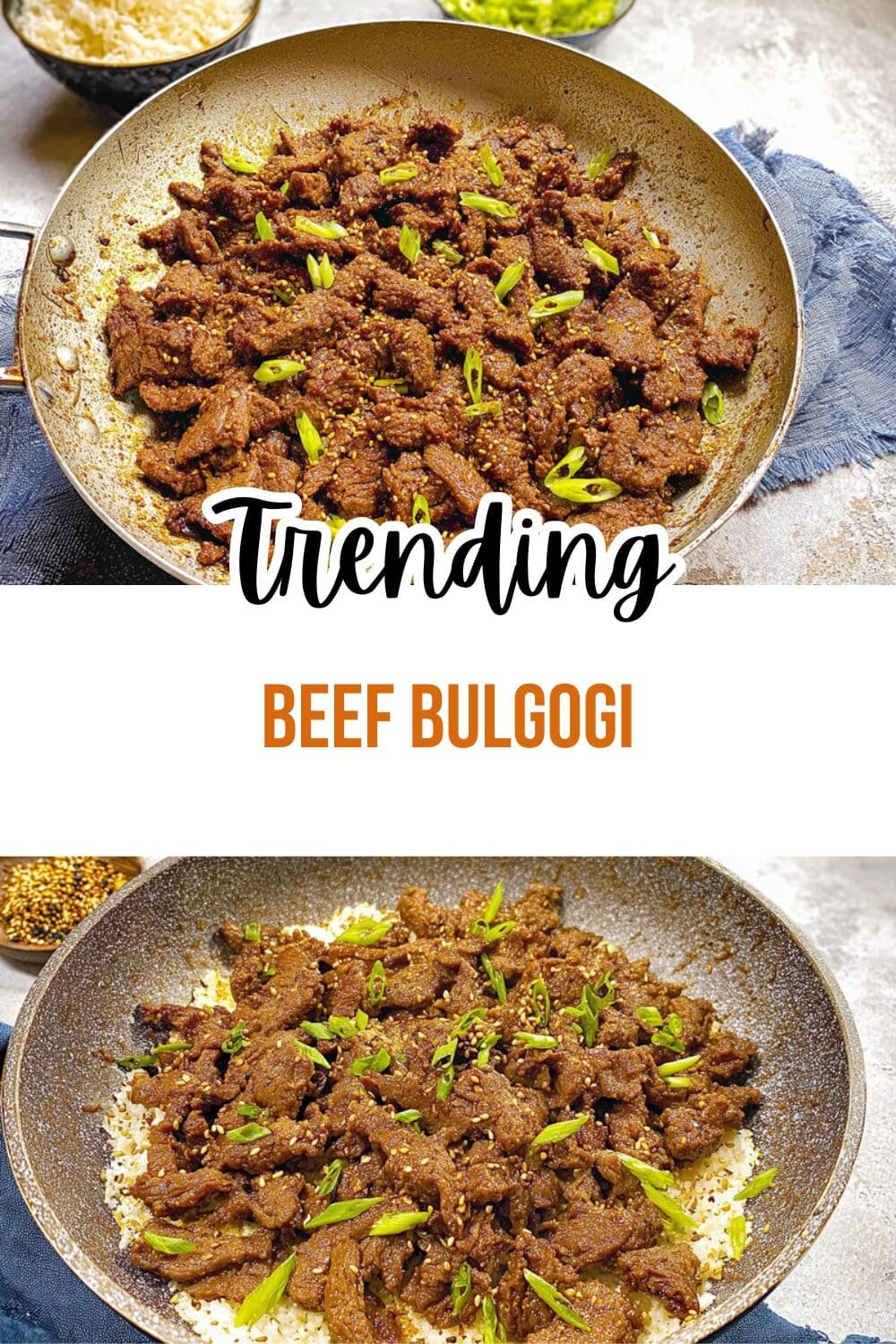
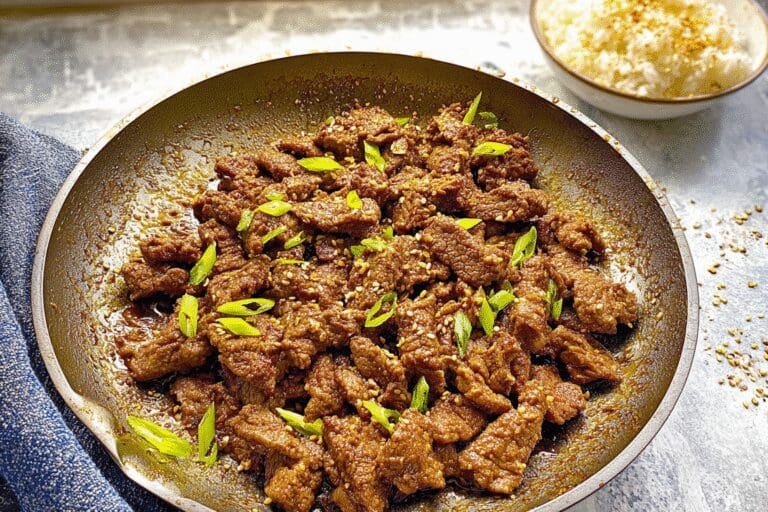
🥩 This Korean Beef Bulgogi recipe features a sweet and savory marinade that tenderizes the beef, making it irresistibly flavorful.
🔥 Perfect for authentic Korean BBQ lovers, it offers a quick and delicious way to enjoy tender, charred rib eye steak at home.
- Total Time: 3 hours
- Yield: 4 servings
Ingredients
– 1 ½ pounds (about 680 grams) boneless rib eye steak
– ½ small pear, peeled and coarsely grated
– ¼ cup (60 ml) reduced sodium soy sauce
– 2 tablespoons (about 25 grams) brown sugar
– 2 tablespoons (30 ml) toasted sesame oil
– 3 cloves garlic, minced
– 1 tablespoon freshly grated ginger
– 1 tablespoon gochujang (Korean red pepper paste)
– 2 tablespoons (30 ml) vegetable oil, divided
– 2 thinly sliced green onions
– 1 teaspoon (about 5 grams) sesame seeds
Instructions
1-First, wrap the steak in plastic wrap and freeze it for 30 minutes to make slicing easier.
2-Then, slice the steak across the grain into ¼-inch thick pieces for the best texture.
3-In a bowl, combine the soy sauce, brown sugar, sesame oil, garlic, ginger, and gochujang to form the marinade.
4-Next, place the sliced steak into a sealable bag with the marinade, turning it occasionally for even coverage.
5-Let it marinate for at least 2 hours or overnight in the fridge for deeper flavors.
6-When ready, heat a cast iron grill pan over medium-high heat with 1 tablespoon of vegetable oil.
7-Cooking in Batches: Cook the steak in batches to avoid overcrowding, using about 2-3 minutes per side until it’s charred and done. Add the remaining oil for the next batch to keep the pan hot. Once cooked, serve right away with green onions and sesame seeds on top.
Last Step:
Please leave a rating and comment letting us know how you liked this recipe! This helps our business to thrive and continue providing free, high-quality recipes for you.Notes
🥢 Slice the beef as thin as possible to achieve authentic tenderness and flavor absorption.
🍐 Use Korean or Bosc pear in the marinade to naturally tenderize the meat and add subtle sweetness.
🔥 Cook the steak in batches to prevent steaming and promote caramelization for perfect char.
⏰ Marinated bulgogi can be frozen before or after cooking; use within 2 months for best quality.
- Prep Time: 15 minutes
- Marinating time: 2 hours
- Cook Time: 15 minutes
- Category: Main Dish
- Method: Marinating and grilling
- Cuisine: Korean
- Diet: Gluten-Free option
Nutrition
- Serving Size: 1 serving
- Calories: 370
- Sugar: 8g
- Sodium: 600mg
- Fat: 22g
- Saturated Fat: 4g
- Unsaturated Fat: 16g
- Trans Fat: 0g
- Carbohydrates: 10g
- Fiber: 1g
- Protein: 32g
- Cholesterol: 90mg