Why You’ll Love This Garlic Knots
Garlic knots are one of those comfort foods that just make everything better. Whether you’re serving them alongside a pasta dinner, enjoying them as a snack, or bringing them to a party, these soft, buttery bites are always a hit. This recipe is particularly special because it delivers restaurant-quality results right from your home kitchen.
What makes these garlic knots stand out from the rest is their perfect texture and rich flavor profile. The outside develops a beautiful golden crust while the inside remains pillowy soft. The garlic butter topping soaks into every crevice, creating bursts of savory goodness with each bite. Plus, they’re incredibly versatile and can be customized to suit different tastes and dietary needs, much like other Italian dough treats that bring joy to any table.
Ease of Preparation
This garlic knots recipe is simple to make, requiring only a few basic ingredients and minimal prep time. The quick cooking process means you can enjoy fresh, warm knots in under 30 minutes, perfect for busy weeknights or last-minute snacks. Even if you’ve never worked with yeast dough before, you’ll find the process surprisingly manageable. The dough is forgiving and comes together beautifully with just a little bit of patience.
Health Benefits
Packed with wholesome ingredients like olive oil and garlic, these garlic knots offer antioxidants and anti-inflammatory properties, promoting wellness. Garlic is known for its impressive health benefits, including boosting the immune system and reducing blood pressure. Using whole grain or gluten-free flours can also enhance nutritional value, making these savory bites a healthier option compared to many store-bought alternatives.
Versatility
This garlic knots recipe adapts easily to various dietary needs. Whether you’re vegan, gluten-free, or watching calories, there are substitutions to suit your preferences without sacrificing flavor or texture. You can also customize the seasonings, add cheese, or experiment with different herbs to create a unique twist on the classic recipe. This flexibility makes it a go-to recipe for families with different food preferences.
Distinctive Flavor
What sets these garlic knots apart is their rich, garlicky taste combined with buttery herbs and a hint of spice. This unique flavor profile makes every bite satisfying and memorable, finishing with a delicate crunch on the outside and soft, airy inside. The combination of fresh garlic, herbs, and butter creates an aromatic experience that will have your kitchen smelling incredible and your taste buds dancing with joy.
Jump to:
- Why You’ll Love This Garlic Knots
- Ease of Preparation
- Health Benefits
- Versatility
- Distinctive Flavor
- Essential Ingredients for Garlic Knots
- Ingredients for Homemade Garlic Knots Dough
- Topping Ingredients
- Understanding the Ingredients
- Special Dietary Options
- How to Prepare the Perfect Garlic Knots: Step-by-Step Guide
- Prepare the Yeast Mixture
- Mix the Dough
- Knead the Dough
- First Rise
- Shape the Knots
- Second Rise
- Bake to Golden Perfection
- Prepare the Garlic Butter Topping
- Finish and Serve
- Dietary Substitutions to Customize Your Garlic Knots
- Protein and Main Component Alternatives
- Vegetable, Sauce, and Seasoning Modifications
- Flavor Variations
- Mastering Garlic Knots: Advanced Tips and Variations
- Pro Cooking Techniques
- Flavor Variations
- Presentation Tips
- Make-Ahead Options
- Pairing Suggestions
- How to Store Garlic Knots: Best Practices
- Refrigeration
- Freezing
- Reheating
- Meal Prep Considerations
- Reviving Stale Knots
- FAQs: Frequently Asked Questions About Garlic Knots
- Can I add cheese inside garlic knots or mix it into the dough?
- How should I store leftover garlic knot dough if I only want to make half the recipe?
- What’s the ideal water temperature for proofing yeast in garlic knot dough?
- Can I brush garlic knots with something other than butter for a dairy-free option?
- Is it possible to freeze shaped garlic knots before baking?
- Garlic Knots
- Ingredients
- Instructions
- Last Step:
- Notes
- Nutrition
- Did you make this recipe?
Essential Ingredients for Garlic Knots
Creating the perfect garlic knots starts with selecting the right ingredients. Each component plays a crucial role in developing the flavor, texture, and overall quality of the final product. Let’s take a closer look at what you’ll need to make these delicious treats.
Ingredients for Homemade Garlic Knots Dough
- 1 cup warm water (100 110°F)
- 2 and 1/4 teaspoons instant yeast (1 packet)
- 1 tablespoon granulated sugar
- 3 tablespoons olive oil or melted butter
- 1 teaspoon salt
- 1 teaspoon garlic powder
- 3 and 1/3 cups bread flour (or all-purpose flour as substitute), plus extra for work surface and hands
Topping Ingredients
- 5 tablespoons unsalted butter, melted
- 3 garlic cloves minced or 1/2 teaspoon garlic powder
- 1 teaspoon Italian seasoning or a mix of dried oregano, basil, and parsley
- 1/4 teaspoon salt
- Optional after baking: 1/4 cup grated Parmesan cheese, 2 tablespoons chopped fresh parsley
Understanding the Ingredients
The foundation of great garlic knots is the dough. The combination of warm water and yeast creates the fermentation necessary for the dough to rise and develop that airy texture we love. Sugar feeds the yeast, while olive oil adds moisture and creates a tender crumb. Salt not only enhances flavor but also strengthens the gluten structure of the dough. The garlic powder in the dough infuses a subtle garlic flavor throughout, making sure every bite is delicious.
For the topping, fresh garlic is essential for that bold, authentic taste. When sautéed in butter, garlic releases its aromatic oils and becomes sweeter and less pungent. The Italian seasoning blend complements the garlic perfectly, adding depth and complexity to the flavor profile. The optional Parmesan cheese adds a savory umami element, while fresh parsley provides a bright, fresh finish.
Special Dietary Options
- Vegan: Substitute butter with plant-based margarine or olive oil
- Gluten-free: Use a gluten-free all-purpose flour blend suitable for yeast breads
- Low-calorie: Opt for olive oil spray instead of butter and reduce salt quantity
These substitutions make it possible for everyone to enjoy garlic knots regardless of dietary restrictions. Experimenting with these alternatives can also introduce new and exciting flavors to your recipe repertoire.
How to Prepare the Perfect Garlic Knots: Step-by-Step Guide
Making garlic knots from scratch might seem intimidating, but with this detailed guide, you’ll see just how simple and rewarding the process can be. The key is to follow each step carefully and give the dough the time it needs to develop properly. Let’s walk through the entire process together.
Prepare the Yeast Mixture
Start by combining warm water and yeast in a large mixing bowl. Let it sit for 5-10 minutes until frothy to activate the yeast. This step is crucial because it guarantees your yeast is alive and active, which is necessary for the dough to rise properly. You should see small bubbles forming on the surface of the water, indicating that the yeast is working.
Mix the Dough
Add the flour, salt, and olive oil into the bowl with the yeast mixture. Stir until a sticky dough forms. At this stage, the dough will look shaggy and messy, which is completely normal. The flour will gradually absorb the liquid as you mix, creating a cohesive dough structure.
Knead the Dough
Turn the dough out onto a floured surface and knead for 7-10 minutes until smooth and elastic. Kneading develops the gluten in the flour, which gives the knots their characteristic chewy texture. The dough should spring back when poked lightly with a finger. For gluten-free, knead gently as per the flour blend instructions to avoid breaking down the structure.
First Rise
Place the dough in a lightly greased bowl, cover with a cloth, and let it rise for 1 hour in a warm area until doubled in size. This is when the yeast does its work, creating air pockets that will make the knots light and fluffy. Find a warm, draft-free spot for this step, such as inside an oven with just the light on or on top of the refrigerator.
Shape the Knots
Punch down the dough to release the air and divide into 12 equal pieces. Roll each piece into a rope about 8-10 inches long. Tie each rope into a simple knot, tucking the ends underneath. Don’t worry about making them perfect; rustic knots have their own charm and will taste delicious regardless of their appearance.
Second Rise
Place knots on a baking sheet lined with parchment paper. Cover and let rise for another 20-30 minutes until puffy. This second rise gives the knots a lighter texture and helps them maintain their shape during baking.
Bake to Golden Perfection
Preheat oven to 375°F (190°C). Bake the knots for 12-15 minutes until golden brown. Keep an eye on them during the last few minutes, as baking times can vary depending on your oven. The knots should be lightly browned on top and sound hollow when tapped on the bottom.
Prepare the Garlic Butter Topping
While the knots are baking, mix melted butter, minced garlic, and chopped parsley. The heat from the butter will help release the flavors of the garlic and herbs, creating an aromatic mixture that will coat the knots beautifully.
Finish and Serve
Remove knots from the oven and brush generously with the garlic butter mixture while still hot. This allows the butter to soak into the surface, creating those irresistible, flavorful pockets we all love. For extra flavor, sprinkle with additional herbs or grated Parmesan cheese. Serve warm for the best experience.

Dietary Substitutions to Customize Your Garlic Knots
One of the wonderful things about this garlic knot recipe is its adaptability. Whether you have specific dietary requirements or simply want to experiment with different flavors, there are numerous substitutions you can try without compromising on taste or texture. Let’s explore some creative ways to customize your garlic knots.
Protein and Main Component Alternatives
- Replace traditional all-purpose flour with gluten-free flour blends to accommodate gluten sensitivities. Look for blends specifically designed for yeast breads to guarantee the best results.
- Use chickpea or almond flour for added protein in low-carb or paleo diets. These alternatives create a denser, nuttier texture that many people find appealing.
- Incorporate plant-based protein powders into the dough for vegan protein enrichment. Unflavored or vanilla protein powders work well and won’t significantly alter the taste.
Vegetable, Sauce, and Seasoning Modifications
- Substitute fresh garlic with garlic powder or roasted garlic for milder flavor. Roasted garlic adds a subtle sweetness that balances the savory notes of the knots.
- Use different herbs like basil, oregano, or rosemary to vary taste profiles. Each herb brings its unique character to the recipe.
- Swap out butter-based garlic sauce with olive oil or vegan margarine blends for dairy-free options. These alternatives still provide rich flavor and moisture.
- Add diced sun-dried tomatoes or olives for seasonal or Mediterranean flavor twists. These additions introduce both flavor and texture contrast.
“Creativity in the kitchen comes from experimenting with different ingredients and techniques. Don’t be afraid to make this recipe your own by trying new combinations that appeal to your taste preferences.”
Flavor Variations
For those who love a bit of heat, consider adding red pepper flakes to the garlic butter or mixing some finely diced jalapeño into the dough. Cheese lovers can incorporate shredded mozzarella or cheddar directly into the dough for extra richness. If you prefer a sweeter note, try adding a touch of honey to the garlic butter for a sweet and savory combination.
These substitutions allow personalization while maintaining the signature essence and tastiness of garlic knots. Remember that when making significant changes to the recipe, especially with alternative flours, you may need to adjust the liquid amounts slightly to achieve the right dough consistency.
Mastering Garlic Knots: Advanced Tips and Variations
Once you’ve mastered the basic garlic knots recipe, you might be ready to take your skills to the next level. These advanced tips and creative variations will help you create garlic knots that look and taste like they came from a professional bakery. Let’s explore some techniques that can improve your garlic knot game.
Pro Cooking Techniques
Use a stand mixer with a dough hook to knead dough for more consistent texture and less effort. The mixer provides uniform kneading that develops gluten perfectly. If you prefer hand-kneading, try the “stretch and fold” method, which involves stretching the dough out and folding it back onto itself several times during the first rise. This technique creates a stronger dough structure without the physical exertion of traditional kneading.
Flavor Variations
Infuse garlic butter with chili flakes, Parmesan cheese, or fresh lemon zest before brushing. The addition of chili flakes adds a gentle heat that cuts through the richness of the butter. Lemon zest brightens the overall flavor profile, making these knots perfect for summer gatherings. You can also experiment with different types of garlic, such as roasted garlic for a sweeter, milder taste or black garlic for a unique umami flavor.
Presentation Tips
Garnish with freshly chopped herbs, grated cheese, or sprinkle with sea salt for a special look. A light dusting of flour before baking can create an artisanal appearance, while a glossy finish can be achieved by brushing the knots with a beaten egg before baking. Serve them in a basket lined with a clean napkin or on a wooden board for a rustic presentation.
Make-Ahead Options
Prepare dough ahead, refrigerate overnight to develop flavor, then shape and bake fresh when needed. This slow fermentation process allows the flavors to develop more fully, resulting in a more complex taste profile. You can also freeze the shaped, unbaked knots on a baking sheet until firm, then transfer to a freezer bag for longer storage. Bake from frozen, adding a few extra minutes to the baking time.
Pairing Suggestions
Garlic knots pair beautifully with a variety of dishes. Serve them alongside Italian classics like garlic bread and pasta, or offer them as an appetizer with marinara sauce for dipping. They also make a great accompaniment to soups, salads, and main courses of all types. For a fun twist, try splitting them in half and using them as sandwich buns for mini sliders.
Incorporating these advanced techniques and creative variations can enhance your garlic knots’ appeal and versatility, perfect for impressing guests or modifying for dietary preferences. Remember that practice makes perfect, and each time you make this recipe, you’ll discover new ways to refine your technique and customize the flavor to your liking, similar to how you might approach creative sweet treats in your kitchen.
How to Store Garlic Knots: Best Practices
There’s nothing quite like fresh-from-the-oven garlic knots, but sometimes we make more than we can eat in one sitting. Proper storage makes sure you can enjoy these delicious treats later without sacrificing quality or taste. Here’s everything you need to know about storing your garlic knots to maintain their wonderful texture and flavor.
Refrigeration
Store garlic knots in an airtight container at room temperature for up to 2 days. For longer storage, refrigerate for up to 5 days, making sure the container seals tightly to retain softness. If you notice the knots becoming slightly firm after refrigeration, don’t worry; they can be easily revived with proper reheating. Avoid storing them in the refrigerator if you plan to eat them within 24 hours, as the cool, dry air can accelerate staling.
Freezing
Wrap knots individually in plastic wrap and place in a zip-top freezer bag. Freeze for up to 3 months. Thaw at room temperature before reheating. This method works best for completely cooled knots that haven’t been brushed with the garlic butter topping yet. If freezing already-topped knots, the butter may become slightly grainy upon thawing, but this doesn’t affect the taste significantly.
Reheating
Warm knots in a preheated oven at 350°F (175°C) for 5-7 minutes or in a microwave for 20-30 seconds to restore freshness. The oven method produces a slightly crispy exterior, while the microwave creates softer knots. For the best of both worlds, try microwaving for 20 seconds and then placing in a hot oven for 2-3 minutes. If you’re reheating frozen knots without thawing, add a few extra minutes to the oven time.
Meal Prep Considerations
Prepare batches ahead, freeze portioned knots, and reheat as needed for quick snacks or meals without compromising taste or texture. This approach is especially helpful for busy weeknights when you want homemade goodness without the time investment. Consider making a double batch and freezing half for later; you’ll thank yourself when you need a quick side dish or snack.
| Storage Method | Duration | Best Practice |
|---|---|---|
| Room Temperature | Up to 2 days | Store in airtight container or bag |
| Refrigerator | Up to 5 days | Wrap tightly to prevent drying |
| Freezer | Up to 3 months | Wrap individually and label with date |
Reviving Stale Knots
If your garlic knots have gone slightly stale, don’t throw them away! You can transform them into delicious croutons for salads or soups by cutting them into cubes and toasting in the oven with a little olive oil. Alternatively, slice them in half, brush with more garlic butter, and toast under the broiler for a revived garlic bread experience. They also make excellent bread for breadcrumbs when processed in a food processor.
FAQs: Frequently Asked Questions About Garlic Knots
Can I add cheese inside garlic knots or mix it into the dough?
Yes, you can add about 1 cup of shredded cheese into the dough when mixing in the second half of the flour for a cheesy flavor throughout. Alternatively, you can place small cheese cubes in the center of each knot before shaping to create cheese-filled pockets. Keep in mind some cheese may melt and ooze out during baking, which adds to the flavor.
How should I store leftover garlic knot dough if I only want to make half the recipe?
It’s best to freeze the unused dough for longer storage. After the first rise and punching down the dough, divide it and coat the portion you want to save lightly with olive oil. Place it in an airtight container or freezer bag, and freeze for up to 3 months. When ready, thaw in the refrigerator overnight before shaping and baking.
What’s the ideal water temperature for proofing yeast in garlic knot dough?
Use warm water between 100°F and 110°F (38°C to 43°C) to activate the yeast effectively. Water that’s too hot can kill the yeast, while water that’s too cold may slow down the rising process. Using a kitchen thermometer can help ensure you’re at the right temperature range for optimal yeast activity.
Can I brush garlic knots with something other than butter for a dairy-free option?
Yes, you can use plant-based butter alternatives like Earth Balance to keep the buttery flavor while making the recipe dairy-free. If you skip the butter entirely, the knots will lose their classic taste and buttery texture, but you can still brush them with olive oil and sprinkle garlic powder and herbs for flavor.
Is it possible to freeze shaped garlic knots before baking?
Yes, shaped garlic knots can be frozen before baking for up to 3 months. Arrange the knots on a baking sheet in a single layer and freeze until solid, then transfer them to a freezer bag. When ready to bake, thaw them in the refrigerator and allow them to come to room temperature and rise slightly before baking to ensure the best texture.
Garlic Knots
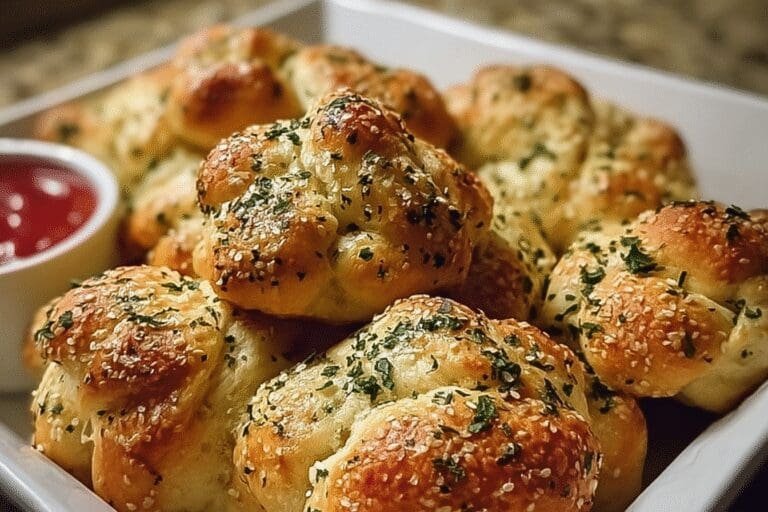
🧄 These Homemade Garlic Knots bring soft, buttery flavor with a perfect garlicky punch that’s great for any occasion.
🥖 They’re an easy-to-make, crowd-pleasing snack or side that pairs wonderfully with pasta, soup, or salad.
- Total Time: 1 hour 50 minutes
- Yield: 12–16 garlic knots 1x
Ingredients
1 cup warm water (100 110°F)
2 and 1/4 teaspoons instant yeast (1 packet)
1 tablespoon granulated sugar
3 tablespoons olive oil or melted butter
1 teaspoon salt
1 teaspoon garlic powder
3 and 1/3 cups bread flour (or all-purpose flour as substitute)
5 tablespoons unsalted butter, melted
3 garlic cloves minced or 1/2 teaspoon garlic powder
1 teaspoon Italian seasoning or a mix of dried oregano, basil, and parsley
1/4 teaspoon salt
1/4 cup grated Parmesan cheese
2 tablespoons chopped fresh parsley
Instructions
1-Prepare the Yeast Mixture: Start by combining warm water and yeast in a large mixing bowl. Let it sit for 5-10 minutes until frothy to activate the yeast. This step is crucial because it guarantees your yeast is alive and active, which is necessary for the dough to rise properly. You should see small bubbles forming on the surface of the water, indicating that the yeast is working.
2-Mix the Dough: Add the flour, salt, and olive oil into the bowl with the yeast mixture. Stir until a sticky dough forms. At this stage, the dough will look shaggy and messy, which is completely normal. The flour will gradually absorb the liquid as you mix, creating a cohesive dough structure.
3-Knead the Dough: Turn the dough out onto a floured surface and knead for 7-10 minutes until smooth and elastic. Kneading develops the gluten in the flour, which gives the knots their characteristic chewy texture. The dough should spring back when poked lightly with a finger. For gluten-free, knead gently as per the flour blend instructions to avoid breaking down the structure.
4-First Rise: Place the dough in a lightly greased bowl, cover with a cloth, and let it rise for 1 hour in a warm area until doubled in size. This is when the yeast does its work, creating air pockets that will make the knots light and fluffy. Find a warm, draft-free spot for this step, such as inside an oven with just the light on or on top of the refrigerator.
5-Shape the Knots: Punch down the dough to release the air and divide into 12 equal pieces. Roll each piece into a rope about 8-10 inches long. Tie each rope into a simple knot, tucking the ends underneath. Don’t worry about making them perfect; rustic knots have their own charm and will taste delicious regardless of their appearance.
6-Second Rise: Place knots on a baking sheet lined with parchment paper. Cover and let rise for another 20-30 minutes until puffy. This second rise gives the knots a lighter texture and helps them maintain their shape during baking.
7-Bake to Golden Perfection: Preheat oven to 375°F (190°C). Bake the knots for 12-15 minutes until golden brown. Keep an eye on them during the last few minutes, as baking times can vary depending on your oven. The knots should be lightly browned on top and sound hollow when tapped on the bottom.
8-Prepare the Garlic Butter Topping: While the knots are baking, mix melted butter, minced garlic, and chopped parsley. The heat from the butter will help release the flavors of the garlic and herbs, creating an aromatic mixture that will coat the knots beautifully.
9-Finish and Serve: Remove knots from the oven and brush generously with the garlic butter mixture while still hot. This allows the butter to soak into the surface, creating those irresistible, flavorful pockets we all love. For extra flavor, sprinkle with additional herbs or grated Parmesan cheese. Serve warm for the best experience.
Last Step:
Please leave a rating and comment letting us know how you liked this recipe! This helps our business to thrive and continue providing free, high-quality recipes for you.Notes
🧂 Be careful not to add too much flour; dough should be slightly sticky for soft knots.
⏲️ Allow the dough to rise fully for the best texture and flavor.
🧈 Brush knots immediately after baking to lock in the buttery garlic flavor and shine.
- Prep Time: 15 minutes
- Rising time: 1 hour 20 minutes
- Cook Time: 15 minutes
- Category: Appetizer, Snack, Side
- Method: Baking
- Cuisine: Italian-American
Nutrition
- Serving Size: 1 garlic knot
- Calories: 120 kcal
- Sugar: 1 g
- Sodium: 180 mg
- Fat: 6 g
- Saturated Fat: 3 g
- Unsaturated Fat: 3 g
- Trans Fat: 0 g
- Carbohydrates: 14 g
- Fiber: 1 g
- Protein: 3 g
- Cholesterol: 15 mg