Why You’ll Love This Chocolate Macarons
There is something truly magical about the art of baking French macarons. For many home bakers, these delicate cookies have a reputation for being difficult, but this chocolate macarons recipe is designed to change that narrative. With clear, simple instructions and a focus on the fundamentals, you can create bakery-quality treats right in your own kitchen. The satisfaction of seeing those perfect “feet” develop on the shells is unmatched, and the taste is even better.
Beyond the technical triumph, you will love this recipe because it balances the intense richness of cocoa with a light, airy texture. Unlike heavy brownies or dense cakes, a chocolate macaron offers a delicate crunch that gives way to a chewy, flavorful center. This textural contrast makes them an incredibly sophisticated dessert, yet they are surprisingly simple to make once you understand the rhythm of the process.
Another reason to adore this recipe is its versatility. While the core ingredients are classic, the method allows for adaptations to fit your lifestyle. Whether you need a gluten-free treat for a friend or want to experiment with different fillings, this macarons recipe serves as a reliable foundation. Plus, enjoying these homemade delights means you control the quality of ingredients, avoiding unnecessary preservatives often found in store-bought versions. If you are planning a gathering, these are sure to impress, perhaps even more so when served alongside a warm cup of soulful chai.
Jump to:
- Why You’ll Love This Chocolate Macarons
- Essential Ingredients for Chocolate Macarons
- Ingredients for Macaron Shells
- Ingredients for Chocolate Ganache
- The Role of Each Ingredient
- Special Dietary Options
- How to Prepare the Perfect Chocolate Macarons: Step-by-Step Guide
- Phase 1: Preparation and Dry Ingredients
- Phase 2: Making the Meringue
- Phase 3: Macaronage (The Folding Process)
- Phase 4: Piping and Resting
- Phase 5: Baking and Cooling
- Phase 6: Preparing the Ganache
- Nutritional Information and Timing
- Mastering Chocolate Macarons: Advanced Tips and Variations
- Pro Tips for Success
- Flavor Variations
- Presentation Ideas
- Dietary Substitutions to Customize Your Chocolate Macarons
- Protein and Main Component Alternatives
- Sweeteners and Add-ins
- How to Store Chocolate Macarons: Best Practices
- Refrigeration
- Freezing
- FAQs: Frequently Asked Questions About Chocolate Macarons
- Why do my chocolate macarons crack or hollow out during baking?
- Can I substitute almond flour with other nut flours when making chocolate macarons?
- How should I store chocolate macarons to keep them fresh?
- What’s the best way to make ganache filling for chocolate macarons so it isn’t too runny?
- Will adding espresso powder to chocolate macarons affect the recipe’s stability?
- Chocolate Macarons
- Ingredients
- Instructions
- Last Step:
- Notes
- Nutrition
- Did you make this recipe?
Essential Ingredients for Chocolate Macarons
Success in baking french macarons comes down to precision and quality ingredients. Using a digital scale is highly recommended because volume measurements can vary significantly and affect the outcome of your shells. Below, you will find the structured list of ingredients needed for the shells and the decadent ganache filling, followed by some insights into their roles.
Ingredients for Macaron Shells
- Almond Flour: 50 grams (preferably superfine)
- Powdered Sugar: 114 grams
- Cocoa Powder: 7 grams
- Egg Whites: 57 grams, aged overnight in the fridge and brought to room temperature
- Cream of Tartar: ⅛ teaspoon
- Granulated Sugar: 28 grams
- Vanilla Extract: ½ teaspoon
- Salt: 1 pinch
Ingredients for Chocolate Ganache
- Heavy Cream: 2 ounces
- Chocolate (semisweet, milk, or dark): 2.5 ounces
- Vanilla Extract: ½ teaspoon
- Salt: ⅛ teaspoon
The Role of Each Ingredient
The almond flour provides the necessary structure and nutty flavor that is characteristic of baking macarons. It is important to use superfine almond flour to prevent the shells from becoming gritty. Powdered sugar is used instead of granulated sugar in the dry mix because it dissolves more easily, contributing to the smooth, glossy finish of the macaron shells. Cocoa powder not only gives the recipe its deep chocolate hue but also adds a layer of sophistication to the flavor profile.
The egg whites are the workhorse of this recipe. When whipped, they create the meringue that gives the macarons their lift. Aging the egg whites helps reduce moisture content, which leads to a more stable meringue. Granulated sugar is added gradually to stabilize the egg whites, creating a stiff peak that can hold the weight of the dry ingredients. A pinch of cream of tartar acts as an acid, strengthening the protein bonds in the egg whites and helping them hold their shape better.
Special Dietary Options
This recipe is naturally gluten-free because it relies on almond flour rather than wheat flour. This makes it an excellent option for those with gluten sensitivities or celiac disease. If you are looking to make a vegan version, you can substitute aquafaba, which is the liquid from a can of chickpeas, for the egg whites. Whip the aquafaba just like you would egg whites, though you may need to adjust the whipping time slightly to achieve the right stiffness. For those watching their sugar intake, you can experiment with powdered sweeteners designed for baking, though this may slightly alter the texture of the final product.
How to Prepare the Perfect Chocolate Macarons: Step-by-Step Guide
Making homemade chocolate macarons is a process that requires patience and attention to detail. By breaking it down into manageable stages, you can approach the recipe with confidence. Follow these steps closely to achieve the best results.
Phase 1: Preparation and Dry Ingredients
Start by preheating your oven to 320ºF (160ºC). It is crucial that your oven is fully heated before the cookies go in. Prepare a baking sheet by lining it with parchment paper. If you have a macaron template, place it under the parchment to guide your piping.
In a medium bowl, sift together the powdered sugar, cocoa powder, salt, and almond flour. Sifting twice might seem tedious, but it is essential for removing lumps and aerating the mixture. After sifting, pulse the dry ingredients in a food processor for about 8 to 10 times. This step further refines the texture, ensuring your shells are smooth and free of specks. This careful preparation of dry ingredients is the first secret to the best chocolate macarons recipe.
Phase 2: Making the Meringue
Ensure your mixing bowl and whisk are completely clean and grease-free. Any trace of fat can prevent the egg whites from whipping properly. Place the egg whites in the bowl and begin whipping on low speed until they become frothy. At this point, gradually add the granulated sugar in thirds. Do not dump it all in at once; adding it slowly allows it to dissolve completely.
Once the whites turn white and you can see visible whisk lines, add the cream of tartar. Increase the speed to medium and continue whipping until soft, glossy peaks form. Add the vanilla extract for flavor, then increase the speed to medium-high. Continue whipping until stiff peaks form and the mixture feels dense. You should be able to turn the bowl upside down without the mixture moving. This is the stage where you want to be careful not to overwhip, which can make the batter difficult to mix later.
Phase 3: Macaronage (The Folding Process)
This is often considered the most critical step in how to make chocolate macarons. Add one-third of the almond mixture to the meringue. Fold it in gently but thoroughly using a spatula. Once mostly incorporated, add the rest of the dry ingredients. Continue folding until the batter is homogeneous.
You are looking for a specific consistency known as the “lava stage.” The batter should fall off your spatula in a slow, continuous ribbon and flow slowly like magma. If you lift the spatula, the ribbon should disappear into the batter within about 20 to 30 seconds. Under-mixed batter will leave peaks on the piped shells, while over-mixed batter will be too runny and spread flat. Finding this balance takes practice, but follow the visual cues closely.
Phase 4: Piping and Resting
Transfer the batter to a piping bag fitted with a round tip. Hold the bag perpendicular to the baking sheet and pipe 1-inch diameter rounds onto the parchment paper. Use the template if you have one to keep the sizes uniform. Once the tray is full, pick it up and drop it onto the counter from a height of about 5 to 6 inches. Do this 5 to 6 times. This helps release trapped air bubbles that could cause cracks during baking.
Inspect the shells and pop any large bubbles that rise to the surface with a toothpick. If there are rough peaks, smooth them out with a damp fingertip. Now, let the macarons rest uncovered at room temperature. This can take anywhere from 30 minutes to 2 hours, depending on the humidity. You are waiting for a dry crust to form on top. When you touch the surface gently, it should feel dry and not stick to your finger. If you live in a humid climate, a space heater can help speed up the drying process.
Phase 5: Baking and Cooling
Bake the macarons at 320ºF (160ºC) for 14 to 15 minutes. They are done when they are lightly browned and easily lift off the parchment paper. If they stick, give them another minute. Overbaking can dry them out too much, while underbaking can leave them stuck to the paper. Once baked, let them cool completely on the baking sheet before attempting to remove them. Trying to move them while warm can cause the tops to separate from the bottoms.
Phase 6: Preparing the Ganache
While the shells are cooling or baking, you can prepare the macaron filling. Place the heavy cream, chocolate, vanilla extract, and salt in a heatproof bowl. Microwave for one minute. Let the mixture sit for 5 minutes to allow the heat to melt the chocolate. Whisk until smooth. If there are still lumps, microwave for another 15 seconds.
Place the ganache in the refrigerator for 20 minutes. After chilling, whisk it again until the texture resembles peanut butter. This ensures the filling is thick enough to hold the cookies together without spilling out.
Nutritional Information and Timing
Here is a breakdown of the nutritional content per cookie, so you can enjoy these treats mindfully. While chocolate macarons are an indulgence, knowing the stats helps in planning your dietary intake.
| Nutrient | Amount Per Cookie |
|---|---|
| Calories | 81 kcal |
| Carbohydrates | 11 g |
| Protein | 1 g |
| Fat | 4 g (Saturated Fat: 2 g) |
| Cholesterol | 4 mg |
| Sodium | 40 mg |
| Potassium | 29 mg |
| Fiber | 1 g |
| Sugar | 10 g |
| Vitamin A | 46 IU |
| Calcium | 10 mg |
| Iron | 1 mg |
In terms of time management, this easy chocolate macaron recipe fits well into a relaxed afternoon of baking. Here is the estimated time breakdown:
- Preparation: 20 minutes
- Bake Time: 15 minutes
- Resting Time: 20 minutes to 2 hours
- Total Time: Approximately 1 hour 8 minutes (excluding longer resting times)
Mastering Chocolate Macarons: Advanced Tips and Variations
Once you have mastered the basics, there are several ways to refine your technique and customize your macaron flavors. These tips are gathered from experienced bakers and can help you troubleshoot common issues.
Pro Tips for Success
- Temperature Matters: Use egg whites at room temperature. If you forgot to take them out, you can warm them slightly in a bowl of warm water.
- Aging Whites: Aging egg whites overnight in the fridge reduces moisture and strengthens the meringue, leading to better stability.
- Precision: Weigh and sift dry ingredients carefully. Accuracy is more important in this recipe than almost any other.
- Grease-Free Gear: Ensure all equipment is absolutely grease-free to help the egg whites whip up to their full volume.
- Peak Stages: Whip egg whites to soft, glossy peaks before adding vanilla and moving to stiff peaks. Do not rush this process.
- Humidity Check: Adjust drying time based on humidity levels. If it is a rainy day, the resting period will take longer.
- Folding Technique: Fold gently to avoid releasing almond oil from the flour. Excess oil can cause greasy shells.
- Release the Air: Tap the baking sheet firmly to release air bubbles. This is the primary defense against hollow shells.
- The Skin: Allow sufficient resting time before baking. A dry shell is necessary to prevent cracking and allow the “foot” to rise properly.
Flavor Variations
While the classic chocolate ganache is delicious, do not be afraid to experiment. You can incorporate espresso powder into the dry ingredients to create a mocha flavor profile. Adding a pinch of chili powder or cayenne to the ganache adds a spicy kick that pairs beautifully with dark chocolate. For a fruity twist, consider adding a layer of raspberry jam between the shell and the ganache. Tips and tricks from the macaron community often suggest adding freeze-dried fruit powder to the shells for natural flavoring without changing the batter consistency.
Presentation Ideas
For a stunning visual effect, pipe the ganache into the center of the shell and sandwich it with another. You can roll the edges of the exposed ganache in sprinkles, crushed nuts, or edible glitter. This adds a festive touch perfect for holidays. If you are serving these at a high-tea or a sophisticated brunch, consider arranging them on a fruit charcuterie board alongside berries and other finger foods for a colorful display.

Dietary Substitutions to Customize Your Chocolate Macarons
Baking should be inclusive, and this recipe is adaptable to various dietary needs. Whether you have allergies or simply prefer to eat differently, you can still enjoy these French delights.
Protein and Main Component Alternatives
As mentioned earlier, aquafaba is the go-to substitute for vegans. When using aquafaba, reduce the amount slightly compared to egg whites as it can sometimes hold more water. Ensure you whip it until it forms very stiff peaks to provide enough structure for the shells. If you cannot have almonds, you can try other nut flours like hazelnut or cashew. However, keep in mind that different nuts have different oil contents. Hazelnut flour, for example, is oilier and might result in a slightly different texture. It is best to sift these alternative flours even more finely to mimic the texture of almond flour.
Sweeteners and Add-ins
For those looking to reduce sugar, powdered erythritol or stevia blends can be used in place of powdered sugar. Note that artificial sweeteners can sometimes affect the browning of the shells, so keep a close eye on the oven. You can also enhance the flavor naturally. Orange zest or lemon zest added to the dry mix provides a bright contrast to the rich chocolate. Peppermint oil is another excellent addition, especially if you are aiming for a holiday-inspired treat. Just remember that extracts and oils are potent, so start with a drop and adjust to taste.
How to Store Chocolate Macarons: Best Practices
One of the best things about french chocolate macarons recipe outcomes is that they actually improve with time. Allowing the filled macarons to rest in the fridge for 24 hours lets the moisture from the filling soften the shell slightly, creating the perfect chewy texture.
Refrigeration
Store your filled macarons in an airtight container in the refrigerator. They will stay fresh for up to 5 days. Be sure to place a piece of parchment paper between layers if you are stacking them to prevent sticking. Before serving, take them out and let them sit at room temperature for about 20 minutes. This brings out the flavor of the chocolate and makes the ganache creamy again.
Freezing
If you want to enjoy these treats over a longer period, freezing is a great option. You can freeze the unfilled shells in a sealed container for up to a month. When you are ready to eat them, thaw the shells completely at room temperature before filling them with fresh ganache. You can also freeze filled macarons, though the texture might change slightly upon thawing. Always thaw in the refrigerator rather than on the counter to prevent condensation from making the shells soggy.
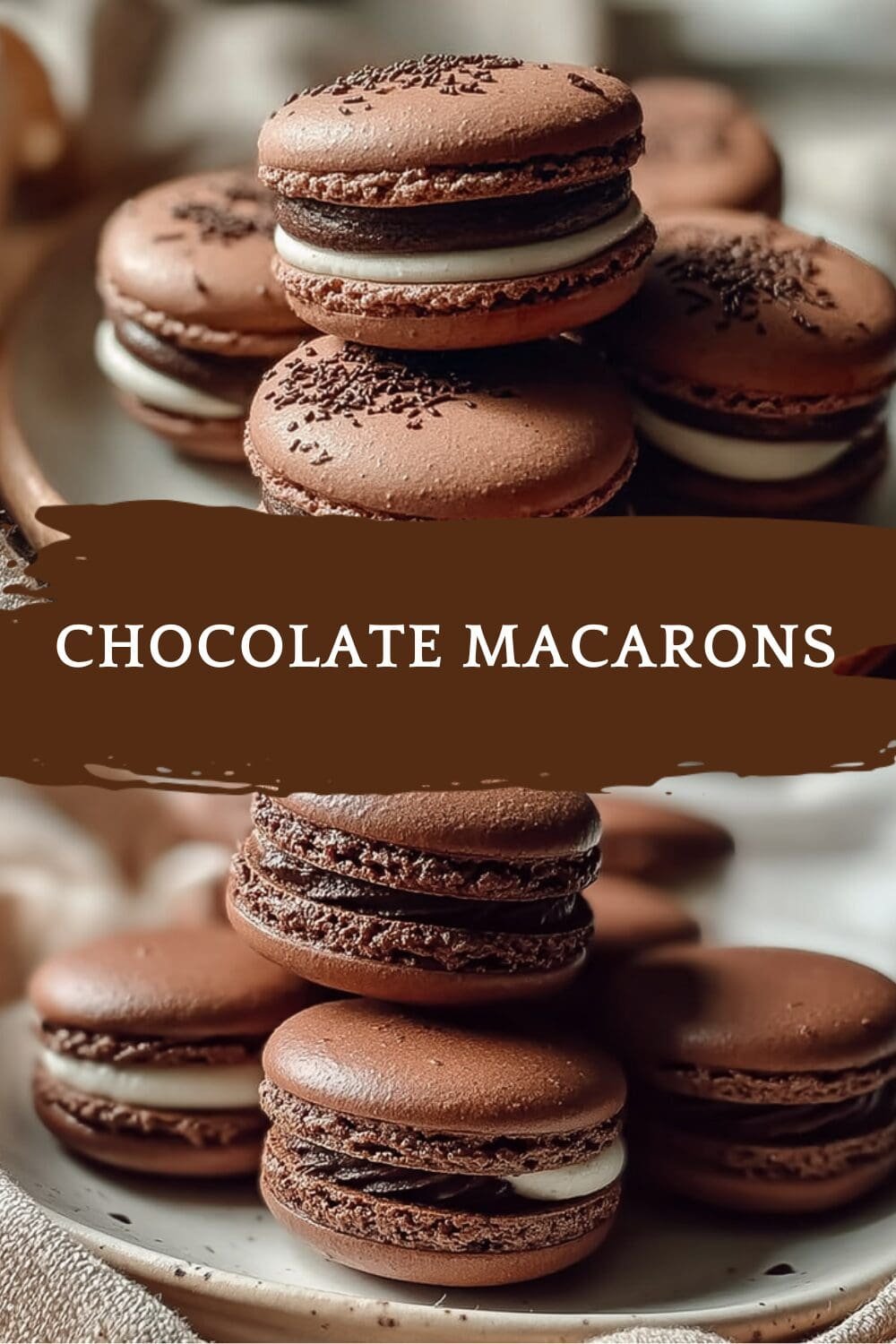
FAQs: Frequently Asked Questions About Chocolate Macarons
Why do my chocolate macarons crack or hollow out during baking?
Cracking and hollow shells are common issues caused by incorrect oven temperature or batter consistency. Make sure your oven is properly preheated and calibrated, ideally at 300°F (150°C). The batter should flow slowly off the spatula but hold its shape. Overmixing or undermixing can affect the texture. Also, allow the piped shells to rest for 30-60 minutes before baking until a thin skin forms to prevent cracks.
Can I substitute almond flour with other nut flours when making chocolate macarons?
Almond flour is the standard for macarons due to its fine texture and mild flavor, which ensures proper structure. Using other nut flours like hazelnut or pistachio can change the batter’s consistency and final texture, often making results unpredictable. If you want to experiment, try a small batch and adjust the drying time and mixing accordingly, but note it may require practice to get right.
How should I store chocolate macarons to keep them fresh?
Store macarons in an airtight container in the refrigerator for up to 5 days. Bring them to room temperature before serving to enjoy their soft interior and crisp shell. For longer storage, you can freeze filled macarons for up to a month; thaw in the refrigerator overnight to retain texture and flavor.
What’s the best way to make ganache filling for chocolate macarons so it isn’t too runny?
To avoid runny ganache, use a 2:1 ratio of chocolate to heavy cream for a thicker consistency. After heating the cream, pour it over chopped chocolate and let it sit for 1-2 minutes before stirring until smooth. Refrigerate the ganache for at least 2 hours until it firms up before filling the macarons. This helps the filling hold its shape and prevent spillage.
Will adding espresso powder to chocolate macarons affect the recipe’s stability?
Adding small amounts (around 1/4 teaspoon) of espresso powder can enhance the chocolate flavor without compromising stability, as long as it’s mixed in with the dry ingredients. Avoid adding liquid coffee or too much powder, which could alter the batter consistency and drying time. Test with a small batch first to verify results in your specific recipe.
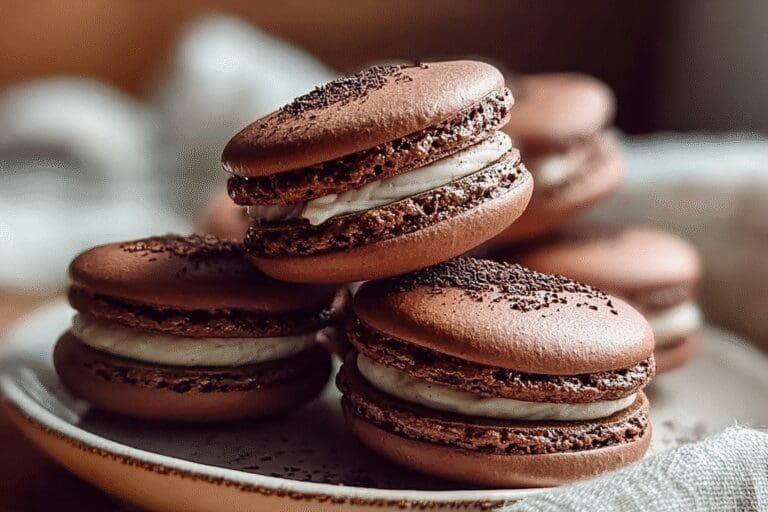
Chocolate Macarons
🍫 These Chocolate Macarons offer a delightful French treat with rich cocoa and a smooth ganache filling.
🍪 Perfect for special occasions or an elegant snack, they combine delicate texture with intense chocolate flavor.
- Total Time: 1 hour 8 minutes
- Yield: Makes about 20 macarons (40 shells)
Ingredients
– 50 grams Almond Flour (preferably superfine)
– 114 grams Powdered Sugar
– 7 grams Cocoa Powder
– 57 grams Egg Whites aged overnight in the fridge and brought to room temperature
– ⅛ teaspoon Cream of Tartar
– 28 grams Granulated Sugar
– ½ teaspoon Vanilla Extract
– 1 pinch Salt
– 2 ounces Heavy Cream
– 2.5 ounces Chocolate (semisweet, milk, or dark)
– ½ teaspoon Vanilla Extract
– ⅛ teaspoon Salt
Instructions
1-Phase 1: Preparation and Dry Ingredients: Start by preheating your oven to 320ºF (160ºC). It is crucial that your oven is fully heated before the cookies go in. Prepare a baking sheet by lining it with parchment paper. If you have a macaron template, place it under the parchment to guide your piping.
In a medium bowl, sift together the powdered sugar, cocoa powder, salt, and almond flour. Sifting twice might seem tedious, but it is essential for removing lumps and aerating the mixture. After sifting, pulse the dry ingredients in a food processor for about 8 to 10 times. This step further refines the texture, ensuring your shells are smooth and free of specks. This careful preparation of dry ingredients is the first secret to the best chocolate macarons recipe.
2-Phase 2: Making the Meringue: Ensure your mixing bowl and whisk are completely clean and grease-free. Any trace of fat can prevent the egg whites from whipping properly. Place the egg whites in the bowl and begin whipping on low speed until they become frothy. At this point, gradually add the granulated sugar in thirds. Do not dump it all in at once; adding it slowly allows it to dissolve completely.
Once the whites turn white and you can see visible whisk lines, add the cream of tartar. Increase the speed to medium and continue whipping until soft, glossy peaks form. Add the vanilla extract for flavor, then increase the speed to medium-high. Continue whipping until stiff peaks form and the mixture feels dense. You should be able to turn the bowl upside down without the mixture moving. This is the stage where you want to be careful not to overwhip, which can make the batter difficult to mix later.
3-Phase 3: Macaronage (The Folding Process): This is often considered the most critical step in how to make chocolate macarons. Add one-third of the almond mixture to the meringue. Fold it in gently but thoroughly using a spatula. Once mostly incorporated, add the rest of the dry ingredients. Continue folding until the batter is homogeneous.
You are looking for a specific consistency known as the “lava stage.” The batter should fall off your spatula in a slow, continuous ribbon and flow slowly like magma. If you lift the spatula, the ribbon should disappear into the batter within about 20 to 30 seconds. Under-mixed batter will leave peaks on the piped shells, while over-mixed batter will be too runny and spread flat. Finding this balance takes practice, but follow the visual cues closely.
4-Phase 4: Piping and Resting: Transfer the batter to a piping bag fitted with a round tip. Hold the bag perpendicular to the baking sheet and pipe 1-inch diameter rounds onto the parchment paper. Use the template if you have one to keep the sizes uniform. Once the tray is full, pick it up and drop it onto the counter from a height of about 5 to 6 inches. Do this 5 to 6 times. This helps release trapped air bubbles that could cause cracks during baking.
Inspect the shells and pop any large bubbles that rise to the surface with a toothpick. If there are rough peaks, smooth them out with a damp fingertip. Now, let the macarons rest uncovered at room temperature. This can take anywhere from 30 minutes to 2 hours, depending on the humidity. You are waiting for a dry crust to form on top. When you touch the surface gently, it should feel dry and not stick to your finger. If you live in a humid climate, a space heater can help speed up the drying process.
5-Phase 5: Baking and Cooling: Bake the macarons at 320ºF (160ºC) for 14 to 15 minutes. They are done when they are lightly browned and easily lift off the parchment paper. If they stick, give them another minute. Overbaking can dry them out too much, while underbaking can leave them stuck to the paper. Once baked, let them cool completely on the baking sheet before attempting to remove them. Trying to move them while warm can cause the tops to separate from the bottoms.
6-Phase 6: Preparing the Ganache: While the shells are cooling or baking, you can prepare the macaron filling. Place the heavy cream, chocolate, vanilla extract, and salt in a heatproof bowl. Microwave for one minute. Let the mixture sit for 5 minutes to allow the heat to melt the chocolate. Whisk until smooth. If there are still lumps, microwave for another 15 seconds.
Place the ganache in the refrigerator for 20 minutes. After chilling, whisk it again until the texture resembles peanut butter. This ensures the filling is thick enough to hold the cookies together without spilling out.
Last Step:
Please leave a rating and comment letting us know how you liked this recipe! This helps our business to thrive and continue providing free, high-quality recipes for you.Notes
🥚 Use room temperature egg whites or warm them in water to improve whipping.
🕰️ Aging egg whites overnight reduces moisture and strengthens the meringue.
🎯 Weigh and sift dry ingredients carefully for best texture and even mixing.
- Prep Time: 20 minutes
- Resting time: 20 minutes to 2 hours
- Cook Time: 15 minutes
- Category: Dessert, Snack, French Pastry
- Method: Baking
- Cuisine: French
Nutrition
- Serving Size: 1 macaron
- Calories: 81 kcal
- Sugar: 10 g
- Sodium: 40 mg
- Fat: 4 g
- Saturated Fat: 2 g
- Trans Fat: 0 g
- Carbohydrates: 11 g
- Fiber: 1 g
- Protein: 1 g
- Cholesterol: 4 mg