Why You’ll Love This Shrimp Tortellini
If you’re looking for a dinner that feels special but comes together quickly, this shrimp tortellini with creamy garlic sauce is about to become your new favorite meal. The combination of succulent shrimp, cheese-filled pasta, and rich sauce creates a dish that tastes like it came from a high-end restaurant, yet takes only 30 minutes from start to finish.
What makes this recipe truly special is how it balances convenience with incredible flavor. You don’t need advanced cooking skills or hours in the kitchen to create something impressive. Whether you’re cooking for a weeknight family dinner, hosting a weekend gathering with friends, or just want to treat yourself to something delicious after a long day, this dish delivers every time.
Ease of Preparation
This shrimp tortellini recipe is wonderfully simple, requiring minimal prep time and quick cooking, making it perfect for busy weeknights or last-minute dinners. The straightforward steps allow even beginners to achieve a delicious meal fast. With just 10 minutes of prep and 20 minutes of cooking time, you can have a restaurant-quality meal on the table faster than you can get delivery.
The beauty of this recipe lies in its streamlined process. You’ll cook the shrimp quickly in batches, then use the same pan to build the creamy garlic sauce while the tortellini boils. This efficient method means fewer dishes to wash and less time spent multitasking in the kitchen.
Health Benefits
Packed with high-quality protein from shrimp and enriched with nutrient-dense ingredients, this dish supports a balanced diet. Shrimp is an excellent source of lean protein, providing essential nutrients while keeping calories in check. According to research on shrimp health benefits, shellfish offers omega-3 fatty acids, selenium, and vitamin B12, all contributing to heart health and overall wellness.
The addition of fresh spinach adds important vitamins and minerals to the dish, making it a more complete meal. When paired with whole grain tortellini options, this recipe can be part of a balanced diet that doesn’t sacrifice flavor for nutrition.
Versatility
Shrimp tortellini is highly adaptable, lending itself well to various dietary needs. Whether you prefer gluten-free pasta, vegan alternatives, or low-calorie tweaks, this recipe can be customized without sacrificing flavor. You can easily swap ingredients based on what’s in your pantry or what your family prefers.
This versatility makes the recipe perfect for households with different dietary preferences or restrictions. One base recipe can please everyone at the table with just a few simple modifications. Whether you’re cooking for picky eaters, health-conscious family members, or guests with allergies, this recipe has you covered.
Distinctive Flavor
The combination of succulent shrimp with rich, cheese-filled tortellini and a complementary sauce creates a dish bursting with flavor. The unique blend of spices and fresh herbs elevates the taste, making it a standout option compared to other pasta dishes. The creamy garlic sauce provides the perfect balance of richness and brightness, while the red pepper flakes add just enough heat to keep things interesting.
What sets this recipe apart is how the flavors meld together. The shrimp provide a sweet, delicate seafood taste that pairs perfectly with the savory tortellini. The sauce brings everything together with its creamy texture and aromatic garlic notes. Each bite offers a perfect harmony of flavors that will have you coming back for seconds.
Pro tip: Always save a small cup of pasta water before draining. The starchy water helps create a silkier sauce and ensures your pasta clings to every delicious drop of that garlic cream sauce.
Jump to:
- Why You’ll Love This Shrimp Tortellini
- Ease of Preparation
- Health Benefits
- Versatility
- Distinctive Flavor
- Essential Ingredients for Shrimp Tortellini
- Main Ingredients
- Understanding the Ingredients
- Sauce Components Breakdown
- Fresh vs. Dried Ingredients
- Pantry Staples Worth Stocking
- How to Prepare the Perfect Shrimp Tortellini: Step-by-Step Guide
- Step 1: Prepare Your Ingredients
- Step 2: Start the Tortellini
- Step 3: Sear the Shrimp
- Step 4: Build the Sauce Foundation
- Step 5: Create the Creamy Base
- Step 6: Add Spinach and Seasonings
- Step 7: Combine Everything
- Dietary Substitutions to Customize Your Shrimp Tortellini
- Protein and Main Component Alternatives
- Dairy-Free Modifications
- Gluten-Free Options
- Vegetable, Sauce, and Seasoning Modifications
- Low-Calorie and Lighter Options
- Mastering Shrimp Tortellini: Advanced Tips and Variations
- Pro Cooking Techniques
- Flavor Variations
- Presentation Tips
- Make-Ahead Options
- Pairing Suggestions
- How to Store Shrimp Tortellini: Best Practices
- Refrigeration Guidelines
- Freezing Instructions
- Reheating Methods
- Meal Prep Considerations
- Quality Indicators and Safety
- FAQs: Frequently Asked Questions About Shrimp Tortellini
- Can I use frozen shrimp instead of fresh shrimp for shrimp tortellini?
- How do I prevent tortellini from sticking together when cooking?
- What sauce pairs best with shrimp tortellini?
- Can I make shrimp tortellini ahead of time and reheat it?
- Is shrimp tortellini a good source of protein and nutrients?
- Shrimp Tortellini
- Ingredients
- Instructions
- Last Step:
- Notes
- Nutrition
- Did you make this recipe?
Essential Ingredients for Shrimp Tortellini
The magic of this recipe lies in its simple yet high-quality ingredients. Each component plays a crucial role in creating the perfect balance of flavors and textures. Let’s break down everything you’ll need to make this memorable dish.
Main Ingredients
- 450 grams of large or jumbo shrimp (peeled and deveined)
- 500 grams of refrigerated cheese tortellini (such as three cheese, spinach and ricotta, or Italian sausage flavors)
- 2 tablespoons of olive or grapeseed oil
- 120 ml (1/2 cup) dry white wine
- 30 grams (2 tablespoons) unsalted butter
- 3 cloves minced garlic
- 2 tablespoons all-purpose flour
- 240 ml (1 cup) seafood or chicken stock
- 115 grams (1/2 cup) softened cream cheese
- 120 ml (1/2 cup) heavy cream
- Sea salt to taste
- 1 teaspoon dried basil
- 2 cups fresh baby spinach
- 1/4 teaspoon crushed red pepper flakes
- 60 grams (1/2 cup) freshly grated Parmesan cheese
Understanding the Ingredients
The quality of your shrimp makes a significant difference in this recipe. Large or jumbo shrimp provide that satisfying bite that stands up well to the creamy sauce. If possible, choose wild-caught shrimp for the best flavor, though farm-raised will work perfectly fine. The key is ensuring they’re properly thawed and patted dry before cooking to achieve that perfect sear.
For the tortellini, refrigerated varieties tend to have better texture and flavor than shelf-stable options. The three-cheese, spinach and ricotta, or Italian sausage flavors all pair beautifully with shrimp. The type of tortellini you choose can subtly change the character of the dish, so feel free to experiment with different fillings to find your favorite combination.
The white wine serves multiple purposes in this recipe. Not only does it add acidity and depth of flavor, but it also helps deglaze the pan after searing the shrimp, incorporating all those flavorful browned bits into your sauce. A dry white wine like Pinot Grigio or Sauvignon Blanc works best, though you can also substitute with additional seafood stock if you prefer to cook without alcohol.
Sauce Components Breakdown
The creamy garlic sauce is what truly makes this recipe special. The combination of butter, garlic, and flour creates a roux that forms the base of the sauce. This traditional technique ensures a smooth, lump-free texture that will coat your pasta perfectly. Adding cream cheese to the sauce gives it an extra richness and body that standard cream sauces sometimes lack.
Heavy cream brings luxurious texture, while the stock provides savory depth. The dried basil adds an herbaceous note that complements the garlic without overpowering the delicate shrimp. Finally, the Parmesan cheese adds salty, nutty notes that round out the entire dish, tying all the flavors together.
Fresh vs. Dried Ingredients
While fresh ingredients often yield the best results, this recipe uses a thoughtful balance of fresh and dried components. Fresh garlic provides that essential aromatic base that dried garlic simply can’t replicate. However, dried basil works beautifully in this cooked sauce as it maintains its flavor throughout the simmering process.
The fresh spinach adds both color and nutrition, wilting quickly in the hot sauce to create appealing green ribbons throughout the dish. When selecting spinach, look for vibrant green leaves without any signs of wilting or yellowing. The crushed red pepper flakes provide adjustable heat that allows you to customize the spiciness to your preference.
Pantry Staples Worth Stocking
Most of the ingredients in this recipe are likely already in your pantry or easy to find at any grocery store. Flour, salt, dried basil, red pepper flakes, and olive oil are kitchen staples that you’ll use again and again. Keeping these items on hand means you can whip up this impressive meal whenever the craving strikes.
While cream cheese and heavy cream might not be everyday items for all households, they’re worth having specifically for recipes like this that call for rich, indulgent sauces. If you cook with pasta frequently, consider keeping these ingredients in your refrigerator for whenever you want to add a touch of luxury to your meals.
How to Prepare the Perfect Shrimp Tortellini: Step-by-Step Guide
Now that we’ve gathered all our ingredients, let’s walk through the process of creating this delicious dish. Following these steps will ensure your shrimp tortellini turns out perfectly every time. The total preparation time is approximately 10 minutes, with about 20 minutes of cooking, for a total of 30 minutes, making this dish quick and satisfying.
Step 1: Prepare Your Ingredients
Before you begin cooking, it’s essential to prepare all your ingredients. Season the shrimp with all-purpose seasoning and set aside. Make sure your shrimp are peeled and deveined for convenience. This preparation step, often called mise en place, ensures a smooth cooking process without any last-minute scrambling.
Measure out all your sauce ingredients, including the oil, wine, butter, garlic, flour, stock, cream cheese, heavy cream, dried basil, spinach, red pepper flakes, and Parmesan cheese. Having everything ready before you start cooking means you can focus entirely on technique rather than searching for ingredients mid-recipe.
Step 2: Start the Tortellini
Bring a large pot of salted water to a boil. Once boiling, add the tortellini and cook according to package instructions, typically about 3-5 minutes for refrigerated varieties. You want the pasta al dente – tender but with a slight bite to the center. Overcooked tortellini will become mushy and won’t hold up well when combined with the sauce.
Before draining, remember to save about 1/2 cup of the pasta water. This starchy liquid is a secret weapon that can help adjust the consistency of your sauce later. Drain the tortellini well and set aside while you prepare the shrimp and sauce.
Step 3: Sear the Shrimp
Heat the oil in a large skillet over medium-high heat. Once hot, add half of the seasoned shrimp to the pan, being careful not to overcrowd. Sear for about 1-2 minutes per side until pink and just cooked through. Overcrowding the pan will cause the shrimp to steam rather than sear, resulting in less color and flavor.
Remove the first batch of shrimp and set aside on a plate. Repeat with the second batch of shrimp. Once all shrimp are cooked, remove them from the pan and set aside. The shrimp will finish cooking when returned to the sauce later, so it’s okay to remove them when they’re just barely opaque in the center.
Step 4: Build the Sauce Foundation
Reduce the heat to medium and deglaze the skillet with the white wine. Use a wooden spoon to scrape up any browned bits from the bottom of the pan – these add tremendous flavor to your sauce. Let the wine simmer for about 1-2 minutes to reduce slightly and cook off the alcohol.
Add the butter and minced garlic to the pan. Cook for about 1 minute, stirring constantly until the garlic is fragrant but not browned. Burnt garlic will taste bitter and ruin the delicate balance of flavors. The butter should be melted and bubbling, coating the garlic evenly.
Step 5: Create the Creamy Base
Sprinkle the flour over the garlic and butter mixture, stirring constantly to coat. Cook for about 1 minute to remove the raw flour taste. This creates a roux that will thicken your sauce without becoming gummy or lumpy.
Gradually whisk in the seafood or chicken stock, ensuring there are no lumps as you add it. Continue whisking as you add the softened cream cheese and heavy cream. Add the dried basil at this point, allowing it to infuse its flavor as the sauce simmers. Bring the mixture to a gentle simmer and cook for several minutes, stirring occasionally, until the sauce begins to thicken slightly.
Step 6: Add Spinach and Seasonings
Add the fresh baby spinach to the sauce, stirring until it wilts. This should only take 1-2 minutes. The spinach will shrink dramatically, so don’t worry if it seems like a lot at first. This step adds both nutrition and vibrant color to your dish.
Mix in the crushed red pepper flakes and freshly grated Parmesan cheese, stirring until the cheese has melted and is fully incorporated. Taste the sauce at this point and adjust the seasonings as needed, adding more salt or red pepper flakes according to your preference.
Step 7: Combine Everything
Add the cooked tortellini to the sauce, tossing gently to coat each piece. If the sauce seems too thick, add a splash of the reserved pasta water to reach the desired consistency. The sauce should generously coat the pasta without being overwhelming.
Finally, add the cooked shrimp back to the pan, gently folding them in to combine. You just want to warm the shrimp through, not cook them further. Serve immediately while everything is hot and the sauce is at its creamiest.
| Step | Action | Time | Tips |
|---|---|---|---|
| 1 | Prepare ingredients | 5 minutes | Season shrimp, measure sauce components |
| 2 | Cook tortellini | 3-5 minutes | Save pasta water before draining |
| 3 | Sear shrimp | 4-5 minutes | Cook in batches to prevent steaming |
| 4 | Deglaze pan & add garlic | 2-3 minutes | Scrape up browned bits for flavor |
| 5 | Create sauce base | 5-6 minutes | Whisk gradually to prevent lumps |
| 6 | Add spinach & seasonings | 2-3 minutes | Taste and adjust seasoning |
| 7 | Combine and serve | 1-2 minutes | Use pasta water if sauce needs thinning |

Dietary Substitutions to Customize Your Shrimp Tortellini
One of the wonderful aspects of this recipe is its adaptability. Whether you have dietary restrictions, preferences, or simply want to try something new, there are numerous ways to customize this dish while maintaining its delicious character. Let’s explore some substitutions that will help you make this recipe work for your specific needs.
Protein and Main Component Alternatives
If you’re not a fan of shrimp or have a shellfish allergy, there are excellent alternatives. Replace shrimp with marinated tofu or chickpeas for a plant-based option. Firm tofu, pressed to remove excess moisture and cubed, can be seasoned similarly to the shrimp and seared in the pan before being added to the sauce. Chickpeas, rinsed and patted dry, develop a delicious crispy exterior when pan-fried and add a lovely texture contrast to the pasta.
Scallops or cooked chicken breast are other excellent alternate proteins suited to different tastes and dietary requirements. Sea scallops, seared similarly to the shrimp, offer a luxurious sweetness that pairs beautifully with the garlic cream sauce. Leftover cooked chicken, shredded or cubed, makes this a great weeknight meal option when you need to use up leftovers.
Dairy-Free Modifications
For those who are lactose intolerant or following a dairy-free diet, several substitutions work well. Replace the butter with olive oil or a dairy-free butter alternative. The heavy cream can be swapped with full-fat coconut milk, which provides a similar rich texture, though it will add a subtle coconut flavor. For a more neutral taste, try a cashew cream made by blending soaked cashews with water.
The cream cheese can be replaced with a dairy-free cream cheese alternative or simply omitted and slightly increase the amount of other thickening agents. For the Parmesan cheese, nutritional yeast or a vegan Parmesan alternative made from nuts and nutritional yeast can provide that savory, cheesy flavor.
Gluten-Free Options
Making this recipe gluten-free is straightforward with a few simple swaps. Use gluten-free tortellini made from rice or corn flour to accommodate gluten sensitivities. Many brands now offer high-quality gluten-free pasta options that perform similarly to traditional varieties.
For the sauce, replace the all-purpose flour with an equal amount of gluten-free flour blend or cornstarch. If using cornstarch, mix it with a little cold liquid before adding to the sauce to prevent clumping. Always check labels on stock and other packaged ingredients to ensure they’re certified gluten-free, as hidden gluten can sometimes be found in surprising places.
Vegetable, Sauce, and Seasoning Modifications
Swap fresh baby spinach with other greens like kale or arugula for different nutritional profiles and flavors. Kale holds up well in the sauce and adds a heartier texture, while arugula brings a peppery bite that contrasts nicely with the rich cream sauce. If you prefer more vegetables, consider adding sliced bell peppers, zucchini, or peas.
Experiment with sauces by modifying the base. For a lighter option, reduce the heavy cream and increase the amount of stock. Try adding lemon zest and juice for a bright, citrusy version that’s perfect for spring meals. For a Mediterranean twist, incorporate sun-dried tomatoes and olives into the sauce.
Season with herbs like oregano, thyme, or tarragon instead of or in addition to the dried basil to introduce new flavor dimensions. Fresh herbs added at the end of cooking provide a bright pop of flavor, while dried herbs should be added earlier to allow their flavors to develop.
Low-Calorie and Lighter Options
If you’re watching calories but still want to enjoy this delicious dish, there are several ways to lighten it up. Opt for whole wheat or vegetable-based tortellini which offer more fiber and nutrients. Use light olive oil or cooking spray instead of regular olive oil to reduce fat content.
Substitute the heavy cream with half-and-half or evaporated milk for a lighter sauce. You can also use a combination of stock and milk to create a creamy texture with fewer calories. Increase the amount of vegetables like spinach to add bulk and nutrition without significantly increasing calories.
Consider using slightly less tortellini per serving and adding more shrimp or vegetables to create a more nutrient-dense meal with a better balance of macros. This strategy allows you to enjoy the flavors you love while meeting your dietary goals. As noted in research about pasta’s nutritional value, thoughtful portioning and ingredient quality can make pasta a part of a healthy diet.
Remember: When making substitutions, introduce one change at a time. This way, if something doesn’t taste quite right, you’ll know exactly which ingredient to adjust next time.
Mastering Shrimp Tortellini: Advanced Tips and Variations
Once you’ve mastered the basic recipe, you might want to take your shrimp tortellini to the next level. These professional techniques and creative variations will help you customize this dish to suit your taste and impress your dinner guests. Whether you’re cooking for a special occasion or just want to elevate your weeknight dinner, these tips will transform your dish from delicious to extraordinary.
Pro Cooking Techniques
For maximum flavor, marinate shrimp briefly in garlic and lemon juice before cooking. A simple 10-minute marinade with minced garlic, lemon juice, olive oil, and herbs infuses the shrimp with extra flavor that permeates every bite. Just be careful not to marinate longer than 30 minutes, as the acid can begin to “cook” the shrimp and alter its texture.
Use a sauté pan with high heat to get a slight sear on shrimp, enhancing texture and creating those flavorful browned bits that are essential to a good sauce. Pat the shrimp completely dry before cooking – excess moisture prevents proper searing. Let the pan get properly hot before adding the shrimp, and resist the urge to move them around until they’ve developed a golden crust on one side.
When making the sauce, temper the cream by gradually whisking a small amount of the hot liquid into it before adding it to the pan. This prevents the cream from separating when it hits the hot sauce. Always simmer gently rather than boil vigorously once cream is added to avoid curdling.
Flavor Variations
Incorporate Mediterranean spices such as smoked paprika or add capers and olives for a briny kick that transports your taste buds to the Italian coast. Sun-dried tomatoes packed in oil can be chopped and added to the sauce for concentrated tomato flavor and a chewy texture contrast.
Try a pesto sauce variation using fresh basil, pine nuts, and Parmesan. Simply swirl in prepared pesto at the end or make your own by blending fresh basil, pine nuts, garlic, Parmesan, and olive oil. The bright, herbaceous notes of pesto complement the shrimp beautifully while adding a different dimension to the dish.
For a Cajun-inspired version, season the shrimp with a Cajun spice blend before searing and add more to the sauce. This creates a spicy, flavorful dish with a Southern twist that’s sure to please those who enjoy a bit of heat. Consider adding andouille sausage or bell peppers to complete the Cajun experience.
Presentation Tips
Serve shrimp tortellini in shallow bowls garnished with microgreens and a drizzle of extra virgin olive oil. The contrast of the vibrant green microgreens against the creamy pasta creates visual appeal while adding a fresh, delicate flavor. A final grind of black pepper and extra Parmesan shavings completes the presentation.
Add edible flowers for visual appeal that makes this dish fit for a dinner party. Nasturtiums, pansies, or chive blossoms not only look beautiful but also add subtle flavors that complement the dish. Just be sure to use flowers specifically grown for culinary purposes.
Consider plating individual portions rather than serving family-style. Arrange the tortellini in a neat pile or circle in the center of the plate, arrange the shrimp on top, and drizzle sauce around the pasta. This restaurant-style presentation makes even a simple weeknight dinner feel special.
Make-Ahead Options
Prepare tortellini and sauce separately then combine just before serving. This prevents the pasta from absorbing too much sauce and becoming mushy. Both components can be made a day ahead and stored in airtight containers in the refrigerator.
The sauce actually benefits from being made ahead, as the flavors have time to meld and develop. Simply reheat gently before adding the cooked tortellini and shrimp. You may need to add a splash of water or stock when reheating to restore the proper consistency.
For meal prep, portion the completed dish into individual containers, allowing for some expansion when freezing. While pasta dishes don’t always freeze perfectly, this one fares better than many due to the creamy sauce. Thaw overnight in the refrigerator and reheat gently on the stovetop or in the microwave.
Pairing Suggestions
A crisp white wine like Pinot Grigio, Sauvignon Blanc, or dry Riesling pairs beautifully with shrimp tortellini, cutting through the richness of the cream sauce while complementing the delicate seafood. If you prefer red, a light Pinot Noir works without overpowering the dish.
For a non-alcoholic option, consider serving with sparkling water with a twist of lemon or a light, citrusy iced tea. The acidity and effervescence help cleanse the palate between bites of the rich pasta. During the holiday season, a festive glass of homemade eggnog makes a delightful after-dinner treat that complements the rich meal.
A simple green salad with a bright vinaigrette makes an excellent first course, providing contrast in both texture and flavor. For bread, a crusty baguette or garlic knots are perfect for soaking up any extra sauce.
When planning a complete meal, consider finishing with a light dessert like angel food cake topped with fresh berries. Its airy texture balances the richness of the pasta without being too heavy after such a satisfying main course.
Temperature matters! Serve your shrimp tortellini on warmed plates to ensure the dish stays hot throughout the meal. Cold plates cause pasta to cool too quickly, affecting both flavor and texture.
How to Store Shrimp Tortellini: Best Practices
While this dish is best enjoyed fresh, knowing how to properly store leftovers ensures you can enjoy your shrimp tortellini later without sacrificing quality. Proper storage techniques maintain the texture and flavor of the dish, preventing food waste and making meal prep more efficient. Here’s everything you need to know about storing your shrimp tortellini for maximum enjoyment.
Refrigeration Guidelines
Store leftover shrimp tortellini in airtight containers in the refrigerator for up to 2-3 days to preserve freshness and flavor. Allow the dish to cool completely before refrigerating to prevent condensation from making the pasta soggy. However, don’t leave the food at room temperature for more than 2 hours, as this can lead to bacterial growth.
For best results, separate the pasta and sauce if possible before storing. This prevents the tortellini from absorbing too much sauce and becoming mushy. Place each component in its own airtight container, or use a container with dividers. When ready to eat, simply reheat the sauce, warm the pasta, and combine them.
If you must store the dish already combined, add a splash of water or stock before sealing the container. This extra liquid helps maintain moisture during storage and reheating. Gently toss the pasta when you first store it to distribute the sauce evenly.
Freezing Instructions
For long-term storage, freeze the dish in portioned, sealed containers. Ensure it is cooled completely before freezing to avoid condensation and freezer burn; it can last 1-2 months. Portioning before freezing allows you to thaw only what you need, reducing waste and making meal prep more convenient.
Use freezer-safe containers or heavy-duty freezer bags. If using bags, squeeze out as much air as possible before sealing to prevent freezer burn. Label each container with the date and contents, as frozen foods can all look similar after a few weeks.
For the best results, consider freezing the sauce and pasta separately. The tortellini freezes better on its own, and the sauce maintains its texture without the pasta absorbing moisture during freezing. This method yields results much closer to the freshly made dish.
Reheating Methods
Gently reheat on the stovetop with a splash of water or broth to maintain moisture, or use a microwave on medium power. The stovetop method generally yields better results, allowing you to control the temperature and prevent the sauce from separating. Place the shrimp tortellini in a pan over low heat, adding liquid gradually until the desired consistency is reached.
If using the microwave, heat in short intervals, stirring between each to ensure even warming. Cover the container with a microwave-safe lid or paper towel to trap moisture, preventing the dish from drying out. Start with 1-minute intervals on medium power, adjusting as needed.
Avoid overcooking to retain the delicate texture of shrimp and pasta. The goal is to warm the dish through, not to cook it further. Shrimp can become rubbery if reheated too aggressively, and pasta can continue to soften, becoming mushy.
Meal Prep Considerations
When batch cooking, keep sauce and tortellini separate until ready to serve to maximize quality. Prepare both components ahead of time, perhaps on a Sunday, then simply reheat and combine throughout the week for quick, satisfying meals. This approach gives you the convenience of meal prep without the texture compromise that often comes with pre-combined pasta dishes.
Consider prepping individual portions in meal prep containers for grab-and-go lunches. This makes it easy to take your homemade shrimp tortellini to work or school. Pack a small container of extra sauce separately if you prefer a saucier pasta.
For variety, prepare different variations of the sauce while batch cooking. A classic garlic cream sauce one day, a Cajun-spiced version the next, and a pesto-inspired sauce for the third day. This prevents meal fatigue while still streamlining your prep work.
Quality Indicators and Safety
Always check your leftovers for signs of spoilage before consuming. If the shrimp tortellini has an off smell, unusual appearance, or slimy texture, it’s best to discard it. When in doubt, throw it out – foodborne illness is never worth the risk.
The shrimp should remain opaque and firm, not translucent or mushy. The sauce should be creamy without separation or graininess. If any mold has formed on the surface, discard the entire container, not just the affected area.
Remember that while proper storage extends the life of your leftovers, food quality does degrade over time. Even if technically safe to eat, shrimp tortellini stored for the maximum duration may not be as enjoyable as when freshly made. For the best experience, try to consume leftovers within the first day or two.
FAQs: Frequently Asked Questions About Shrimp Tortellini
Can I use frozen shrimp instead of fresh shrimp for shrimp tortellini?
Yes, frozen shrimp can be used in shrimp tortellini recipes. Thaw the shrimp completely by placing them in the refrigerator overnight or running them under cold water. Pat them dry to remove excess moisture before cooking to prevent sogginess. Using frozen shrimp is a convenient option and can be just as flavorful as fresh shrimp when prepared properly.
How do I prevent tortellini from sticking together when cooking?
To keep tortellini from sticking, use a large pot of boiling salted water and stir gently but frequently during the first few minutes of cooking. Adding a splash of oil to the water can also help reduce sticking. Once cooked, drain the tortellini promptly and toss with a small amount of sauce or olive oil to separate the pieces.
What sauce pairs best with shrimp tortellini?
Shrimp tortellini pairs well with creamy sauces like Alfredo or garlic butter sauce, which complement the shrimp without overpowering its flavor. Tomato-based sauces, such as marinara, can also work well if you prefer a lighter, tangier option. Choose a sauce that balances richness and enhances the seafood taste.
Can I make shrimp tortellini ahead of time and reheat it?
Yes, shrimp tortellini can be prepared ahead and stored in the refrigerator for up to 2 days. To reheat, warm it gently on the stovetop over low heat, adding a splash of broth or cream to maintain moisture and prevent drying out. Avoid overheating to keep the shrimp tender and the pasta from becoming mushy.
Is shrimp tortellini a good source of protein and nutrients?
Shrimp tortellini provides a balanced mix of protein, carbohydrates, and fats. Shrimp is a lean source of protein low in calories and rich in nutrients like selenium, vitamin B12, and omega-3 fatty acids. The pasta adds energy through carbohydrates, making this dish both satisfying and nutritious when paired with vegetables or leafy greens.
Shrimp Tortellini
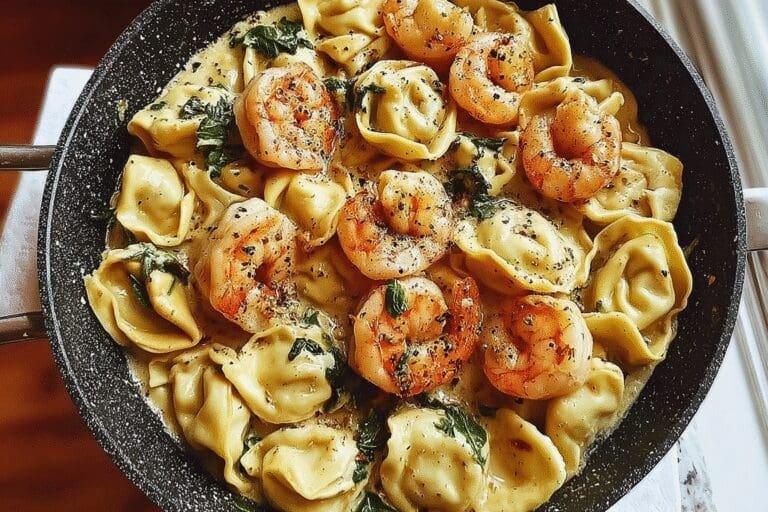
🦐 This Shrimp Tortellini with Creamy Garlic Sauce recipe offers a delicious and satisfying meal that combines tender shrimp with rich, velvety sauce.
🍝 Quick to prepare, this dish is perfect for weeknight dinners that deliver gourmet flavors in just 30 minutes.
- Total Time: 30 minutes
- Yield: 4 servings
Ingredients
– 450 grams large or jumbo shrimp (peeled and deveined)
– 500 grams refrigerated cheese tortellini (such as three cheese, spinach and ricotta, or Italian sausage flavors)
– 2 tablespoons olive or grapeseed oil
– 120 ml (1/2 cup) dry white wine
– 30 grams (2 tablespoons) unsalted butter
– 3 cloves minced garlic
– 2 tablespoons all-purpose flour
– 240 ml (1 cup) seafood or chicken stock
– 115 grams (1/2 cup) softened cream cheese
– 120 ml (1/2 cup) heavy cream
– Sea salt to taste
– 1 teaspoon dried basil
– 2 cups fresh baby spinach
– 1/4 teaspoon crushed red pepper flakes
– 60 grams (1/2 cup) freshly grated Parmesan cheese
Instructions
1-Step 1: Prepare Your Ingredients Before you begin cooking, it’s essential to prepare all your ingredients. Season the shrimp with all-purpose seasoning and set aside. Make sure your shrimp are peeled and deveined for convenience. This preparation step, often called mise en place, ensures a smooth cooking process without any last-minute scrambling. Measure out all your sauce ingredients, including the oil, wine, butter, garlic, flour, stock, cream cheese, heavy cream, dried basil, spinach, red pepper flakes, and Parmesan cheese. Having everything ready before you start cooking means you can focus entirely on technique rather than searching for ingredients mid-recipe.
2-Step 2: Start the Tortellini Bring a large pot of salted water to a boil. Once boiling, add the tortellini and cook according to package instructions, typically about 3-5 minutes for refrigerated varieties. You want the pasta al dente – tender but with a slight bite to the center. Overcooked tortellini will become mushy and won’t hold up well when combined with the sauce. Before draining, remember to save about 1/2 cup of the pasta water. This starchy liquid is a secret weapon that can help adjust the consistency of your sauce later. Drain the tortellini well and set aside while you prepare the shrimp and sauce.
3-Step 3: Sear the Shrimp Heat the oil in a large skillet over medium-high heat. Once hot, add half of the seasoned shrimp to the pan, being careful not to overcrowd. Sear for about 1-2 minutes per side until pink and just cooked through. Overcrowding the pan will cause the shrimp to steam rather than sear, resulting in less color and flavor. Remove the first batch of shrimp and set aside on a plate. Repeat with the second batch of shrimp. Once all shrimp are cooked, remove them from the pan and set aside. The shrimp will finish cooking when returned to the sauce later, so it’s okay to remove them when they’re just barely opaque in the center.
4-Step 4: Build the Sauce Foundation Reduce the heat to medium and deglaze the skillet with the white wine. Use a wooden spoon to scrape up any browned bits from the bottom of the pan – these add tremendous flavor to your sauce. Let the wine simmer for about 1-2 minutes to reduce slightly and cook off the alcohol. Add the butter and minced garlic to the pan. Cook for about 1 minute, stirring constantly until the garlic is fragrant but not browned. Burnt garlic will taste bitter and ruin the delicate balance of flavors. The butter should be melted and bubbling, coating the garlic evenly.
5-Step 5: Create the Creamy Base Sprinkle the flour over the garlic and butter mixture, stirring constantly to coat. Cook for about 1 minute to remove the raw flour taste. This creates a roux that will thicken your sauce without becoming gummy or lumpy. Gradually whisk in the seafood or chicken stock, ensuring there are no lumps as you add it. Continue whisking as you add the softened cream cheese and heavy cream. Add the dried basil at this point, allowing it to infuse its flavor as the sauce simmers. Bring the mixture to a gentle simmer and cook for several minutes, stirring occasionally, until the sauce begins to thicken slightly.
6-Step 6: Add Spinach and Seasonings Add the fresh baby spinach to the sauce, stirring until it wilts. This should only take 1-2 minutes. The spinach will shrink dramatically, so don’t worry if it seems like a lot at first. This step adds both nutrition and vibrant color to your dish. Mix in the crushed red pepper flakes and freshly grated Parmesan cheese, stirring until the cheese has melted and is fully incorporated. Taste the sauce at this point and adjust the seasonings as needed, adding more salt or red pepper flakes according to your preference.
7-Step 7: Combine Everything Add the cooked tortellini to the sauce, tossing gently to coat each piece. If the sauce seems too thick, add a splash of the reserved pasta water to reach the desired consistency. The sauce should generously coat the pasta without being overwhelming. Finally, add the cooked shrimp back to the pan, gently folding them in to combine. You just want to warm the shrimp through, not cook them further. Serve immediately while everything is hot and the sauce is at its creamiest.
Last Step:
Please leave a rating and comment letting us know how you liked this recipe! This helps our business to thrive and continue providing free, high-quality recipes for you.Notes
🦐 Ensure shrimp are peeled and deveined for easy eating.
🌿 If using frozen spinach, drain thoroughly to avoid watery sauce.
🍅 Optional ingredients like cherry tomatoes, sliced mushrooms, or crabmeat can add variety and flavor.
- Prep Time: 10 minutes
- Cook Time: 20 minutes
- Category: Main Dish, Pasta, Seafood
- Method: Sautéing, Simmering
- Cuisine: Italian
Nutrition
- Serving Size: 1 serving
- Calories: 520 kcal
- Sugar: 3 g
- Sodium: 760 mg
- Fat: 28 g
- Saturated Fat: 15 g
- Unsaturated Fat: 10 g
- Trans Fat: 0 g
- Carbohydrates: 40 g
- Fiber: 3 g
- Protein: 35 g
- Cholesterol: 180 mg