Why You’ll Love This Savory Soup Rice
Are you looking for a simple, comforting dish that comes together in minutes? This Savory Soup Rice is the perfect solution for busy weeknights, quick lunches, or whenever you need something delicious without spending hours in the kitchen. With just three main ingredients, this recipe transforms basic pantry staples into a satisfying meal that the whole family will enjoy.
This versatile dish adapts easily to whatever you have on hand, making it a go-to recipe for home cooks of all skill levels. Whether you’re a busy parent juggling multiple responsibilities, a student looking for budget-friendly meal options, or just someone who appreciates good food made simply, this Savory Soup Rice is sure to become a staple in your recipe collection.
What Makes This Recipe Special
The beauty of this Savory Soup Rice lies in its simplicity and versatility. By combining a cream-based soup, chicken broth, and rice, you create a dish that’s both comforting and flavorful. The soup provides a rich, creamy base while the broth adds depth of flavor, and the rice serves as the perfect canvas to absorb all those delicious tastes.
This recipe also supports various dietary preferences and restrictions. You can easily customize it to be gluten-free by choosing appropriate soup and broth options, or make it vegetarian or vegan by using plant-based alternatives. The mild base flavor makes it an excellent foundation for adding your favorite seasonings, vegetables, or proteins to create a completely personalized dish.
“This Savory Soup Rice has become my family’s favorite weeknight dinner. It’s so easy to customize, and my kids actually ask for seconds!” – Home Cook
The Benefits of Simple Cooking
In today’s fast-paced world, having recipes that require minimal ingredients and preparation time is invaluable. This Savory Soup Rice delivers on both fronts while still providing a satisfying, home-cooked meal. The total cooking time is just 15 minutes, with no additional prep time needed beyond rinsing the rice.
Simple cooking doesn’t mean sacrificing nutrition or flavor. This dish provides balanced macronutrients with 4 grams of protein, 26 grams of carbohydrates, and just 1 gram of fat per serving. It also contains essential vitamins and minerals like vitamin A, potassium, calcium, and iron, making it a wholesome choice for any meal.
For busy professionals and working parents, this recipe offers a perfect solution for those hectic weeknights when time is scarce but you still want to provide a nutritious, home-cooked meal. The minimal cleanup required after preparing this dish is another bonus that makes it appealing for everyday cooking.
Perfect for Every Occasion
This Savory Soup Rice isn’t just for quick weeknight dinners it’s versatile enough for various occasions. Serve it as a comforting side dish at Sunday dinner, bring it to potlucks and gatherings, or pack it for a satisfying lunch at work. Its universal appeal makes it a crowd-pleaser that works for different events and celebrations.
For special occasions, you can easily dress up this recipe with premium ingredients, additional vegetables, or proteins to create a more elegant presentation. Despite its humble origins, this dish can be transformed into something worthy of any dinner table with just a few thoughtful additions.
Jump to:
- Why You’ll Love This Savory Soup Rice
- What Makes This Recipe Special
- The Benefits of Simple Cooking
- Perfect for Every Occasion
- Essential Ingredients for Savory Soup Rice
- Understanding Your Ingredients
- Optional Additions to Customize Your Dish
- Understanding Rice Varieties
- How to Prepare the Perfect Savory Soup Rice: Step-by-Step Guide
- Preparation Tips for Success
- Step-by-Step Instructions
- Important Cooking Tips
- Troubleshooting Common Issues
- Serving Suggestions
- Dietary Substitutions to Customize Your Savory Soup Rice
- Vegan and Vegetarian Options
- Gluten-Free Adaptations
- Lower-Sodium and Heart-Healthy Variations
- Low-Carb and Keto Alternatives
- Mastering Savory Soup Rice: Advanced Tips and Variations
- Cooking Techniques for Perfect Texture
- Global Flavor Variations
- Presentation and Serving Suggestions
- Batch Cooking and Meal Prep
- How to Store Savory Soup Rice: Best Practices
- Refrigeration Guidelines
- Freezing Instructions
- Reheating for Best Quality
- Food Safety Considerations
- FAQs: Frequently Asked Questions About Savory Soup Rice
- What types of rice work best for savory soup rice recipes?
- How can I make savory soup rice more flavorful?
- Should I rinse rice before preparing savory soup rice?
- How do I adjust the water-to-rice ratio when cooking savory soup rice?
- Can savory soup rice be made gluten-free or vegan?
- Savory Soup Rice
- Ingredients
- Instructions
- Last Step:
- Notes
- Nutrition
- Did you make this recipe?
Essential Ingredients for Savory Soup Rice
The beauty of this recipe lies in its simplicity. With just three main ingredients, you can create a delicious, comforting dish that’s perfect for busy weeknights or when you need a quick meal solution. Here’s what you’ll need to make this Savory Soup Rice:
- One 10.75-ounce can of regular or low-sodium cream-based soup (such as chicken, mushroom, celery, or cheese)
- One 14.5-ounce can of chicken broth
- 1 cup of long-grain or basmati rice
These three pantry staples come together to create a dish that’s greater than the sum of its parts. The cream-based soup provides richness and flavor, while the chicken broth adds depth and helps cook the rice to perfection. The long-grain or basmati rice ensures a fluffy, non-sticky texture that pairs beautifully with the creamy sauce.
Understanding Your Ingredients
Each component plays a crucial role in this recipe. The cream-based soup not only adds flavor but also creates a velvety texture that coats the rice grains. Popular choices include cream of chicken, cream of mushroom, cream of celery, or cheddar cheese soup, depending on your taste preferences.
The chicken broth provides the necessary liquid for cooking the rice while infusing it with savory notes. For best results, consider using a high-quality broth or even homemade if you have it available. If you’re watching your sodium intake, low-sodium options work perfectly in this recipe.
The choice of rice is important for the final texture of your dish. Long-grain and basmati varieties are recommended because they cook up fluffy and separate, unlike shorter grain varieties which tend to be stickier. Before cooking, always rinse your rice under cold water until the water runs clear to remove excess starch.
Optional Additions to Customize Your Dish
While the basic recipe uses just three ingredients, this Savory Soup Rice serves as an excellent canvas for additional flavors. Consider adding any of these optional ingredients to customize your dish:
| Vegetables | Proteins | Seasonings |
|---|---|---|
| Diced carrots | Shredded chicken | Fresh herbs (parsley, thyme) |
| Frozen peas | Cooked shrimp | Garlic powder |
| Diced bell peppers | Diced steak | Paprika |
| Sliced mushrooms | Beans or lentils | Black pepper |
These additions can transform your Savory Soup Rice from a simple side dish into a complete, hearty meal. Just remember to adjust cooking times if adding raw vegetables or proteins that require more time to cook.
Understanding Rice Varieties
While this recipe calls for long-grain or basmati rice, understanding different rice varieties can help you customize the dish to your preferences. Here’s a brief overview of common rice types and how they work in this recipe:
- Long-grain rice: These grains remain separate and fluffy when cooked, making them perfect for this recipe. Basmati and jasmine are popular long-grain varieties that add subtle fragrance to the dish.
- Short-grain rice: These grains are stickier and more tender. While not ideal for the standard recipe, they can work if you prefer a more porridge-like consistency.
- Brown rice: A whole grain option that requires more liquid and longer cooking time. It adds a nutty flavor and additional nutrients but may need up to 45 minutes to cook thoroughly.
- Wild rice: Actually a semi-aquatic grass rather than true rice, it has a chewy texture and nutty flavor. It typically requires more liquid and longer cooking time than white rice.
- Instant rice: Pre-cooked and dehydrated, it cooks much faster than regular rice but may have a slightly different texture. Adjust cooking time to 5-8 minutes and reduce liquid slightly.
When experimenting with different rice varieties, remember that the liquid ratio and cooking time will need adjustment. Brown rice typically requires about 2.5 cups of liquid per cup of rice and longer cooking time, while instant rice needs less liquid and much less cooking time.
How to Prepare the Perfect Savory Soup Rice: Step-by-Step Guide
Creating this delicious dish couldn’t be easier. Follow these simple steps to make the perfect Savory Soup Rice every time. This foolproof method ensures tender, flavorful rice with a creamy consistency that will have everyone coming back for seconds.
Preparation Tips for Success
Before you begin cooking, take a moment to prepare your ingredients and workspace. For best results, rinse the rice under cold water until the water runs clear to remove excess starch. This simple step helps prevent sticky rice and improves the overall texture of your dish.
Choose a medium saucepan or pot with a heavy bottom to ensure even heating and prevent the rice from sticking to the bottom. Having all your ingredients measured and ready before you start cooking will make the process smoother and more enjoyable.
Step-by-Step Instructions
- Rinse 1 cup of long-grain or basmati rice under cold water until the water runs clear. Drain well and set aside.
- In a medium saucepan, combine one 10.75-ounce can of cream-based soup and one 14.5-ounce can of chicken broth.
- Whisk the soup and broth together until well combined and smooth.
- Add the rinsed rice to the saucepan and stir gently to combine with the liquid mixture.
- Place the saucepan over medium-high heat and bring the mixture to a boil, stirring occasionally.
- Once boiling, reduce the heat to low to maintain a gentle simmer.
- Cover the saucepan with a tight-fitting lid to trap the steam.
- Cook for 10-12 minutes, or until the rice is tender and has absorbed most of the liquid.
- Remove from heat and let it stand covered for 5 minutes. This allows the rice to finish cooking and the flavors to meld.
- Remove the lid and fluff the rice gently with a fork before serving.
Important Cooking Tips
Avoid lifting the lid during the cooking process as this releases essential steam needed for properly cooked rice. The trapped steam is what helps the rice cook evenly and become fluffy. If you’re using a glass lid, you can check the progress without removing it.
If you’re planning to add vegetables or proteins, consider when they should be introduced. Quick-cooking vegetables like frozen peas can be added during the last few minutes of cooking, while heartier vegetables might need to be pre-cooked or added earlier in the process.
For different rice varieties, you may need to adjust the cooking time and liquid ratio. Brown rice typically requires more liquid and a longer cooking time, while instant rice will need less time to cook. Always check the package instructions for your specific rice type as a reference point.
Troubleshooting Common Issues
Even experienced cooks can encounter challenges when making rice. Here are solutions to common problems that might arise when preparing Savory Soup Rice:
- Rice is too crunchy: Add a small amount of additional broth or water (about 1/4 cup), cover, and continue cooking for 5-10 more minutes. Check periodically until the desired texture is achieved.
- Rice is too mushy: Unfortunately, overcooked rice cannot be restored to its original texture. For future batches, reduce the cooking time by a few minutes or use slightly less liquid. For the current batch, consider incorporating it into soups or casseroles where texture is less critical.
- Rice is sticking to the bottom of the pot: This usually indicates the heat was too high or the pot doesn’t have a heavy enough bottom. For next time, use a heavy-bottomed pot and reduce the heat to maintain a gentle simmer rather than a vigorous boil.
- Rice is unevenly cooked: This can happen if the lid isn’t tight-fitting, allowing steam to escape. Make sure your lid fits properly and avoid lifting it during cooking. Stirring the rice once before reducing to a simmer can also help distribute the grains evenly.
- Dish is too salty: If using regular rather than low-sodium soup or broth, the final dish might be saltier than desired. Balance the saltiness by adding a squeeze of lemon juice, a splash of vinegar, or some diced vegetables. If the rice is already cooked, you can also mix in additional unsalted cooked rice to dilute the sodium content.
Remember that practice makes perfect. As you become more familiar with your stove, pots, and the specific rice varieties you use, you’ll develop an intuitive sense for the small adjustments needed to achieve perfect results every time.
Serving Suggestions
This Savory Soup Rice is delicious on its own, but it can also be served as a side dish alongside roasted meats, grilled fish, or your favorite vegetarian main course. Its creamy consistency makes it an excellent pairing for dishes with crispy textures or bold flavors that benefit from a milder counterpart.
For a complete meal, consider serving with a side of steamed vegetables or a crisp green salad with a vinaigrette dressing. The contrast between the creamy rice and fresh, crunchy vegetables creates a satisfying balance of textures and flavors.
For presentation, transfer the cooked rice to a serving bowl and garnish with freshly chopped herbs, a sprinkle of shredded cheese, or a few toasted nuts. These simple additions not only enhance the visual appeal but also add complementary flavors and textures.

Dietary Substitutions to Customize Your Savory Soup Rice
One of the best things about this Savory Soup Rice recipe is its versatility. Whether you have dietary restrictions or just want to try something different, there are countless ways to customize this dish to suit your needs and preferences.
Vegan and Vegetarian Options
Converting this recipe to a vegan or vegetarian version is simple. Replace the chicken broth with vegetable broth for a completely plant-based dish. When selecting your cream-based soup, be sure to check the ingredients list carefully. Many traditional cream soups contain chicken or meat products, but there are excellent plant-based alternatives available at most grocery stores.
For an extra protein boost in your vegetarian version, consider adding plant-based proteins like:
- Canned beans (black beans, kidney beans, or chickpeas)
- Lentils (red lentils cook quickly and work well)
- Tofu cubes (added toward the end of cooking)
- Textured vegetable protein
Making your own plant-based cream soup is another option. Simply blend silken tofu with vegetable broth and seasonings, or create a roux using plant-based butter and flour, then add vegetable milk and your preferred seasonings. This homemade approach allows you to control the ingredients completely and avoid processed additives.
Gluten-Free Adaptations
Making this recipe gluten-free requires careful ingredient selection. While rice is naturally gluten-free, the cream-based soup and broth may contain gluten or be processed in facilities that handle gluten-containing grains. Look for products that are certified gluten-free to avoid cross-contamination.
When shopping for gluten-free cream soups, you might find dedicated gluten-free brands or need to make your own simple roux-based sauce using gluten-free flour. Many health food stores now carry a variety of gluten-free condensed soup alternatives.
If you’re making your own gluten-free cream soup, start with a roux made from equal parts gluten-free all-purpose flour blend and fat (butter or oil). Cook this mixture for a minute or two to remove the raw flour taste, then gradually whisk in your liquid. Continue cooking until the sauce thickens to your desired consistency. Season generously to compensate for the milder flavor of gluten-free flours.
Lower-Sodium and Heart-Healthy Variations
If you’re watching your sodium intake, this recipe can easily be adapted to meet your needs. Start by choosing low-sodium versions of both the cream-based soup and chicken broth. Each 3/4 cup serving of the standard recipe contains about 163 mg of sodium, but this can be significantly reduced by using low-sodium ingredients.
For a heart-healthy version, consider these modifications:
- Use olive oil or avocado oil if you need to sauté any vegetables
- Increase vegetables to add fiber and nutrients
- Choose broth options with lower sodium content
- Limit added salt and season with herbs and spices instead
Remember that this recipe contains only 1 gram of fat per serving, making it a naturally low-fat option. The small amount of fat present comes primarily from the cream-based soup, so selecting lower-fat varieties when available can further reduce the fat content if desired.
To enhance flavor without adding sodium, incorporate: – Fresh herbs like basil, oregano, or thyme – A squeeze of lemon or lime juice for acidity – Toasted spices like cumin, coriander, or smoked paprika – Minced garlic or onion for aromatic depth – A dash of hot sauce for those who enjoy heat
Low-Carb and Keto Alternatives
For those following a low-carbohydrate or ketogenic diet, traditional rice may not fit your macronutrient goals. Fortunately, there are several excellent alternatives that can work in this recipe:
- Cauliflower rice: Use 2 cups of cauliflower rice in place of regular rice, and reduce cooking time to 5-7 minutes
- Shirataki rice: This low-calorie, zero-carb alternative can be used with minimal cooking adjustments
- Brokoli rice: Similar to cauliflower rice but with a slightly different nutrient profile
- Konjac rice: Another low-carb option that works well in creamy dishes
When using these alternatives, you may need to adjust the liquid quantity as they don’t absorb liquid in the same way as traditional rice. Start with less liquid and add more as needed to achieve your desired consistency.
For cauliflower rice, simply pulse fresh cauliflower florets in a food processor until they reach a rice-like consistency. You can also purchase pre-riced cauliflower in many grocery stores for added convenience. When cooking cauliflower rice in this recipe, add it during the last 5-7 minutes of cooking to prevent it from becoming mushy.
Shirataki and konjac rice are made from the konjac yam and contain almost no digestible carbohydrates. They come pre-packaged and usually require rinsing before use. These alternatives have a slightly different texture than traditional rice but work well in creamy dishes like Savory Soup Rice.
Mastering Savory Soup Rice: Advanced Tips and Variations
Once you’ve mastered the basic Savory Soup Rice recipe, you’ll want to explore the many ways to elevate this simple dish into something extraordinary. These advanced techniques and flavor variations will help you create restaurant-quality results in your own kitchen.
Cooking Techniques for Perfect Texture
The key to exceptional Savory Soup Rice lies in achieving the perfect texture. While the basic recipe yields delicious results, these professional techniques can take your dish to the next level:
Rice Toasting: Before adding the liquid, toast the rice in a small amount of oil or butter in your saucepan over medium heat for 2-3 minutes. This simple step develops a nutty flavor in the rice and helps the grains maintain their structure during cooking, resulting in a less mushy final product.
Layered Flavors: Build a flavor foundation by sautéing aromatic vegetables like diced onions, minced garlic, or shallots in the pot before adding the soup, broth, and rice. This creates depth of flavor that will permeate the entire dish.
Braising Technique: For a more intense flavor profile, consider using the braising technique. Brown your protein of choice first, remove it from the pan, then prepare the rice in the same pot to incorporate the fond (the flavorful brown bits) into your dish.
Pilaf Method: Try cooking this dish using the pilaf method. After sautéing aromatics, add the uncooked rice and stir to coat each grain with fat. This helps create individual grains that stay separate during cooking. Then add your liquids and proceed with the recipe as directed.
Global Flavor Variations
This versatile recipe serves as an excellent canvas for international flavor profiles. By simply changing the cream-based soup and adding a few strategic seasonings, you can transport your Savory Soup Rice to different culinary destinations:
| Flavor Profile | Soup Base | Key Seasonings |
|---|---|---|
| Italian | Cream of mushroom | Dried oregano, basil, garlic powder |
| Southwestern | Cream of chicken | Cumin, chili powder, smoked paprika |
| Asian-Inspired | Cream of celery | Ginger, lemongrass, soy sauce |
| French | Cheese soup | Herbes de Provence, thyme |
| Cajun | Cream of mushroom | Cajun seasoning, cayenne pepper |
For an Asian-inspired version, try adding fresh ginger and lemongrass to the pot along with the other ingredients. The bright, zesty flavors pair beautifully with the creamy base and create an unexpected but delicious fusion.
To achieve a smoky depth, incorporate smoked paprika or a small amount of liquid smoke. This works particularly well with chicken or mushroom-based soups and adds complexity without overwhelming the other flavors.
For a Mediterranean twist, use cream of mushroom soup as your base and add sun-dried tomatoes, kalamata olives, and fresh basil. Finish with a sprinkle of crumbled feta cheese just before serving for an authentic taste of the Mediterranean.
Presentation and Serving Suggestions
The way you present your Savory Soup Rice can transform it from a humble side dish into an impressive main course. Consider these presentation tips to elevate the visual appeal of your dish:
- Serve in rustic bowls and garnish with freshly chopped parsley, chives, or green onions for a pop of color
- Top with toasted nuts or seeds like sliced almonds, pine nuts, or pumpkin seeds for added texture
- Create a pattern with contrasting vegetables like diced red bell peppers or green peas
- Finish with a sprinkle of shredded cheese or a drizzle of high-quality olive oil
For a complete meal presentation, consider serving your Savory Soup Rice alongside complementary dishes. A crisp green salad with a tangy vinaigrette can cut through the richness of the creamy rice. Roasted vegetables with caramelized edges provide textural contrast and additional nutrients.
If you’re hosting a gathering, consider setting up a Savory Soup Rice bar where guests can customize their bowls with various toppings. This interactive dining experience is both fun and practical, allowing everyone to create their perfect combination.
Batch Cooking and Meal Prep
This Savory Soup Rice is an excellent candidate for meal prep and batch cooking. The recipe scales up easily, allowing you to prepare multiple servings at once with minimal additional effort. Here’s how to successfully batch cook and store this dish:
When doubling or tripling the recipe, use a larger pot to ensure even cooking. You may need to extend the cooking time slightly, but avoid increasing the heat, as this can cause the bottom to burn before the rice is fully cooked.
After cooking, allow the rice to cool completely before transferring to storage containers. This prevents condensation from forming and making the rice soggy. Portion into individual containers for grab-and-go convenience during busy weekdays.
For freezer-friendly meal prep, cool the rice completely, then transfer to freezer-safe bags or containers. Remove as much air as possible to prevent freezer burn. Label with the date and reheating instructions for easy reference later.
Consider preparing “Savory Soup Rice kits” for even easier meal prep. Place the uncooked rice in a bag or container with a label indicating how much soup and broth to add. This approach allows you to have meal components ready with minimal prep time when you’re ready to cook.
How to Store Savory Soup Rice: Best Practices
Proper storage is essential for maintaining the quality, flavor, and safety of your Savory Soup Rice. Whether you’re storing leftovers or meal prepping for the week ahead, following these storage guidelines will ensure your rice remains delicious and safe to eat.
Refrigeration Guidelines
After cooking, cool the rice thoroughly before refrigeration. Leaving cooked rice at room temperature for extended periods can lead to bacterial growth, so aim to refrigerate within 2 hours of cooking. For faster cooling, spread the rice in a shallow container or place the pot in an ice water bath.
Store your Savory Soup Rice in airtight containers to prevent moisture loss and absorption of odors from other foods in your refrigerator. When properly stored, it will maintain its quality for 4-6 days in the refrigerator.
Before refrigerating, consider dividing the rice into portion-sized containers. This not only makes meal planning easier but also means you only reheat what you need, reducing food waste and preserving the quality of remaining portions.
Freezing Instructions
Freezing is an excellent option for extending the life of your Savory Soup Rice. When properly frozen, it will maintain its quality for 2-3 months. Follow these steps for the best freezing results:
- Cool the rice completely to room temperature
- Transfer to freezer-safe bags or containers
- Remove as much air as possible to prevent freezer burn
- Label with the date and contents
- Place in the freezer, ideally not stacked until completely frozen
For easiest reheating, freeze individual portions rather than one large container. This allows you to thaw only what you need, maintaining better quality for future servings.
When using freezer bags, flatten them to create a thin, even layer. This shape freezes more quickly and thaws more evenly, resulting in better texture when reheated.
Reheating for Best Quality
Proper reheating is just as important as proper storage to maintain the quality and safety of your Savory Soup Rice. When reheating, ensure the rice reaches 165°F throughout to eliminate any potential bacteria growth.
For refrigerated rice, you can reheat using one of these methods:
- Stovetop: Place in a saucepan with a splash of water or broth, cover, and heat over medium-low, stirring occasionally until heated through
- Microwave: Transfer to a microwave-safe dish, add a splash of water, cover, and heat in 1-minute intervals, stirring between each, until hot throughout
- Oven: Place in an oven-safe dish, cover with foil, and bake at 350°F until heated through, approximately 15-20 minutes
For frozen rice, thaw in the refrigerator overnight before reheating using the methods above. If reheating from frozen, increase the time accordingly and stir more frequently to ensure even heating.
Important food safety note: Avoid reheating Savory Soup Rice more than once. Repeated cooling and reheating can increase the risk of foodborne illness. Only reheat the portion you plan to eat immediately.
Food Safety Considerations
Cooked rice requires special attention to food safety due to the potential presence of Bacillus cereus spores, which can survive cooking and multiply if rice is left at unsafe temperatures. Following these guidelines will keep your Savory Soup Rice safe to eat:
- Never leave cooked rice at room temperature for more than 2 hours
- Cool rice quickly by spreading it in a shallow container or using an ice bath
- Store at 40°F or below in the refrigerator
- Reheat to 165°F throughout before serving
- Discard any rice that has been left at room temperature for more than 2 hours
By following these storage and reheating guidelines, you can enjoy your Savory Soup Rice safely throughout the week, reducing food waste while always having a delicious meal ready to heat and eat.
FAQs: Frequently Asked Questions About Savory Soup Rice
What types of rice work best for savory soup rice recipes?
Long-grain varieties like basmati, jasmine, or standard long-grain rice are ideal for savory soup rice because they stay fluffy and less sticky. Instant white rice such as Minute Rice can also be used for quicker cooking but may alter texture slightly. When using instant rice, reduce cooking time to around 5 to 8 minutes and skip rinsing since it’s pre-cooked.
How can I make savory soup rice more flavorful?
Cooking rice in broth or stock instead of water adds depth and richness. Adding condensed soups like cream of mushroom or chicken boosts creaminess and taste. Incorporating fresh or dried herbs—such as thyme, parsley, or rosemary—further enhances flavor. Toasting the rice briefly before adding liquids also brings a nutty note.
Should I rinse rice before preparing savory soup rice?
Yes, rinsing rice under cold water removes excess surface starch that can cause the rice to become sticky or clumpy during cooking. Rinsing until the water runs clear helps keep rice grains separate and improves the texture of your dish.
How do I adjust the water-to-rice ratio when cooking savory soup rice?
For basmati, jasmine, or long-grain rice, the standard ratio is typically 2 parts liquid to 1 part rice. When using broth or condensed soup, combine liquids to reach this ratio. If using thicker soups, you might need slightly more broth or water to ensure the rice cooks evenly and absorbs enough moisture.
Can savory soup rice be made gluten-free or vegan?
Yes, savory soup rice can suit gluten-free and vegan diets by choosing appropriate ingredients. Use gluten-free labeled soups and broths to avoid gluten contamination. For a vegan version, select plant-based broths and condensed soups free from animal products. Always read product labels carefully to confirm dietary compatibility.
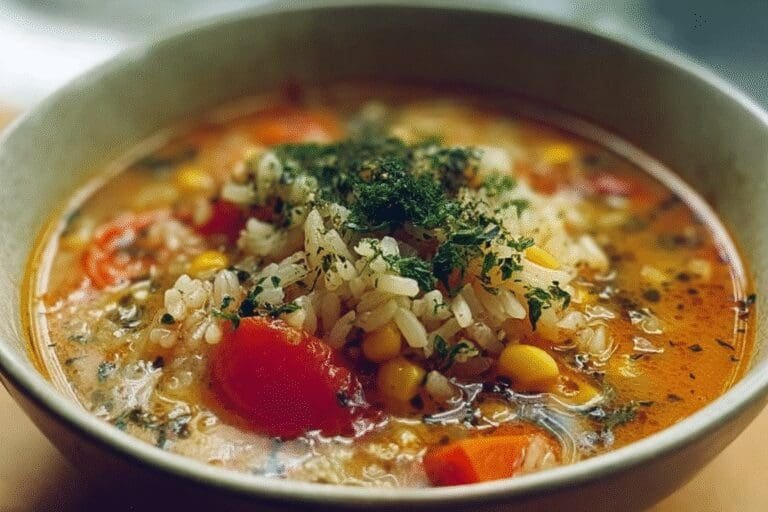
Savory Soup Rice
🍚 Savory Rice Recipe With 3 Simple Ingredients offers a quick, easy meal solution that’s both flavorful and adaptable.
⏱️ With minimal prep and cook time, this dish is perfect for busy days when you want delicious homemade food fast.
- Total Time: 15 minutes
- Yield: 4 servings
Ingredients
– One 10.75-ounce can of regular or low-sodium cream-based soup (such as chicken, mushroom, celery, or cheese)
– One 14.5-ounce can of chicken broth
– 1 cup long-grain or basmati rice
– Diced carrots
– Frozen peas
– Diced bell peppers
– Sliced mushrooms
– Shredded chicken
– Cooked shrimp
– Diced steak
– Beans or lentils
– Fresh herbs (parsley, thyme)
– Garlic powder
– Paprika
– Black pepper
Instructions
1-Rinse 1 cup of long-grain or basmati rice under cold water until the water runs clear. Drain well and set aside.
2-In a medium saucepan, combine one 10.75-ounce can of cream-based soup and one 14.5-ounce can of chicken broth.
3-Whisk the soup and broth together until well combined and smooth.
4-Add the rinsed rice to the saucepan and stir gently to combine with the liquid mixture.
5-Place the saucepan over medium-high heat and bring the mixture to a boil, stirring occasionally.
6-Once boiling, reduce the heat to low to maintain a gentle simmer.
7-Cover the saucepan with a tight-fitting lid to trap the steam.
8-Cook for 10-12 minutes, or until the rice is tender and has absorbed most of the liquid.
9-Remove from heat and let it stand covered for 5 minutes. This allows the rice to finish cooking and the flavors to meld.
10-Remove the lid and fluff the rice gently with a fork before serving.
Last Step:
Please leave a rating and comment letting us know how you liked this recipe! This helps our business to thrive and continue providing free, high-quality recipes for you.Notes
🍚 Rinse the rice thoroughly to prevent it from becoming sticky.
🍲 Use a heavy-bottomed pot to ensure even cooking and prevent burning or sticking.
⏳ Do not lift the lid during cooking to keep the steam trapped for perfect rice texture.
- Prep Time: 0 minutes
- Cook Time: 15 minutes
- Category: Side Dish, Main Dish
- Method: Simmering
- Cuisine: American
Nutrition
- Serving Size: 3/4 cup cooked rice
- Calories: 134 kcal
- Sugar: 3 g
- Sodium: 163 mg
- Fat: 1 g
- Saturated Fat: 1 g
- Carbohydrates: 26 g
- Fiber: 1 g
- Protein: 4 g
- Cholesterol: 2 mg