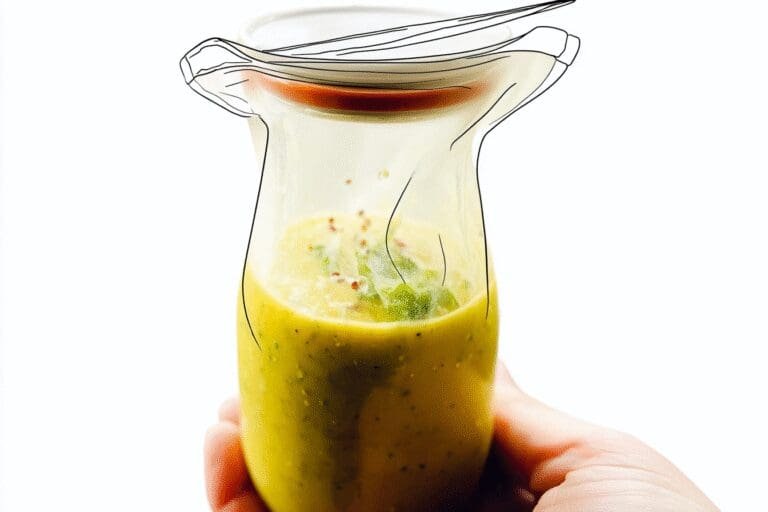
Ingredients
3 tablespoons olive oil (preferably extra-virgin, good-quality) This serves as the base, providing a rich, smooth texture and healthy fats that support heart health and add a deep, fruity flavor to the dressing.
1 small garlic clove, pressed or minced (or 1/2 teaspoon garlic powder) Garlic adds a pungent, aromatic element that enhances the overall taste, offering potential anti-inflammatory benefits while making the dressing more savory.
1 tablespoon freshly-squeezed lemon juice (or any preferred vinegar such as red wine, balsamic, sherry, white wine, or apple cider) This ingredient brings acidity and brightness, helping to balance flavors and aid in emulsification for a smooth consistency.
1 teaspoon creamy Dijon mustard (can be adjusted or replaced with whole-grain Dijon) Mustard acts as an emulsifier to blend the ingredients and adds a mild sharpness, which can be intensified for a bolder taste or altered for texture preferences.
1/2 teaspoon fine sea salt Salt enhances the flavors of all other ingredients, helping to draw out their natural tastes and ensuring the dressing isn’t bland.
1/4 teaspoon freshly-cracked black pepper (adjust to taste) This adds a subtle warmth and spice, improving the dressing’s complexity and allowing for personalization based on heat tolerance.
Instructions
1-First Step: Begin by measuring out all your ingredients precisely in a small bowl or measuring cup to avoid any mistakes. For instance, add 3 tablespoons of olive oil first, as it forms the base of your salad dressing and helps blend the other flavors. This step is adaptable if you’re watching calories; simply use a bit less oil for a lighter version without altering the core taste.
2-Second Step: Next, incorporate the garlic by pressing or mincing 1 small clove, or use 1/2 teaspoon of garlic powder for a faster option. This adds a fresh, aromatic punch that can be adjusted for dietary needs, like omitting it entirely if you’re sensitive to strong flavors. Stir it into the olive oil to let the flavors start melding, which is key for building a cohesive dressing texture.
3-Third Step: Now, pour in 1 tablespoon of freshly-squeezed lemon juice or your chosen vinegar, such as red wine or balsamic, to introduce acidity. This not only brightens the dressing but also aids in preservation, making it suitable for vegan or gluten-free diets as is. Whisk everything together gently at this stage to ensure even distribution, and taste for adjustments based on your preferences.
4-Fourth Step: Add 1 teaspoon of creamy Dijon mustard, along with 1/2 teaspoon of fine sea salt and 1/4 teaspoon of freshly-cracked black pepper, stirring them in thoroughly. The mustard helps emulsify the mixture, creating a creamy consistency that’s ideal for coating salads, and you can swap it for whole-grain Dijon if you want more texture. For dietary variations, reduce the salt for low-sodium options or skip it if you’re on a restricted diet, ensuring the dressing remains versatile.
5-Final Step: Once all ingredients are combined, whisk vigorously until fully blended, or shake in a jar for about 30 seconds for a quick mix. If you’re making a larger batch, pulse it in a blender to get a smoother result, especially with fresh garlic. Serve immediately over your favorite salad, or store it in the refrigerator for up to 7 days if using vinegar; remember to shake or stir before using to refresh the flavors. This simple process makes salad dressing an effortless addition to your routine, perfect for busy parents or food enthusiasts looking for quick meal prep tips.
Last Step:
Please leave a rating and comment letting us know how you liked this recipe! This helps our business to thrive and continue providing free, high-quality recipes for you.Notes
🫒 Use a high-quality extra-virgin olive oil for the best flavor.
🧄 Fresh garlic is preferred for taste, but garlic powder works as a quicker alternative.
🍯 Add 1-2 teaspoons of honey or maple syrup for a sweeter variation.
- Prep Time: 5 minutes
- Cook Time: 0 minutes
- Category: Condiment
- Method: Whisking or Shaking
- Cuisine: International
- Diet: Vegan, Gluten-Free, Vegetarian
Nutrition
- Serving Size: 2 tablespoons
- Calories: 120
- Sugar: 0g
- Sodium: 280mg
- Fat: 14g
- Saturated Fat: 2g
- Unsaturated Fat: 12g
- Trans Fat: 0g
- Carbohydrates: 0g
- Fiber: 0g
- Protein: 0g
- Cholesterol: 0mg