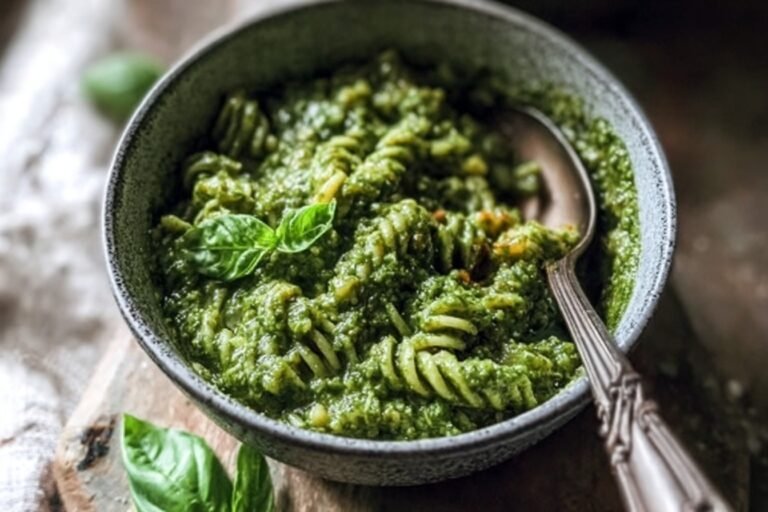
Ingredients
– 2 cups Thai basil leaves, packed, washed, and dried
– 2 tablespoons roasted unsalted cashew nuts
– 2 tablespoons roasted unsalted peanuts
– 2 crushed garlic cloves
– 1/2 teaspoon chilli flakes
– 60 milliliters olive oil or sesame oil
– 1/2 teaspoon sea salt or 1 teaspoon soya sauce or tamari
– 1 teaspoon rice wine vinegar
– 1 teaspoon caster sugar
– Juice from 1/2 lime, to taste
Instructions
1-First step: wash and dry the basil Start by washing 2 cups of Thai basil leaves well. Shake off the water, then pat them dry or let them air dry until there is no visible moisture. This matters because extra water can make the pesto thin and can shorten its shelf life. Since Thai basil leaves are sturdy, they hold up well once dried and ready for blending.
2-Second step: gather and measure everything Before blending, measure out all your ingredients so the process feels smooth. You will need the roasted cashews, roasted peanuts, crushed garlic cloves, chilli flakes, oil, salt or soya sauce or tamari, rice wine vinegar, caster sugar, and lime juice. Having everything ready also helps you taste and adjust faster at the end.
3-Third step: add the basil and flavor builders to the processor Place the dried basil leaves into a mini food processor. Add the cashews, peanuts, garlic, chilli flakes, oil, sea salt or soya sauce or tamari, rice wine vinegar, caster sugar, and lime juice. If you are using sesame oil, expect a nuttier finish. If you want a lighter taste, olive oil is a nice choice.
4-Fourth step: blend into a paste Pulse the mixture a few times first so the nuts and garlic break down. Then blend until the ingredients form a thick paste. Stop a few times to scrape down the sides of the bowl so every bit gets mixed in. If the blades start struggling, add a tiny splash more oil, just enough to help it move. You can keep the texture chunky if you like a rustic pesto, or blend longer for a smoother sauce.
5-Fifth step: taste and adjust Once the pesto looks blended, taste it. This is where you make it yours. Add more lime juice if it needs brightness. If you want more heat, add a little more chilli flakes. If the flavor seems flat, a tiny pinch more salt or a splash of tamari can help. The best Thai Basil Pesto usually has a mix of salty, citrusy, herby, and nutty notes all working together.
6-Final step: store or serve Spoon the pesto into a clean jar or airtight container. Drizzle a thin layer of oil over the top to cover the surface, then seal tightly. It can be refrigerated for up to a week or frozen for up to 4 months. Serve it right away on toast with avocado and tomato, stirred into noodles or pasta, spooned over rice, or used as a condiment for steak, chicken, or fish. It is also great spread on crackers for a quick snack.
Last Step:
Please leave a rating and comment letting us know how you liked this recipe! This helps our business to thrive and continue providing free, high-quality recipes for you.Notes
💡 If short on Thai basil, supplement with Italian basil leaves for a hybrid flavor.
🥜 Use only cashews or peanuts if you prefer a single nut texture.
🌶️ Start with 1/2 teaspoon chili flakes for mild heat and increase to taste for more spice.
- Prep Time: 15 minutes
- Cook Time: 0 minutes
- Category: Sauces & Condiments
- Method: Food Processor
- Cuisine: Thai-Italian Fusion
- Diet: Vegan
Nutrition
- Serving Size: 2 tablespoons
- Calories: 794 kcal (total)
- Sugar: 5g
- Sodium: 1190mg
- Fat: 79g
- Saturated Fat: 11g
- Unsaturated Fat: 65g
- Trans Fat: 0g
- Carbohydrates: 17g
- Fiber: 4g
- Protein: 11g
- Cholesterol: 0mg