Why You'll Love This Homemade Bread
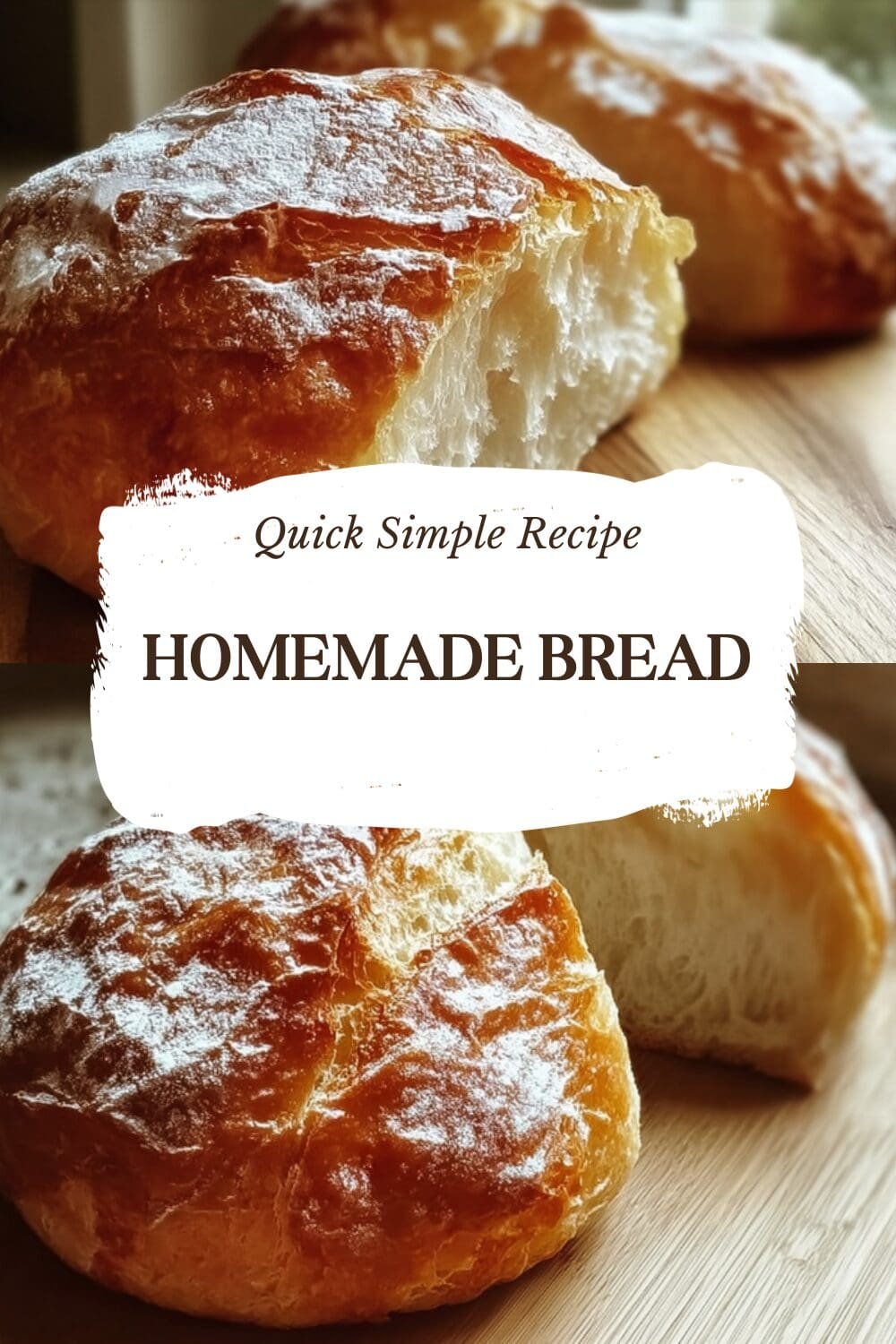
Nothing beats the smell of fresh homemade bread baking in your kitchen. This recipe delivers soft, fluffy loaves that are perfect for sandwiches, toast, or just tearing apart with butter. Whether you are a busy parent whipping up dinner or a baking enthusiast trying something new, this homemade bread fits right into your routine.
One big reason folks rave about this homemade bread is its ease of preparation. You only need a handful of basic ingredients you probably have on hand already. Prep takes just 15 minutes, bake time is 30 minutes, and with about 3 hours total rise time, the full process clocks in at around 3 hours and 45 minutes. No fancy gadgets required, making it ideal for beginners or anyone short on time.
- Ease of preparation: This homemade bread recipe is simple to follow with minimal ingredients and quick cooking time, making it perfect for both beginners and busy individuals like students or working professionals.
- Health benefits: Packed with wholesome, natural ingredients, this bread provides essential nutrients, fiber, and supports overall wellness. Each serving offers 202 calories, 41g carbs, 5g protein, and 2g fat, plus key minerals like iron and calcium. It stands out as a nutritious swap for store-bought options loaded with preservatives.
- Versatility: Adapt it for vegan diets with plant-based oil, or tweak for other needs. Tips include using bread flour for chewiness or all-purpose for softness. You can even add mix-ins like raisins for fun twists.
- Distinctive flavor: Fresh yeast, honey or sugar, and proper rising create a rich, irresistible taste far better than anything from the supermarket. Brush with butter right out of the oven for that golden touch.
For diet-conscious eaters or seniors wanting lighter options, this homemade bread keeps sodium at 196mg per serving and fiber at 1g. Travelers or newlyweds setting up house will appreciate how it turns simple meals into special ones. Party hosts love slicing it for crowds.
This homemade bread is so simple you can't mess it up, and soon enough you'll have a fresh, soft loaf ready to enjoy with your favorite fillings.
Imagine slathering it with jam for breakfast or using it for [garlic bread](https://maestrorecipe.com/garlic-bread-3/) at your next gathering. It brings families together around the table.
Jump to:
- Why You'll Love This Homemade Bread
- Essential Ingredients for Homemade Bread
- Main Ingredients
- Special Dietary Options
- Nutritional Information Per Serving
- How to Prepare the Perfect Homemade Bread: Step-by-Step Guide
- Preparation Times Summary
- Dietary Substitutions to Customize Your Homemade Bread
- Protein and Main Component Alternatives
- Vegetable, Sauce, and Seasoning Modifications
- Mastering Homemade Bread: Advanced Tips and Variations
- How to Store Homemade Bread: Best Practices
- FAQs: Frequently Asked Questions About Homemade Bread
- Do I need a bread maker or stand mixer to make homemade bread?
- Can I use Instant yeast instead of Active Dry yeast in homemade bread recipes?
- How can I make homemade bread dough rise faster?
- What is the best way to store homemade bread to keep it fresh?
- Can I prepare homemade bread dough in advance and refrigerate it?
- Homemade Bread
- Ingredients
- Instructions
- Last Step:
- Notes
- Nutrition
- Did you make this recipe?
Essential Ingredients for Homemade Bread
Gathering the right ingredients sets you up for success with homemade bread. Stick to these measurements for two perfect 9×5-inch loaves. Everything is straightforward and affordable.
Main Ingredients
- 2 cups warm water (105-115°F)
- 1 tablespoon active dry yeast
- 1/4 cup honey or sugar (85g honey or 50g sugar)
- 2 teaspoons salt
- 2 tablespoons oil (canola or vegetable)
- 4 to 5 1/2 cups all-purpose or bread flour (500g-688g)
Warm water activates the yeast just right. Honey adds natural sweetness and moisture, while oil keeps the crumb tender. Salt balances flavors, and flour builds structure. Use fresh yeast from the fridge for reliable rises.
Special Dietary Options
- Vegan: This recipe is naturally vegan; stick with vegetable oil.
- Gluten-free: Swap to a gluten-free flour blend, but expect adjustments in rising and texture.
- Low-calorie: Cut oil slightly or use a spray, and opt for sugar over honey to trim sugars.
Flour provides the base, with bread flour giving a chewier bite if you prefer that over all-purpose.
Nutritional Information Per Serving
| Nutrient | Amount |
|---|---|
| Calories | 202 kcal |
| Carbohydrates | 41g |
| Protein | 5g |
| Fat | 2g |
| Saturated Fat | 1g |
| Sodium | 196mg |
| Potassium | 56mg |
| Fiber | 1g |
| Sugar | 3g |
| Calcium | 8mg |
| Iron | 2mg |
These values make it a solid choice for balanced eating.
How to Prepare the Perfect Homemade Bread: Step-by-Step Guide
Follow these steps closely for fluffy homemade bread every time. Total time is about 3 hours 45 minutes, with hands-on work minimal.
- Proof the yeast by mixing the yeast, warm water, and a pinch of sugar or honey in a large bowl; let it rest for 5-10 minutes until foamy.
- Add the remaining sugar or honey, salt, oil, and 3 cups of flour to the yeast mixture and combine.
- Add another cup of flour and mix; then add more flour 1/2 cup at a time until the dough pulls away from the sides but remains slightly sticky.
- Knead the dough for 4-5 minutes with a mixer or 5-8 minutes by hand until smooth and elastic.
- Place the dough in a greased bowl, turning to coat, cover, and let rise in a warm place until doubled in size (about 1 1/2 hours).
- Prepare two 9×5 inch loaf pans by spraying them with cooking spray. Punch the dough down to release air, divide into two portions, shape into logs, and place in pans.
- Cover pans with a lightweight towel or greased plastic wrap and let rise for 45 minutes to 1 hour until dough rises about 1 inch above the pans.
- Preheat the oven to 350°F. Bake the bread for 30-33 minutes or until golden brown and hollow sounding when tapped.
- Remove loaves, invert onto a wire rack, brush tops with butter, and cool for at least 10 minutes before slicing.
Prep time: 15 minutes. Bake time: 30 minutes. Rise time: 3 hours. If you are new to this, watch the dough; it should feel slightly sticky, not wet, to avoid dense loaves. For busy schedules, try the oven trick later.
Preparation Times Summary
- Prep time: 15 minutes
- Bake time: 30 minutes
- Total rise time: approximately 3 hours
- Total time: about 3 hours 45 minutes
Patience with rising pays off in fluffy texture.

Dietary Substitutions to Customize Your Homemade Bread
Tailor this homemade bread to fit any diet. Start with the base recipe and swap smartly.
Protein and Main Component Alternatives
- Use chickpea flour or lentil flour to increase protein content for plant-based diets.
- Incorporate quinoa or amaranth flour blends for gluten-free, protein-rich alternatives.
Vegetable, Sauce, and Seasoning Modifications
- Add grated zucchini, carrots, or spinach for added moisture and nutrients.
- Substitute herbs like rosemary, thyme, or basil for different flavor profiles.
- Use garlic powder, onion powder, or nutritional yeast for savory notes without added fat.
These changes keep the bread soft while boosting nutrition. For food enthusiasts, experiment freely.
Mastering Homemade Bread: Advanced Tips and Variations
Take your homemade bread to the next level with these pointers. They come from real kitchen trials.
- Pro cooking techniques: Use steam in the oven during the first 10 minutes of baking to develop a crispier crust. Employ autolyse by resting dough after initial mixing for better gluten development.
- Flavor variations: Experiment with adding olives, sun-dried tomatoes, or nuts for unique tastes. Roll out dough after first rise, add cinnamon sugar or raisins, then reshape.
- Presentation tips: Dust the bread with flour for a rustic look or score the top with decorative patterns before baking.
- Make-ahead options: Prepare dough the night before and refrigerate for a slow rise, enhancing flavor and fitting tight schedules. Dough refrigerates up to one day after first mix or freezes after shaping up to 3 months.
Use fresh yeast stored in the refrigerator for best results. To speed rising, place covered dough in a greased bowl inside an oven preheated to 180°F then turned off, door slightly open. Instant yeast skips proofing and shortens time; add directly. Baked bread freezes well up to 3 months, thaw at room temp or fridge.
Dough should stay slightly sticky to prevent dense bread. Bread flour chews more; all-purpose works too. Pair your loaf with [wood-fired pizza dough](https://maestrorecipe.com/wood-fired-pizza-dough/) ideas for pizza nights.
Fresh homemade bread is worth every minute of rise time.
How to Store Homemade Bread: Best Practices
Keep your homemade bread fresh longer with smart storage. It stays soft and tasty when handled right.
- Room temperature: Store fully cooled bread in an airtight container or bread bag for 2-3 days.
- Refrigeration: Wrap in plastic or airtight containers in the fridge up to 5 days, though it may firm up.
- Freezing: Slice and freeze in sealed bags up to 3 months. Thaw at room temperature or toast directly.
- Reheating: Warm in oven at 320°F for 10 minutes to restore crispness. Brush with butter post-thaw.
Meal prep pros: Portion into servings before freezing. For party hosts, this means fresh-tasting slices anytime.
FAQs: Frequently Asked Questions About Homemade Bread
Do I need a bread maker or stand mixer to make homemade bread?
No special equipment is required to make homemade bread. While a stand mixer or bread machine can make mixing and kneading easier, you can mix ingredients by hand using a bowl and wooden spoon, then knead the dough on a clean surface. This traditional method works well and produces great results without extra appliances.
Can I use Instant yeast instead of Active Dry yeast in homemade bread recipes?
Yes, Instant yeast can be used as a substitute for Active Dry yeast. Unlike Active Dry yeast, Instant yeast doesn’t require proofing—add it directly with your dry ingredients. Dough made with Instant yeast will rise faster, so keep an eye on it and proceed to shaping and baking once it has doubled in size.
How can I make homemade bread dough rise faster?
To speed up rising, place the dough in a lightly greased bowl and cover it with plastic wrap. Then, set the bowl in a warm, draft-free area, such as inside a turned-off oven with the light on or at about 75-80°F. This warm environment encourages yeast activity and can significantly reduce rising time.
What is the best way to store homemade bread to keep it fresh?
Store fully cooled homemade bread in an airtight container or bread bag at room temperature for 2 to 3 days to maintain softness. For longer storage, refrigerate the bread for up to 5 days or freeze it wrapped tightly in freezer-safe packaging for up to 3 months. Thaw frozen bread at room temperature before serving.
Can I prepare homemade bread dough in advance and refrigerate it?
Yes, you can prepare the dough through the first rise and then refrigerate it in an airtight container for up to 24 hours. When ready to bake, remove the dough from the fridge and let it come to room temperature before punching it down, shaping, and allowing it to complete the second rise prior to baking.

Homemade Bread
🍞 Enjoy the satisfaction of baking Homemade Bread with soft, fluffy loaves right from your kitchen.
🥖 This recipe offers simple steps to create fresh, delicious bread perfect for sandwiches, toast, or just enjoying on its own.
- Total Time: 3 hours 45 minutes
- Yield: 2 loaves 1x
Ingredients
2 cups warm water (105-115°F)
1 tablespoon active dry yeast
1/4 cup honey or sugar (85g honey or 50g sugar)
2 teaspoons salt
2 tablespoons oil (canola or vegetable)
4 to 5 1/2 cups all-purpose or bread flour (500g-688g)
Instructions
1-Proof the yeast by mixing the yeast, warm water, and a pinch of sugar or honey in a large bowl; let it rest for 5-10 minutes until foamy.
2-Add the remaining sugar or honey, salt, oil, and 3 cups of flour to the yeast mixture and combine.
3-Add another cup of flour and mix; then add more flour 1/2 cup at a time until the dough pulls away from the sides but remains slightly sticky.
4-Knead the dough for 4-5 minutes with a mixer or 5-8 minutes by hand until smooth and elastic.
5-Place the dough in a greased bowl, turning to coat, cover, and let rise in a warm place until doubled in size (about 1 1/2 hours).
6-Prepare two 9×5 inch loaf pans by spraying them with cooking spray. Punch the dough down to release air, divide into two portions, shape into logs, and place in pans.
7-Cover pans with a lightweight towel or greased plastic wrap and let rise for 45 minutes to 1 hour until dough rises about 1 inch above the pans.
8-Preheat the oven to 350°F. Bake the bread for 30-33 minutes or until golden brown and hollow sounding when tapped.
9-Remove loaves, invert onto a wire rack, brush tops with butter, and cool for at least 10 minutes before slicing.
Last Step:
Please leave a rating and comment letting us know how you liked this recipe! This helps our business to thrive and continue providing free, high-quality recipes for you.Notes
🌿 Use fresh yeast stored in the refrigerator for best proofing.
🔥 Speed rising by placing the covered dough in an oven preheated to 180°F and then turned off with door slightly open.
🍞 Dough should be slightly sticky but not too wet to avoid dense bread.
- Prep Time: 15 minutes
- Rise Time: 3 hours
- Cook Time: 30 minutes
- Category: Bread
- Method: Baking
- Cuisine: American
Nutrition
- Serving Size: 1 slice
- Calories: 202
- Sugar: 3 g
- Sodium: 196 mg
- Fat: 2 g
- Saturated Fat: 1 g
- Carbohydrates: 41 g
- Fiber: 1 g
- Protein: 5 g
- Cholesterol: 0 mg