Why You’ll Love This Bun Bo Hue
Bun Bo Hue is more than just a meal; it’s a spicy adventure straight from Vietnam that brings bold flavors to your table. This dish offers ease of preparation with simple steps that fit into busy schedules, making it perfect for weeknights or relaxed weekends. You’ll appreciate how its nutritious ingredients, like fresh herbs and lean proteins, come together for a wholesome option that supports your daily wellness goals.
What really sets Bun Bo Hue apart is its versatility, allowing tweaks for dietary preferences such as vegan or gluten-free versions without losing that signature spicy kick. Imagine enjoying a soup that’s adaptable, packed with health benefits, and delivers a unique blend of lemongrass, chili, and shrimp paste for an unforgettable taste. Whether you’re a home cook exploring new recipes or just wanting something exciting, this Bun Bo Hue will quickly become a favorite.
This recipe stands out because it combines beef and pork in a way that creates rich, layered flavors, making every bowl feel special. Health enthusiasts will love the vitamins A and C, calcium, and iron it provides, all while keeping things balanced at around 1277 calories per serving. Plus, with tips like preparing saté ahead of time, you can make this dish even simpler for your routine.
Jump to:
- Why You’ll Love This Bun Bo Hue
- Essential Ingredients for Bun Bo Hue
- Main Ingredients for the Broth and Soup
- Ingredients for Noodles and Garnishes
- Ingredients for Saté (Spicy Condiment)
- How to Prepare the Perfect Bun Bo Hue: Step-by-Step Guide
- Dietary Substitutions to Customize Your Bun Bo Hue
- Protein and Main Component Alternatives
- Vegetable, Sauce, and Seasoning Modifications
- Mastering Bun Bo Hue: Advanced Tips and Variations
- How to Store Bun Bo Hue: Best Practices
- FAQs: Frequently Asked Questions About Bun Bo Hue
- What makes bún bò Huế different from other Vietnamese noodle soups?
- Is bún bò Huế always spicy, and can I adjust the heat level?
- What are the common toppings and herbs served with bún bò Huế?
- Can I make bún bò Huế without using pork blood or MSG?
- How should the noodles and meats be prepared for authentic bún bò Huế?
- Bun Bo Hue
- Ingredients
- Instructions
- Last Step:
- Notes
- Nutrition
- Did you make this recipe?
Essential Ingredients for Bun Bo Hue
Gathering the right ingredients is key to making an authentic Bun Bo Hue. This section lists everything you need, pulled directly from the details provided, to ensure your soup turns out just right. I’ll break it down into categories for clarity, focusing on precise measurements to make shopping and cooking straightforward.
Main Ingredients for the Broth and Soup
- 1 kg beef shank – for the rich, meaty base
- 1 kg oxtail – adds depth and gelatin
- 1.5 kg pork hocks – contributes texture and flavor
- 2-3 pieces of Huế-style pork sausage containing garlic and whole peppercorns – for authentic spice and aroma
- 200 grams of congealed pork blood – optional for traditional richness
- 4 liters of water – the main liquid for the broth
- 1 liter of chicken broth – enhances the savory profile
- 5 stalks of bruised lemongrass – provides fresh, citrusy notes
- 2 halved onions – builds the flavorful foundation
- 2 teaspoons salt – for seasoning
- 1 tablespoon sugar – to balance the flavors
- 3 tablespoons shrimp paste – essential for umami
- 2 tablespoons annatto seeds – gives the broth its signature red color
- 6 shallots – adds aromatic depth
- 6 garlic cloves – for extra flavor boost
- Optional: 1 teaspoon MSG or 1 tablespoon mushroom powder – as flavor enhancers
Ingredients for Noodles and Garnishes
- 500 grams of round rice noodles – the heart of the dish
- 50 grams mint – for fresh, herbal notes
- 50 grams Thai basil – adds aromatic freshness
- 200 grams of bean sprouts – provides crunch
- Sliced bird’s eye chiles or jalapeños to taste – for adjustable heat
- Lime slices from 2 limes – brightens the flavors
- 150 grams of thinly sliced banana flower soaked in lemon water – to reduce bitterness and add texture
Ingredients for Saté (Spicy Condiment)
- 30 grams dried Thai chiles – soaked and blended for heat
- 100 ml oil – for blending and cooking
- 2 shallots or 1 small white onion – for aroma
- 3 garlic cloves – enhances the base
- 1 stalk lemongrass – adds citrusy spice
- 1 tablespoon Korean chile powder – for extra kick
- 1 teaspoon sugar – to balance the heat
- 1 teaspoon salt – for seasoning
- 2 tablespoons fish sauce – for umami depth
This structured list covers everything required, making it easy to follow and measure out for success. For special diets, remember you can swap items like using mushroom broth for vegan options.
How to Prepare the Perfect Bun Bo Hue: Step-by-Step Guide
Creating Bun Bo Hue at home is an exciting process that brings Vietnamese tradition to your kitchen. Start by preparing all your ingredients, such as slicing the beef shank and pork hocks, and bruising the lemongrass to release its aroma it’s like unlocking a world of flavors right away. For an authentic touch, here’s where you can check out an easy Pad Thai recipe on our site if you’re into other Asian noodles.
- First, boil the meats like the 1 kg beef shank, 1 kg oxtail, and 1.5 kg pork hocks in water, then rinse them to remove impurities for a cleaner broth.
- Next, simmer the meats in a mix of 4 liters of water and 1 liter of chicken broth for up to 3 hours with 5 stalks of bruised lemongrass and 2 halved onions until they’re tender.
- Once the meats soften, remove and slice them; meanwhile, adjust the broth by adding 2 teaspoons salt, 1 tablespoon sugar, 3 tablespoons shrimp paste, and the sautéed annatto seeds, 6 shallots, and 6 garlic cloves for that vibrant red color and aroma.
- Separately, cook 500 grams of round rice noodles according to package instructions, and if using raw pork blood, boil it first before adding to bowls.
- For the saté, blend 30 grams dried Thai chiles with 100 ml oil, 2 shallots, 3 garlic cloves, 1 stalk lemongrass, 1 tablespoon Korean chile powder, 1 teaspoon sugar, 1 teaspoon salt, and 2 tablespoons fish sauce, then cook it over medium heat until thickened and cool it for serving.
- Finally, assemble your bowls with noodles, sliced meats, fresh herbs like 50 grams each of mint and Thai basil, 200 grams bean sprouts, lime slices, and optional 150 grams banana flower; pour the hot broth over and add saté to taste. The whole process takes about 30 minutes prep plus 3 hours cooking, yielding 8 servings, and it’s flexible for substitutions like mushroom powder instead of MSG.
One serving packs in nutrients like 1277 calories and vitamins A and C, so it’s not just tasty but nourishing too. Using bamboo chopsticks can make handling those slippery noodles a breeze, just like in traditional settings.

Dietary Substitutions to Customize Your Bun Bo Hue
Protein and Main Component Alternatives
Adapting Bun Bo Hue for your needs is simple and keeps the fun alive. Substitute beef and pork with tofu, seitan, or tempeh for vegan versions to maintain that hearty feel without the meat.
Or, switch to chicken or seafood for a lighter twist that still captures the essence of the dish.
Vegetable, Sauce, and Seasoning Modifications
- Swap traditional herbs with seasonal greens like spinach or bok choy for added nutrition.
- Opt for tamari or coconut aminos as gluten-free sauce alternatives to keep things authentic.
- Adjust spiciness by changing chili amounts or adding sweet peppers to tone down the heat while preserving flavor.
These changes help everyone enjoy Bun Bo Hue, from busy parents to diet-conscious folks, by keeping the core spicy beef and pork broth intact but tailored.
Mastering Bun Bo Hue: Advanced Tips and Variations
Taking your Bun Bo Hue to the next level is all about fine-tuning those details. Pro techniques like skimming impurities during simmering and roasting bones first can give you a clearer, more intense broth that’s worth the effort.
For flavor twists, try adding pineapple or star anise to mix in new aromas that complement the lemongrass and chili. Presentation matters too top your bowls with fresh cilantro, thinly sliced onions, and lime wedges to make them look as good as they taste.
Make-ahead options are a game-changer; prepare the broth in advance and freeze it, or blanch noodles separately to avoid sogginess. If you’re exploring more meaty dishes, check out our grilled flank steak recipe for ideas on handling beef cuts like those in Bun Bo Hue.
Nutritionally, one serving offers 89.95 grams of protein and essential minerals, so it’s great for active lifestyles. Remember, saté adds extra spice, but you can adjust it per bowl to suit your taste.
How to Store Bun Bo Hue: Best Practices
Keeping your Bun Bo Hue fresh ensures it tastes just as good the next day. Store leftovers in an airtight container in the fridge and eat within 3-4 days to hold onto that spicy beef and pork magic.
For longer storage, freeze the broth separately from noodles and garnishes it lasts up to 3 months and makes meal prep easy. When reheating, use low heat to keep flavors intact, and always add fresh toppings like herbs and lime for the best results.
This approach works well for busy schedules, letting you batch-cook the broth ahead and assemble bowls quickly. It’s a smart way to enjoy this Vietnamese favorite without the fuss.
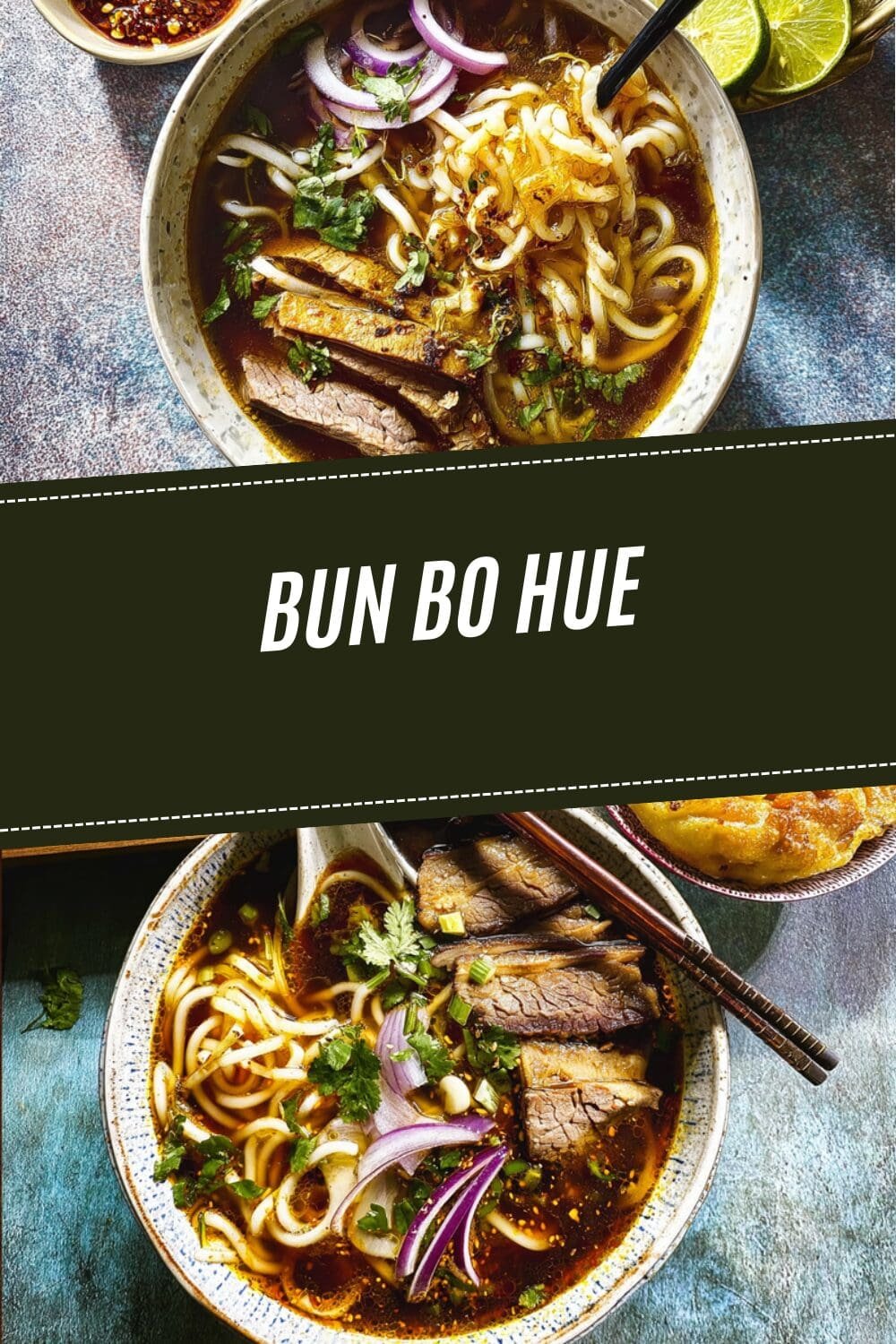
FAQs: Frequently Asked Questions About Bun Bo Hue
What makes bún bò Huế different from other Vietnamese noodle soups?
Bún bò Huế stands out because of its unique broth, which combines beef and pork bones simmered with lemongrass, shrimp paste, and chili paste for a spicy, savory flavor. Unlike phở, it uses round rice noodles rather than flat ones and often includes ingredients like pork hock, pork sausage, and congealed pork blood. The dish is also traditionally served with fresh herbs such as banana flower, mint, and Thai basil, giving it a distinctive taste and texture.
Is bún bò Huế always spicy, and can I adjust the heat level?
Traditionally, bún bò Huế is spicy due to the addition of chili paste and fresh chiles. However, the broth itself can be made mild, allowing you to control the spiciness by adding saté (spicy chili condiment) to your bowl according to your taste. This flexibility makes it suitable for a wide range of spice preferences.
What are the common toppings and herbs served with bún bò Huế?
Typical toppings include fresh banana flower slices (soaked in lemon water to reduce bitterness), bean sprouts, chopped mint, Thai basil, and lime wedges. These fresh herbs and vegetables add brightness and crunch that balance the rich, spicy broth. You can also add sliced chili or saté to intensify the flavor.
Can I make bún bò Huế without using pork blood or MSG?
Yes, pork blood is traditional but optional and can be left out if preferred without significantly affecting the overall flavor. For those avoiding MSG, mushroom powder is an excellent natural alternative that adds a savory depth to the broth while keeping the taste authentic and satisfying.
How should the noodles and meats be prepared for authentic bún bò Huế?
Use round, medium-thick rice noodles, cooking them according to package instructions just before serving to maintain their chewiness. Beef and pork bones are simmered for hours to develop the broth’s flavor, while pork sausage is added at the end of cooking to preserve its texture. Thinly sliced meats are then ladled into the noodle bowl before pouring over the hot broth.
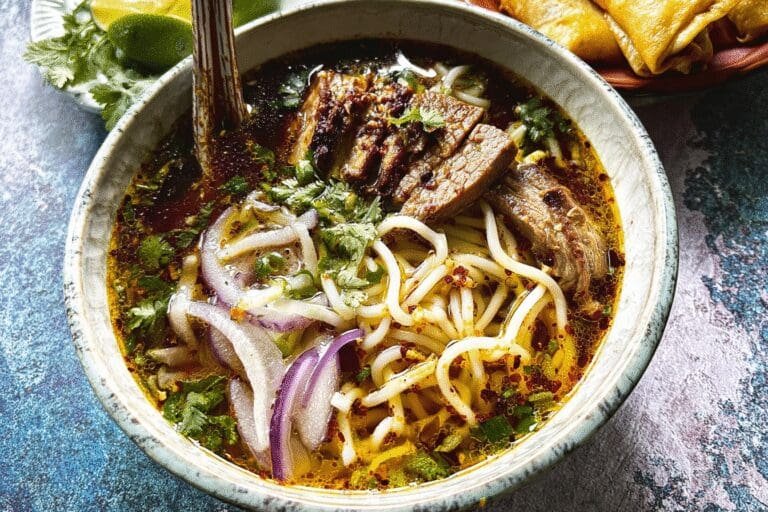
Bun Bo Hue
🍜 Bún Bò Huế offers a rich and spicy Vietnamese noodle soup experience, combining flavorful beef and pork broth for a satisfying meal.
🌿 It is packed with protein, fresh herbs, and a complex balance of spices, making it both nutritious and deeply comforting.
- Total Time: 3 hours 30 minutes
- Yield: 8 servings
Ingredients
– 1 kg beef shank for the rich, meaty base
– 1 kg oxtail adds depth and gelatin
– 1.5 kg pork hocks contributes texture and flavor
– 2-3 pieces of Huế-style pork sausage containing garlic and whole peppercorns for authentic spice and aroma
– 200 grams of congealed pork blood optional for traditional richness
– 4 liters of water the main liquid for the broth
– 1 liter of chicken broth enhances the savory profile
– 5 stalks of bruised lemongrass provides fresh, citrusy notes
– 2 halved onions builds the flavorful foundation
– 2 teaspoons salt for seasoning
– 1 tablespoon sugar to balance the flavors
– 3 tablespoons shrimp paste essential for umami
– 2 tablespoons annatto seeds gives the broth its signature red color
– 6 shallots adds aromatic depth
– 6 garlic cloves for extra flavor boost
– 1 teaspoon MSG as flavor enhancer
– 1 tablespoon mushroom powder as flavor enhancer
– 500 grams of round rice noodles the heart of the dish
– 50 grams mint for fresh, herbal notes
– 50 grams Thai basil adds aromatic freshness
– 200 grams of bean sprouts provides crunch
– Sliced bird’s eye chiles or jalapeños to taste for adjustable heat
– Lime slices from 2 limes brightens the flavors
– 150 grams of thinly sliced banana flower soaked in lemon water to reduce bitterness and add texture
– 30 grams dried Thai chiles soaked and blended for heat
– 100 ml oil for blending and cooking
– 2 shallots or 1 small white onion for aroma
– 3 garlic cloves enhances the base
– 1 stalk lemongrass adds citrusy spice
– 1 tablespoon Korean chile powder for extra kick
– 1 teaspoon sugar to balance the heat
– 1 teaspoon salt for seasoning
– 2 tablespoons fish sauce for umami depth
Instructions
1-First, boil the meats like the 1 kg beef shank, 1 kg oxtail, and 1.5 kg pork hocks in water, then rinse them to remove impurities for a cleaner broth.
2-Next, simmer the meats in a mix of 4 liters of water and 1 liter of chicken broth for up to 3 hours with 5 stalks of bruised lemongrass and 2 halved onions until they’re tender.
3-Once the meats soften, remove and slice them; meanwhile, adjust the broth by adding 2 teaspoons salt, 1 tablespoon sugar, 3 tablespoons shrimp paste, and the sautéed annatto seeds, 6 shallots, and 6 garlic cloves for that vibrant red color and aroma.
4-Separately, cook 500 grams of round rice noodles according to package instructions, and if using raw pork blood, boil it first before adding to bowls.
5-For the saté, blend 30 grams dried Thai chiles with 100 ml oil, 2 shallots, 3 garlic cloves, 1 stalk lemongrass, 1 tablespoon Korean chile powder, 1 teaspoon sugar, 1 teaspoon salt, and 2 tablespoons fish sauce, then cook it over medium heat until thickened and cool it for serving.
6-Finally, assemble your bowls with noodles, sliced meats, fresh herbs like 50 grams each of mint and Thai basil, 200 grams bean sprouts, lime slices, and optional 150 grams banana flower; pour the hot broth over and add saté to taste. The whole process takes about 30 minutes prep plus 3 hours cooking, yielding 8 servings, and it’s flexible for substitutions like mushroom powder instead of MSG.
Last Step:
Please leave a rating and comment letting us know how you liked this recipe! This helps our business to thrive and continue providing free, high-quality recipes for you.Notes
🔥 Prepare saté in advance and keep refrigerated for enhanced flavor.
🌸 Omit pork blood if preferred or substitute banana flower with red cabbage.
🥢 Use bamboo or wooden chopsticks for easy handling of slippery noodles.
🍄 Mushroom powder is a good alternative to MSG to enhance umami.
🕒 Broth can be made ahead and seasoned to taste before serving.
- Prep Time: 30 minutes
- Cooking time: 3 hours
- Category: Soup, Main Dish
- Method: Simmering, sautéing
- Cuisine: Vietnamese
- Diet: Gluten-Free option
Nutrition
- Serving Size: 1 serving
- Calories: 1277
- Sugar: 7.32g
- Sodium: 4939mg
- Fat: 73.1g
- Saturated Fat: 20.9g
- Carbohydrates: 61.37g
- Fiber: 2.55g
- Protein: 89.95g
- Cholesterol: 330mg