Why You’ll Love This Minestrone Soup
This minestrone soup recipe brings together fresh vegetables and hearty beans for a meal that’s simple and satisfying. It’s perfect for busy days because it cooks up quickly, using just one pot to minimize mess. Whether you’re a beginner in the kitchen or cooking for a family, this dish delivers reliable flavors that make it a go-to choice.
One reason to try this minestrone is its health benefits from ingredients like beans and seasonal veggies, which provide fiber and nutrients to support energy and digestion. It fits various diets, including vegetarian options, without needing much fuss. Plus, the combination of tomatoes, herbs, and broth creates a comforting taste that feels just right for any season.
The real appeal lies in how adaptable this soup can be, letting you swap in what’s on hand or follow preferences for gluten-free or vegan versions. With layers of flavor from sautéed aromatics and a bright finish, it’s more than a basic vegetable soup. Serve it with bread for a complete, wholesome meal that everyone enjoys.
Jump to:
- Why You’ll Love This Minestrone Soup
- Essential Ingredients for Minestrone Soup
- How to Prepare the Perfect Minestrone Soup: Step-by-Step Guide
- Getting Started with Prep
- Adding the Main Ingredients
- Protein and Main Component Alternatives
- Vegetable, Sauce, and Seasoning Modifications
- Mastering Minestrone Soup: Advanced Tips and Variations
- Pro Techniques for Better Flavor
- Presentation and Make-Ahead Ideas
- How to Store Minestrone Soup: Best Practices
- FAQs: Frequently Asked Questions About Minestrone Soup
- What ingredients are traditionally used in Minestrone soup?
- How long does it take to cook Minestrone soup?
- Can Minestrone soup be frozen and reheated later?
- Is Minestrone soup healthy and good for weight loss?
- What are some common variations of Minestrone soup?
- Minestrone Soup
- Ingredients
- Instructions
- Last Step:
- Notes
- Nutrition
- Did you make this recipe?
Essential Ingredients for Minestrone Soup
- 1 medium onion (about 150g), diced
- 2 medium carrots (about 200g), chopped
- 2 celery stalks (about 100g), sliced
- 3 cloves garlic (about 15g), minced
- 1 can diced tomatoes (400g)
- 1 cup green beans (about 150g), chopped
- 1 can white or kidney beans (400g)
- 4 cups vegetable broth (about 1 liter)
- 2 bay leaves
- 1 teaspoon dried oregano
- 1 teaspoon dried thyme
- 1 cup small pasta (about 200g)
- Fresh parsley (about 2 tablespoons, chopped), for garnish
- Optional: Red pepper flakes (1/4 teaspoon, or to taste)
- Optional: Parmesan cheese (about 50g, grated)
In addition to the list above, think of this as your base for a hearty meal. Each item plays a key role in building the soup’s texture and flavor. For special diets, choose vegetable broth to keep it vegan or gluten-free pasta to suit those needs.
How to Prepare the Perfect Minestrone Soup: Step-by-Step Guide
Getting Started with Prep
Begin by gathering and prepping your ingredients to make cooking smoother. Rinse and chop everything ahead, like dicing the onion and carrots, to avoid any rush. This step helps prevent overcooking parts of the soup and ensures a great result every time.
Heating the oil in a pot sets the stage for flavor. Add the onions, carrots, and celery; cook them until soft. Then mix in the garlic for a quick stir. This builds a solid base that makes the soup stand out.
Adding the Main Ingredients
Next, pour in the diced tomatoes, beans, green beans, and broth along with the bay leaves, oregano, and thyme. Let it simmer to blend the tastes. Covering the pot keeps in the moisture while it cooks.
Stir in the pasta and continue simmering until it’s just right. Taste and adjust with salt and pepper as needed. Finish with parsley and any optional add-ins for a fresh touch.
This approach takes about 45 minutes total, with 15 minutes for prep and 30 for cooking, as per the recipe details. It’s quick enough for weeknights and delivers around 198 to 298 calories per serving for 4 to 6 people.
Protein and Main Component Alternatives
Beans are the heart of this minestrone soup, offering plant-based protein that keeps things filling. For variety, swap cannellini beans with chickpeas or lentils to change the texture without losing nutrition. Each choice adds its own twist to the meal.
- Try chickpeas for a firmer bite or lentils for creaminess
- Add browned sausage or turkey for extra savoriness
- Use grains like barley instead of pasta for more fiber
These swaps make it easy to fit the soup into vegan, gluten-free, or low-calorie plans. For instance, skipping pasta and adding more beans boosts the protein while trimming calories.
Vegetable, Sauce, and Seasoning Modifications
Fresh vegetables like carrots and celery form the backbone of minestrone soup, but you can mix things up with seasonal picks. In summer, add zucchini or fresh tomatoes; in winter, go for root veggies to keep it hearty. This flexibility lets you use what’s fresh and available.
To boost flavor, try herbs like basil or spices such as paprika for depth. A dash of vinegar at the end brightens everything up. For lower-sodium versions, use less salt and rely on veggies for taste.
Adjusting these elements ensures your soup stays balanced and satisfying, no matter the tweaks.
Mastering Minestrone Soup: Advanced Tips and Variations
Pro Techniques for Better Flavor
Start by caramelizing the veggies slowly to deepen the broth’s richness. Toasting the pasta before adding liquid brings out nutty notes that elevate the soup. For a silkier texture, blend some tomatoes or mix in starchy bean liquid at the end.
Flavor variations can include a Tuscan style with rosemary or a summer version with fresh basil and zucchini. Adding smoked paprika gives a smoky edge, making each bowl unique. These tips help you customize based on what you have on hand.
Presentation and Make-Ahead Ideas
Serve in shallow bowls to show off the veggies, topped with fresh herbs and oil. For make-ahead meals, cool and store the soup for up to 4 days; add pasta fresh when reheating to keep it firm. This makes it ideal for batch cooking and easy weeknight dinners.
| Variation | Key Change |
|---|---|
| Tuscan Style | Add rosemary and pancetta |
| Summer Fresh | Use zucchini and fresh tomatoes |
Nutritional info shows about 1190 calories for the whole recipe, so it’s a light option when adjusted. Tips like using different broths can enhance taste while keeping it healthy.
How to Store Minestrone Soup: Best Practices
After cooking, cool the soup quickly and put it in airtight containers for the fridge; it lasts up to 4 days. If pasta is in it, expect it to soften, so consider cooking pasta separately next time. This helps maintain the soup’s fresh taste and texture.
For freezing, portion it out and freeze for 2-3 months; add fresh pasta when you reheat. Thaw overnight and warm gently on the stove, adding broth if it thickens. These steps make meal prep straightforward and keep flavors intact.

FAQs: Frequently Asked Questions About Minestrone Soup
What ingredients are traditionally used in Minestrone soup?
Traditional Minestrone soup typically includes a mix of seasonal vegetables such as onions, carrots, celery, zucchini, and tomatoes. It often contains beans like cannellini or kidney beans for protein, and pasta or rice to add substance. Herbs such as garlic, basil, and oregano are common for flavoring. Some recipes include a light vegetable or chicken broth base. While ingredients can vary by region and season, the soup is known for its thick, hearty texture packed with nutritious vegetables and legumes.
How long does it take to cook Minestrone soup?
Cooking Minestrone soup usually takes about 40 to 60 minutes. Start by sautéing vegetables for about 5-10 minutes to soften them. Then add broth, beans, and herbs, bringing it to a simmer for 20-30 minutes to develop flavors. Finally, add pasta or rice and cook for an additional 10-15 minutes until tender. Adjust cooking times according to the hardness of ingredients and your preferred soup consistency.
Can Minestrone soup be frozen and reheated later?
Yes, Minestrone soup freezes well and can be stored for up to three months. To freeze, let the soup cool completely, then transfer it to airtight containers or heavy-duty freezer bags, leaving space for expansion. When reheating, thaw overnight in the refrigerator or defrost in a microwave. Reheat on the stove over medium heat until hot, adding extra broth or water if the soup has thickened. Avoid adding pasta before freezing as it may become mushy; instead, add it fresh when reheating.
Is Minestrone soup healthy and good for weight loss?
Minestrone soup is a healthy choice, rich in vegetables, fiber, and plant-based protein from beans, making it filling and low in calories. It is nutrient-dense, providing vitamins and minerals with minimal fat. Because it is high in fiber and water content, it can help promote satiety and support weight loss when consumed as part of a balanced diet. For lower calories, use vegetable broth, limit added oils, and watch portion sizes of pasta or rice.
What are some common variations of Minestrone soup?
Variations of Minestrone soup include swapping different vegetables based on season or preference, such as adding spinach, cabbage, or green beans. Some recipes use different beans like chickpeas or lentils. It can be made vegetarian or with meat, like pancetta or sausage added for extra flavor. Pasta types vary too, including small shells, ditalini, or even quinoa for a gluten-free option. Adjusting broth—vegetable, chicken, or beef—also changes the flavor profile to suit different tastes.
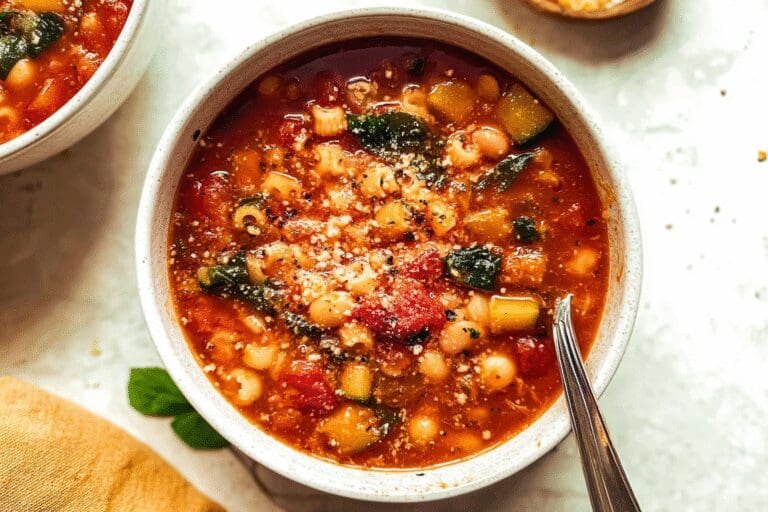
Minestrone Soup
🥣 This minestrone soup combines fresh vegetables and hearty beans for a nutritious and filling meal.
🌿 The recipe is versatile and easy to customize, making it perfect for any season or dietary preference.
- Total Time: 45 minutes
- Yield: Serves 4-6
Ingredients
– 1 medium onion (about 150g), diced
– 2 medium carrots (about 200g), chopped
– 2 celery stalks (about 100g), sliced
– 3 cloves garlic (about 15g), minced
– 1 can diced tomatoes (400g)
– 1 cup green beans (about 150g), chopped
– 1 can white or kidney beans (400g)
– 4 cups vegetable broth (about 1 liter)
– 2 bay leaves
– 1 teaspoon dried oregano
– 1 teaspoon dried thyme
– 1 cup small pasta (about 200g)
– Fresh parsley (about 2 tablespoons, chopped) for garnish
– Red pepper flakes (1/4 teaspoon, or to taste)
– Parmesan cheese (about 50g, grated)
Instructions
1-Getting Started with Prep: Begin by gathering and prepping your ingredients to make cooking smoother. Rinse and chop everything ahead, like dicing the onion and carrots, to avoid any rush. This step helps prevent overcooking parts of the soup and ensures a great result every time.
2-Heating the oil in a pot sets the stage for flavor. Add the onions, carrots, and celery; cook them until soft. Then mix in the garlic for a quick stir. This builds a solid base that makes the soup stand out.
3-Adding the Main Ingredients: Next, pour in the diced tomatoes, beans, green beans, and broth along with the bay leaves, oregano, and thyme. Let it simmer to blend the tastes. Covering the pot keeps in the moisture while it cooks.
4-Stir in the pasta and continue simmering until it’s just right. Taste and adjust with salt and pepper as needed. Finish with parsley and any optional add-ins for a fresh touch.
Last Step:
Please leave a rating and comment letting us know how you liked this recipe! This helps our business to thrive and continue providing free, high-quality recipes for you.Notes
🥕 This soup is highly customizable; substitute fennel for celery or zucchini for green beans based on availability.
🍝 Cook pasta separately and add when serving to prevent sogginess.
🌱 For vegan versions, omit Parmesan or use vegan cheese alternatives.
- Prep Time: 15 minutes
- Cook Time: 30 minutes
- Category: Soup
- Method: Simmering
- Cuisine: Italian
- Diet: Vegetarian, Vegan option available
Nutrition
- Serving Size: 1 bowl (approx. 1.5 cups)
- Calories: 250 kcal (approx.)
- Sugar: 5 g (approx.)
- Sodium: 400 mg (approx.)
- Fat: 4 g (approx.)
- Saturated Fat: 1 g (approx.)
- Unsaturated Fat: 3 g (approx.)
- Trans Fat: 0 g
- Carbohydrates: 45 g (approx.)
- Fiber: 8 g (approx.)
- Protein: 12 g (approx.)
- Cholesterol: 0 mg