Why You’ll Love This Seafood Soup
There is something incredibly comforting about a steaming bowl of brothy seafood soup. It brings the briny essence of the ocean right to your table, wrapped in a warm, aromatic hug. This recipe stands out because it strikes the perfect balance between elegance and ease. It is quick and simple to make, requiring minimal chopping and a convenient one-pot cooking method that saves you time in the kitchen.
Beyond the convenience, this dish is a nutritional powerhouse. It is packed with omega-3 rich fish and nutrient-dense shellfish that support heart health and boost immunity. Despite being rich in flavor, it remains low in calories and high in protein, making it an excellent choice for those keeping an eye on their health without sacrificing satisfaction. The versatility is another huge plus; this recipe can be easily adapted to suit various dietary needs including gluten-free, low-calorie, and pescatarian diets by simply swapping certain ingredients.
What truly makes this seafood soup unforgettable is its distinctive flavor. The vibrant blend of fresh herbs, quality seafood stock, and spices creates a rich, umami-packed profile that makes this soup truly stand out. Whether you are serving it for a casual weeknight dinner or a special gathering, the savory depth and fresh taste will impress everyone. It pairs wonderfully with light, refreshing sides, and if you are looking for a sweet treat to finish the meal, consider serving a chocolate eclair cake for dessert.
Jump to:
- Why You’ll Love This Seafood Soup
- Essential Ingredients for Seafood Soup
- How to Prepare the Perfect Seafood Soup: Step-by-Step Guide
- Dietary Substitutions to Customize Your Seafood Soup
- Protein and Main Component Alternatives
- Vegetable, Sauce, and Seasoning Modifications
- Mastering Seafood Soup: Advanced Tips and Variations
- Nutritional Information
- How to Store Seafood Soup: Best Practices
- FAQs: Frequently Asked Questions About Seafood Soup
- What ingredients are typically used in a classic seafood soup?
- How do I properly clean leeks for use in seafood soup?
- Can I freeze seafood soup for later, and how should I reheat leftovers?
- What vegetables work well in seafood soup, and can potatoes be added?
- What type of wine pairs best with seafood soup?
- Seafood Soup
- Ingredients
- Instructions
- Last Step:
- Notes
- Nutrition
- Did you make this recipe?
Essential Ingredients for Seafood Soup
The secret to a memorable soup lies in the quality of your components. Using fresh, high-quality ingredients ensures that every bite is bursting with flavor. This soup combines a variety of textures and tastes, from the firmness of the fish to the tender succulence of the shellfish, all bound together by a fragrant vegetable and herb base. Omega-3 rich fish are not only delicious but also offer numerous health benefits, making them a star ingredient in this dish.
Below is the structured list of ingredients you will need to create this culinary masterpiece. Each item is listed with its precise measurement to help you prepare perfectly.
- 2 tablespoons unsalted butter or extra-virgin olive oil
- 1 leek (white and light green parts only)
- 1 fennel bulb (trimmed, halved, and thinly sliced, with fronds reserved)
- 1 small white onion (chopped, about 1 cup)
- 2 large celery ribs (diced, about ¾ cup)
- 2 cloves finely chopped garlic
- 2 teaspoons fresh oregano or 1½ teaspoons dried
- 2 teaspoons fresh thyme or 1½ teaspoons dried
- ½ teaspoon red pepper flakes
- 1 cup dry white wine
- 4 cups low-sodium seafood stock or chicken broth
- 8 ounces bottled clam juice
- 2 dried bay leaves
- 1 pound firm white fish cut into 1-inch chunks
- 1 pound medium raw shrimp (41-50 count, peeled and deveined)
- 1 pound scallops (feet removed)
- 1 pound mussels or clams
- ¼ cup chopped parsley
- 1 tablespoon fresh lemon juice
This combination of ingredients creates a symphony of flavors. The leek and fennel provide a sweet, aromatic base that complements the seafood beautifully without overpowering it. If you have special dietary requirements, you can easily adapt this recipe. For a vegan version, substitute the seafood with seaweed chunks and hearty mushrooms. To keep it gluten-free, simply ensure your broth and all seasonings are certified gluten-free. For a lighter option, you can skip the final butter finish or use a lighter oil.
How to Prepare the Perfect Seafood Soup: Step-by-Step Guide
Making this soup is a straightforward process that rewards you with a restaurant-quality meal in under an hour. The key is to add your ingredients in the right order so that everything cooks evenly and retains its texture. Follow these steps to prepare the perfect seafood soup.
First Step: Prepare the Ingredients. Start by prepping all your ingredients. Peel and devein the shrimp, remove the feet from the scallops, and scrub the mussels or clams. Cut the white fish into 1-inch chunks. Chop the vegetables, measure out your spices, and slice the leeks and fennel. When preparing the vegetables, take your time to wash the leeks thoroughly so there is no grit left behind, as this simple step helps keep the broth clean and lets the fresh flavors shine through perfectly.
Second Step: Sauté the Vegetables. In a large pot or Dutch oven over medium heat, melt the butter or heat the olive oil. Add the chopped onion, diced celery, sliced leeks, and fennel. Cook them for about 5 to 7 minutes, stirring occasionally, until they begin to soften and the onions become translucent. This creates a flavorful foundation for the soup.
Third Step: Add Aromatics. Stir in the finely chopped garlic, fresh oregano, fresh thyme, and red pepper flakes. Cook for another minute until the garlic becomes fragrant. Be careful not to burn the garlic, as it can turn bitter.
Fourth Step: Deglaze and Simmer. Pour in the dry white wine to deglaze the pan, scraping up any browned bits from the bottom with a wooden spoon. Let it simmer for a minute or two to reduce slightly. Then, add the seafood stock, bottled clam juice, and dried bay leaves. Bring the mixture to a boil, then reduce the heat to low. Let it simmer gently for about 10 minutes to allow the vegetable flavors to meld with the broth.
Fifth Step: Cook the Seafood. Add the seafood in stages to avoid overcooking. Start with the firm white fish and the mussels or clams. Simmer gently for about 3 to 4 minutes. Then, add the shrimp and scallops. Continue to simmer for another 3 to 5 minutes, or until the shrimp turn pink, the scallops are opaque, and the mussels or clams have opened. Discard any shellfish that do not open.
Sixth Step: Finish and Serve. Remove the pot from the heat. Stir in the chopped parsley, the reserved fennel fronds, and the fresh lemon juice. Season the soup to taste with salt and pepper. If you prefer a richer broth, you can swirl in an extra tablespoon of butter or olive oil just before serving. Ladle the hot soup into bowls and serve immediately.

Dietary Substitutions to Customize Your Seafood Soup
One of the great things about this recipe is its flexibility. Whether you have dietary restrictions or just want to switch things up, there are plenty of ways to customize your soup while keeping it delicious.
Protein and Main Component Alternatives
If you prefer a plant-based diet, you can replace the shrimp with firm tofu or tempeh. For a different taste profile, try using crab meat instead of white fish for a sweeter flavor, or substitute mussels for scallops to vary the texture within the shellfish mix.
Vegetable, Sauce, and Seasoning Modifications
Vegetables can also be swapped to suit your palate or what you have on hand. Swap celery for fennel to introduce a more mild anise note, or add potatoes for a heartier meal. If you are avoiding dairy or looking for a different texture, use coconut milk instead of cream for a dairy-free variation. For a spicy kick, exchange the red pepper flakes for curry powder or add cayenne pepper. You can also add leafy greens like kale or spinach for extra nutrients. Always feel free to adjust salt levels and herbs to match your personal preference.
Mastering Seafood Soup: Advanced Tips and Variations
Once you have mastered the basic recipe, you can start experimenting with professional techniques and flavor twists to make this soup truly your own.
To take your soup to the next level, try making your own seafood stock. Simmering shrimp shells and fish bones in water with aromatics creates a depth of flavor that store-bought stocks simply cannot match. This adds a layer of richness that will impress even the most discerning palates.
For flavor variations, consider incorporating international ingredients. A pinch of saffron can give the soup a beautiful yellow hue and a distinct floral aroma, while lemongrass and ginger can transform it into an Asian-inspired dish. When it comes to presentation, serving the soup in warmed bowls garnished with microgreens or a drizzle of high-quality olive oil adds visual appeal and enhances the flavor.
If you are planning a party, you can prepare the base soup a day ahead. Simply cook the vegetables and broth, then store it in the refrigerator. Add the fresh seafood just before serving to ensure optimal texture and freshness. This prevents the seafood from becoming rubbery and keeps the flavors vibrant.
Nutritional Information
This seafood soup is as nourishing as it is tasty. It is a high-protein, low-fat meal that fits well into a balanced diet. Here is the nutritional breakdown per serving (assuming six servings total):
| Nutrient | Amount per Serving |
|---|---|
| Calories | 374 kcal |
| Carbohydrates | 15 g |
| Protein | 51.5 g |
| Total Fat | 8 g |
| Saturated Fat | 3.5 g |
| Cholesterol | 165 mg |
| Sodium | 1602 mg |
| Fiber | 2 g |
| Sugar | 2 g |
Please note that these values may vary slightly depending on the specific brands of ingredients used and the exact size of your seafood portions. The health benefits of seafood are well-documented, making this dish a smart choice for a healthy lifestyle.
How to Store Seafood Soup: Best Practices
Proper storage is key to enjoying your soup safely later. Because seafood is delicate, it requires a bit of care to maintain its quality.
Refrigeration: Store any leftover soup in airtight containers in the refrigerator. It will stay fresh for up to 3 days. Make sure the soup has cooled down completely before sealing the container to prevent condensation, which can make the broth soggy.
Freezing: For long-term storage, it is best to freeze the soup base without the seafood. Seafood tends to become tough and grainy when frozen and reheated. Freeze the broth and vegetables in properly sealed containers. When you are ready to eat, thaw the base and cook fresh seafood to add to it.
Reheating: When reheating, do so gently on low to medium heat. Stir occasionally to distribute the heat evenly. Avoid bringing the soup to a rolling boil, as this can overcook the seafood and ruin its texture. You want to heat it just enough to warm it through.
Meal Prep Considerations: To simplify your week, portion the soup into single servings before storing. This makes it easy to grab a quick meal without having to thaw the entire batch. It also helps reduce waste by allowing you to defrost only what you need.
FAQs: Frequently Asked Questions About Seafood Soup
What ingredients are typically used in a classic seafood soup?
A classic seafood soup usually combines firm white fish like cod or halibut with shellfish such as mussels, clams, scallops, and shrimp. Vegetables commonly include fennel, leeks, onions, and celery. The broth is flavored with dry white wine, clam juice, seafood stock, lemon juice, and aromatics like garlic, thyme, and bay leaves to create a balanced, savory base.
How do I properly clean leeks for use in seafood soup?
To clean leeks, first trim and slice them. Submerge the slices in cold water and gently agitate to loosen any dirt or sand trapped between the layers. Lift the leeks out carefully without disturbing the sediment at the bottom. This method ensures leeks are free from grit, keeping your soup clean and smooth.
Can I freeze seafood soup for later, and how should I reheat leftovers?
It’s best not to freeze seafood soup, as freezing can alter the texture of the seafood. Instead, store leftovers in an airtight container in the refrigerator for up to four days. To reheat, warm only the portion you plan to eat over medium heat on the stove, bringing it to a gentle simmer without boiling, which helps prevent overcooking the delicate seafood.
What vegetables work well in seafood soup, and can potatoes be added?
Traditional vegetables for seafood soup include fennel (bulb and fronds), onions, leeks, and celery, which add flavor and texture. Potatoes, particularly red new potatoes cut into small pieces, can also be added. Add them just before the broth to ensure they cook thoroughly but don’t become mushy.
What type of wine pairs best with seafood soup?
Light and crisp white wines complement seafood soup nicely. Varieties such as Viognier, Pinot Gris, and Assyrtiko offer refreshing acidity that balances the rich broth and seafood flavors, enhancing the overall dining experience. Serving these wines slightly chilled works best.
Seafood Soup
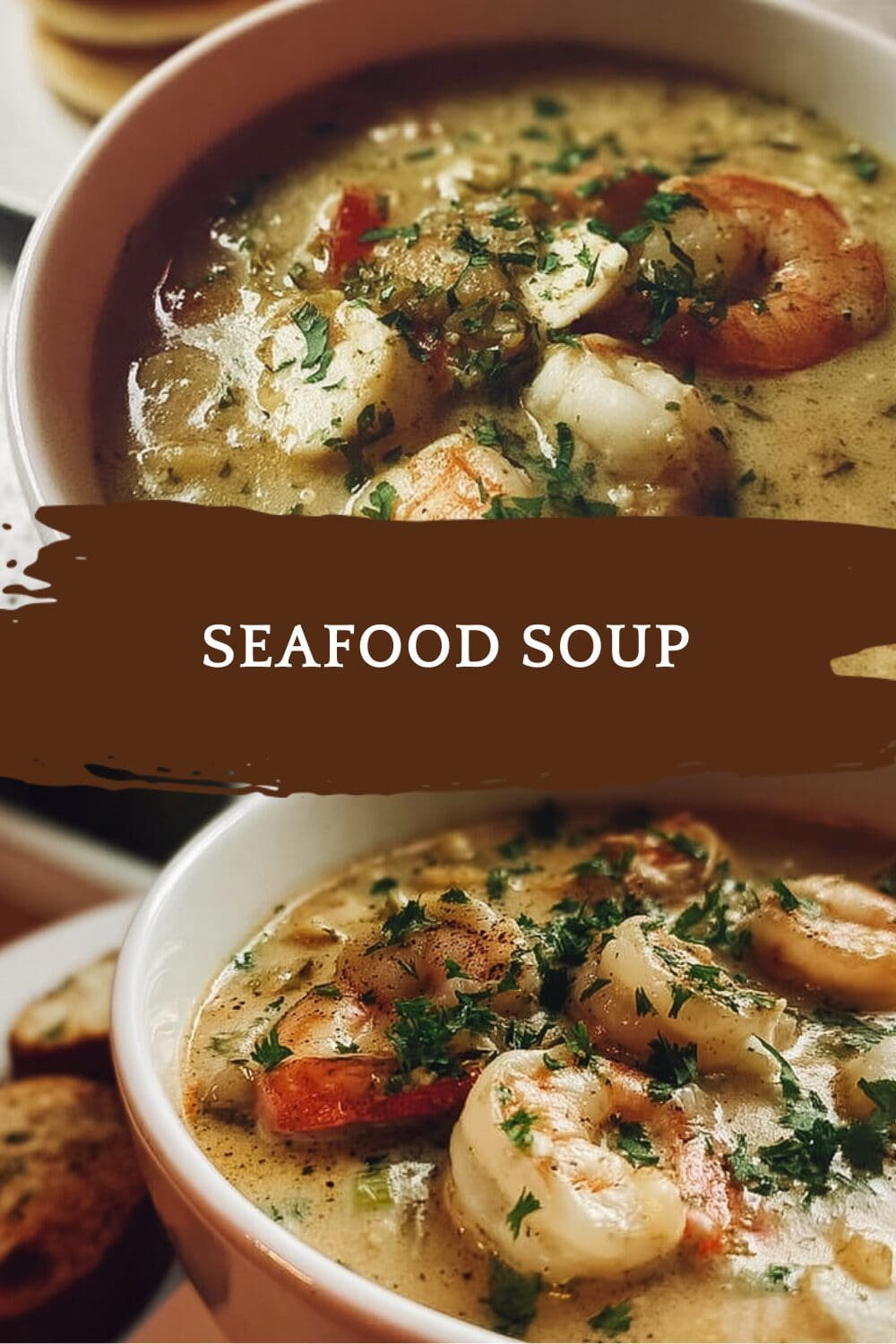
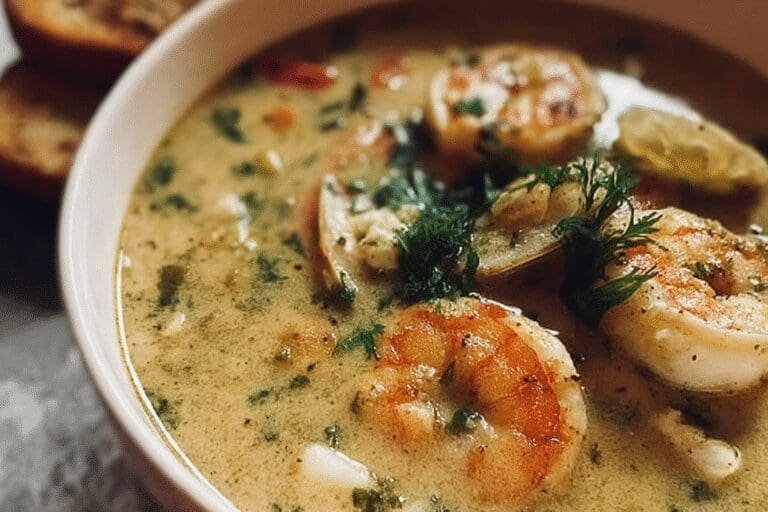
🍲 This Brothy Mixed Seafood Soup offers a fresh, flavorful, and light seafood experience packed with nutritious white fish, shrimp, scallops, and mussels.
🌿 The aromatic broth with fresh herbs and vegetables enhances natural seafood flavors, making it a wholesome and satisfying meal.
- Total Time: 40 minutes
- Yield: 6 servings
Ingredients
– 2 tablespoons unsalted butter or extra-virgin olive oil
– 1 leek (white and light green parts only)
– 1 fennel bulb (trimmed, halved, and thinly sliced, with fronds reserved)
– 1 small white onion (chopped, about 1 cup)
– 2 large celery ribs (diced, about ¾ cup)
– 2 cloves finely chopped garlic
– 2 teaspoons fresh oregano or 1½ teaspoons dried
– 2 teaspoons fresh thyme or 1½ teaspoons dried
– ½ teaspoon red pepper flakes
– 1 cup dry white wine
– 4 cups low-sodium seafood stock or chicken broth
– 8 ounces bottled clam juice
– 2 dried bay leaves
– 1 pound firm white fish cut into 1-inch chunks
– 1 pound medium raw shrimp (41-50 count, peeled and deveined)
– 1 pound scallops (feet removed)
– 1 pound mussels or clams
– ¼ cup chopped parsley
– 1 tablespoon fresh lemon juice
Instructions
1-First Step: Prepare the Ingredients. Start by prepping all your ingredients. Peel and devein the shrimp, remove the feet from the scallops, and scrub the mussels or clams. Cut the white fish into 1-inch chunks. Chop the vegetables, measure out your spices, and slice the leeks and fennel. When preparing the vegetables, take your time to wash the leeks thoroughly so there is no grit left behind, as this simple step helps keep the broth clean and lets the fresh flavors shine through perfectly.
2-Second Step: Sauté the Vegetables. In a large pot or Dutch oven over medium heat, melt the butter or heat the olive oil. Add the chopped onion, diced celery, sliced leeks, and fennel. Cook them for about 5 to 7 minutes, stirring occasionally, until they begin to soften and the onions become translucent. This creates a flavorful foundation for the soup.
3-Third Step: Add Aromatics. Stir in the finely chopped garlic, fresh oregano, fresh thyme, and red pepper flakes. Cook for another minute until the garlic becomes fragrant. Be careful not to burn the garlic, as it can turn bitter.
4-Fourth Step: Deglaze and Simmer. Pour in the dry white wine to deglaze the pan, scraping up any browned bits from the bottom with a wooden spoon. Let it simmer for a minute or two to reduce slightly. Then, add the seafood stock, bottled clam juice, and dried bay leaves. Bring the mixture to a boil, then reduce the heat to low. Let it simmer gently for about 10 minutes to allow the vegetable flavors to meld with the broth.
5-Fifth Step: Cook the Seafood. Add the seafood in stages to avoid overcooking. Start with the firm white fish and the mussels or clams. Simmer gently for about 3 to 4 minutes. Then, add the shrimp and scallops. Continue to simmer for another 3 to 5 minutes, or until the shrimp turn pink, the scallops are opaque, and the mussels or clams have opened. Discard any shellfish that do not open.
6-Sixth Step: Finish and Serve. Remove the pot from the heat. Stir in the chopped parsley, the reserved fennel fronds, and the fresh lemon juice. Season the soup to taste with salt and pepper. If you prefer a richer broth, you can swirl in an extra tablespoon of butter or olive oil just before serving. Ladle the hot soup into bowls and serve immediately.
Last Step:
Please leave a rating and comment letting us know how you liked this recipe! This helps our business to thrive and continue providing free, high-quality recipes for you.Notes
🦐 Add seafood in stages to avoid overcooking and maintain tender texture.
🌿 Use fresh herbs for vibrant flavor, but dried can be substituted if necessary.
🍋 Finish with lemon juice and fennel fronds to brighten and freshen the soup.
- Prep Time: 10 minutes
- Cook Time: 30 minutes
- Category: Soup, Seafood, Main Dish
- Method: Sautéing, Simmering
- Cuisine: American, Mediterranean
Nutrition
- Serving Size: 1 bowl
- Calories: 374 kcal
- Sugar: 2 g
- Sodium: 1602 mg
- Fat: 8 g
- Saturated Fat: 3.5 g
- Trans Fat: 0 g
- Carbohydrates: 15 g
- Fiber: 2 g
- Protein: 51.5 g
- Cholesterol: 165 mg