Why You’ll Love This Slow Roasted Lamb Shoulder
Slow roasted lamb shoulder offers a simple yet rewarding way to enjoy a meal that’s both tender and full of flavor, making it a hit for many home cooks. This dish requires minimal prep and lets the oven do most of the work, leaving you time to relax or handle other tasks. Beyond its ease, the recipe highlights the natural goodness of lamb, packed with protein and essential nutrients that keep you energized.
The rich taste comes from the slow cooking process, which infuses the meat with herbs like rosemary and garlic for a delightful aroma. Whether you’re cooking for family or guests, this lamb shoulder adapts beautifully to different meals, making it a versatile choice for any occasion. You’ll appreciate how it turns out juicy and flavorful every time, adding a special touch to your table without much fuss.
The beauty of this recipe lies in its flexibility, allowing you to tweak it for various tastes and dietary needs while keeping everything straightforward. Imagine the compliments you’ll get from your loved ones as they dig into the tender bites. This slow roasted lamb shoulder is not just a dish, but a comforting experience that brings everyone together.
Jump to:
- Why You’ll Love This Slow Roasted Lamb Shoulder
- Essential Ingredients for Slow Roasted Lamb Shoulder
- Main Ingredients
- Ingredients for the Gravy
- How to Prepare the Perfect Slow Roasted Lamb Shoulder: Step-by-Step Guide
- Dietary Substitutions to Customize Your Slow Roasted Lamb Shoulder
- Mastering Slow Roasted Lamb Shoulder: Advanced Tips and Variations
- Flavor Variations
- Presentation and Make-Ahead Options
- How to Store Slow Roasted Lamb Shoulder: Best Practices
- FAQs: Frequently Asked Questions About Slow Roasted Lamb Shoulder
- What is the best cooking temperature and time for slow roasting lamb shoulder?
- How can I tell when slow roasted lamb shoulder is fully cooked and tender?
- Can I prepare slow roasted lamb shoulder ahead of time and reheat it without losing quality?
- What are good herbs and seasonings to use with slow roasted lamb shoulder?
- How do I make gravy from the roasting pan after cooking lamb shoulder?
- Slow Roasted Lamb Shoulder
- Ingredients
- Instructions
- Last Step:
- Notes
- Nutrition
- Did you make this recipe?
Essential Ingredients for Slow Roasted Lamb Shoulder
Gathering the right ingredients is key to making this slow roasted lamb shoulder dish shine, as they combine to create a flavorful and tender result. Below is a complete list of everything you’ll need, including precise measurements for easy preparation. I’ve pulled together all the essentials from the recipe to ensure you have exactly what’s required.
Main Ingredients
- 1.8 kg lamb shoulder with bone
- 2 tablespoons olive oil
- 2 teaspoons salt
- 1 teaspoon black pepper
- 1 onion, quartered (no need to peel)
- 1 head garlic, halved horizontally
- 3 garlic cloves, cut into slivers
- 8 sprigs rosemary
- 1 cup water
Ingredients for the Gravy
- 2 tablespoons flour
- 2 cups beef broth (or 1 cup red wine plus 1 cup water)
- Salt and pepper to taste
This structured list covers every item needed, making it simple to shop and measure out your ingredients. Each one plays a role in building the dish’s depth and moisture, from the lamb shoulder that becomes the star to the herbs that add a fresh twist.
How to Prepare the Perfect Slow Roasted Lamb Shoulder: Step-by-Step Guide
Creating this slow roasted lamb shoulder starts with simple steps that lead to a mouthwatering meal, blending ease with impressive results. Begin by preheating your oven and preparing the lamb for seasoning, as outlined in the recipe directions. This guide merges the provided instructions with practical tips to help you succeed.
- Preheat the oven to 240°C (465°F) or 220°C (fan forced 425°F). Rub the lamb shoulder with 2 tablespoons olive oil, 2 teaspoons salt, and 1 teaspoon black pepper for even flavor.
- Make 12 deep incisions in the lamb without piercing through and stuff them with 3 garlic cloves cut into slivers and 8 sprigs rosemary to infuse the meat.
- Place the quartered onion, halved garlic head, and some rosemary in the base of a roasting pan, then put the lamb on top and pour 1 cup of water around it.
- Cover the pan with a lid or double layer of foil and reduce the oven temperature to 180°C (350°F) or 160°C fan. Slow roast covered for 3 hours to achieve tenderness.
- Remove the foil, check for liquid and add 3/4 cup water if necessary, then roast uncovered at 220°C (425°F) for 20 to 30 minutes until the skin is browned and crisp.
- Test tenderness by pulling the meat apart with two forks; if it is not tender, cover and cook longer at 180°C (350°F). Remove the lamb and let it rest covered loosely with foil and towels for at least 20 minutes.
- For the gravy, remove most fat from the pan, leaving 2 tablespoons. Place the pan over medium-high heat, stir in 2 tablespoons flour, and cook for about 30 seconds. Gradually add 2 cups beef broth (or the wine and water mix), mash the onion and garlic in the pan, and simmer for 1 to 2 minutes until thickened. Season with salt and pepper, strain, and serve with the lamb.
One 1.5 kg lamb shoulder yields about 700 grams of cooked meat, serving roughly 4 people, with each serving around 398 grams and 575 calories. Always rest the meat to improve its tenderness and juiciness, as noted in the tips.

Dietary Substitutions to Customize Your Slow Roasted Lamb Shoulder
Adapting this slow roasted lamb shoulder recipe for different preferences is straightforward and keeps the dish enjoyable for everyone. For instance, if you’re looking for plant-based options, swap the lamb with alternatives that hold up well to slow cooking. The key is to maintain the flavors while meeting your needs.
Protein and Main Component Alternatives:
– For a plant-based option, use jackfruit or seitan to mimic the texture.
– Switch lamb shoulder with beef brisket or pork shoulder for a different taste while keeping the slow roasting method.
Vegetable, Sauce, and Seasoning Changes:
– Try thyme or oregano instead of rosemary for a fresh herb variation.
– Add seasonal veggies like root vegetables or squash to complement the meal.
– Opt for dairy-free or low-sodium sauces to fit specific diets.
This flexibility makes the recipe a great fit for busy parents or health-focused eaters, ensuring it’s both practical and delicious. Experimenting here lets you tailor the dish to your lifestyle without losing its charm. For more ideas on pairing, check out our cranberry wreath cake recipe, which could make a lovely dessert side for your meal. You can also learn about the health benefits of lamb to see how it supports your diet.
Mastering Slow Roasted Lamb Shoulder: Advanced Tips and Variations
Taking your slow roasted lamb shoulder to the next level involves a few pro techniques that enhance flavor and texture, perfect for food enthusiasts looking to impress. Use a meat thermometer to check for an internal temperature of about 93°C (200°F) for optimal tenderness, ensuring you avoid overcooking the meat.
Flavor Variations
Experiment with spice blends like ras el hanout or garam masala to add an exotic twist to the lamb, building on the classic rosemary and garlic base for a unique profile.
Presentation and Make-Ahead Options
- Slice the lamb neatly and garnish with fresh herbs for an appealing presentation.
- Prepare the dish ahead and reheat slowly to keep it moist, ideal for working professionals with tight schedules.
Remember that lamb shoulder is juicier than lamb leg, so adjust cooking times based on size smaller ones may need about 20 minutes less. Add water if the pan dries out to prevent burning, and tweak the gravy as needed for the best results. For more inspiration on complementary treats, visit our honeycomb caramel tart page, which pairs well with savory mains. Additionally, explore nutritional insights on lamb for more ideas.
How to Store Slow Roasted Lamb Shoulder: Best Practices
Proper storage keeps your slow roasted lamb shoulder fresh and tasty for later, which is handy for students or busy parents prepping meals in advance. Store leftovers in airtight containers in the fridge and use them within 3-4 days to maintain quality.
| Storage Method | Details |
|---|---|
| Refrigeration | Keep in airtight containers for up to 3-4 days. |
| Freezing | Wrap tightly and store for up to 3 months to avoid freezer burn. |
| Reheating | Gently warm in an oven at 300°F covered with foil to retain moisture. |
Portion the lamb before storing for easy reheating, and pair it with pre-cooked sides for quick meals. This approach helps make the most of leftovers without losing flavor, turning them into convenient options for any day.
FAQs: Frequently Asked Questions About Slow Roasted Lamb Shoulder
What is the best cooking temperature and time for slow roasting lamb shoulder?
Slow roasting lamb shoulder is typically done at a low oven temperature between 140°C to 160°C (285°F to 320°F) to allow the meat to become tender and juicy. Cooking time usually ranges from 3 to 4 hours for a 1.5 to 2 kg shoulder. This slow, low-heat method breaks down connective tissues, making the meat easy to pull apart while retaining moisture and flavor.
How can I tell when slow roasted lamb shoulder is fully cooked and tender?
The lamb shoulder is ready when the meat easily pulls apart with two forks without resistance. Internally, it should reach an approximate temperature of 93°C (200°F), indicating the collagen has melted. If it still feels tough, cover and return it to the oven, checking every 20-30 minutes until tender.
Can I prepare slow roasted lamb shoulder ahead of time and reheat it without losing quality?
Yes, you can slow roast the lamb shoulder in advance and reheat it gently before serving. To maintain tenderness, reheat at low temperature (around 140°C/285°F) covered with foil to retain moisture. Browning the skin can be done either before initial cooking or quickly under a grill just before serving.
What are good herbs and seasonings to use with slow roasted lamb shoulder?
Classic herbs for lamb shoulder include rosemary, thyme, and oregano, paired with garlic for robust flavor. Inserting garlic and rosemary sprigs into small incisions in the meat helps infuse flavor throughout the long cooking process. You can also add lemon zest or cumin for a subtle twist.
How do I make gravy from the roasting pan after cooking lamb shoulder?
After removing the lamb, pour off excess fat leaving about 2 tablespoons in the pan. Stir in a tablespoon of flour and cook briefly to form a roux. Gradually whisk in red wine, beef stock, or a mix of both, then simmer gently. Mash any roasted vegetables in the pan to release flavor. Strain and season the gravy to taste for a rich accompaniment.
Slow Roasted Lamb Shoulder
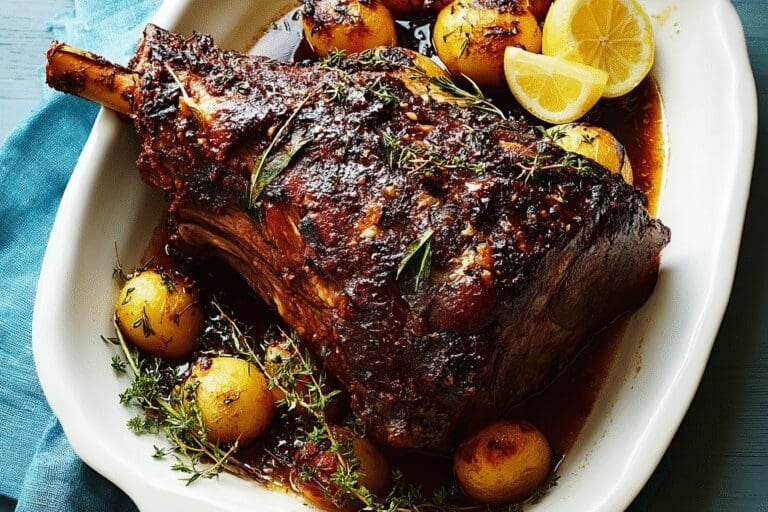
🍖 This Slow Roasted Rosemary Garlic Lamb Shoulder recipe delivers tender, juicy meat infused with aromatic rosemary and garlic.
⏳ Its slow roasting method ensures deep flavor development and melt-in-your-mouth texture, making it ideal for special family meals.
- Total Time: 3 hours 45 minutes
- Yield: 4 servings
Ingredients
– 1.8 kg lamb shoulder with bone
– 2 tablespoons olive oil
– 2 teaspoons salt
– 1 teaspoon black pepper
– 1 onion, quartered (no need to peel)
– 1 head garlic, halved horizontally
– 3 garlic cloves, cut into slivers
– 8 sprigs rosemary
– 1 cup water
– 2 tablespoons flour for the gravy
– 2 cups beef broth for the gravy
– 1 cup red wine for the gravy
– 1 cup water for the gravy
– Salt to taste for the gravy
– Pepper to taste for the gravy
Instructions
1-Preheat the oven to 240°C (465°F) or 220°C (fan forced 425°F). Rub the lamb shoulder with 2 tablespoons olive oil, 2 teaspoons salt, and 1 teaspoon black pepper for even flavor.
2-Make 12 deep incisions in the lamb without piercing through and stuff them with 3 garlic cloves cut into slivers and 8 sprigs rosemary to infuse the meat.
3-Place the quartered onion, halved garlic head, and some rosemary in the base of a roasting pan, then put the lamb on top and pour 1 cup of water around it.
4-Cover the pan with a lid or double layer of foil and reduce the oven temperature to 180°C (350°F) or 160°C fan. Slow roast covered for 3 hours to achieve tenderness.
5-Remove the foil, check for liquid and add 3/4 cup water if necessary, then roast uncovered at 220°C (425°F) for 20 to 30 minutes until the skin is browned and crisp.
6-Test tenderness by pulling the meat apart with two forks; if it is not tender, cover and cook longer at 180°C (350°F). Remove the lamb and let it rest covered loosely with foil and towels for at least 20 minutes.
7-For the gravy, remove most fat from the pan, leaving 2 tablespoons. Place the pan over medium-high heat, stir in 2 tablespoons flour, and cook for about 30 seconds. Gradually add 2 cups beef broth (or the wine and water mix), mash the onion and garlic in the pan, and simmer for 1 to 2 minutes until thickened. Season with salt and pepper, strain, and serve with the lamb.
Last Step:
Please leave a rating and comment letting us know how you liked this recipe! This helps our business to thrive and continue providing free, high-quality recipes for you.Notes
🔥 Lamb shoulder is juicier and more flavorful than lamb leg but needs slow cooking.
🌿 Rosemary sprigs hold well when stuffed into incisions for aroma.
⏲️ Adjust cooking times by shoulder size; smaller shoulders cook about 20 minutes less.
🥩 Resting the meat improves tenderness and juiciness.
💧 Add water during browning to prevent pan liquid from burning.
🍲 Adjust gravy consistency and seasoning to taste after straining.
- Prep Time: 15 minutes
- Slow roasting time: 3 hours
- Cook Time: 20-30 minutes
- Category: Main Dish
- Method: Slow roasting, braising
- Cuisine: Australian
- Diet: Gluten-free
Nutrition
- Serving Size: 398 grams
- Calories: 575 kcal
- Sugar: 1 g
- Sodium: 550 mg
- Fat: 40 g
- Saturated Fat: 16 g
- Unsaturated Fat: 20 g
- Trans Fat: 0 g
- Carbohydrates: 5 g
- Fiber: 1 g
- Protein: 45 g
- Cholesterol: 160 mg