Why You’ll Love This Vanilla Cake
This vanilla cake recipe is a true crowd-pleaser, designed for anyone from busy parents to baking enthusiasts who want a dessert that’s both simple and satisfying. You’ll appreciate how it comes together with most items you might already have in your kitchen, making it ideal for spontaneous treats or special occasions. What sets it apart is its ability to stay moist and flavorful for days, letting you enjoy leftovers without any loss in quality.
At its core, this cake offers a soft, fluffy texture that’s perfect for layering or decorating, adapting easily to different needs like family gatherings or quick snacks. We blend Japanese sponge cake techniques with Western butter cake elements, creating a base that’s stable yet light, with a rich vanilla taste that shines through every bite. Whether you’re a student looking for a simple baking project or a party host aiming to impress, this recipe delivers on taste and ease.
It’s not just about the flavor, though think of the health-conscious touches like using quality ingredients that support wellness. You get a balance that makes it versatile, from dietary swaps to serving ideas that fit your lifestyle. So, if you’re craving something comforting and reliable, give this vanilla cake a try; it’s bound to become your go-to option for everyday joy.
Key Reasons It Stands Out
- It’s straightforward and quick, taking just about 20 minutes to prep and 30 minutes to bake, which is great for busy schedules.
- The recipe uses wholesome elements that provide nutritional benefits, like eggs for protein and milk for essential calcium, while keeping things light at around 339 calories per slice.
- You can tweak it for various diets, such as making it vegan or gluten-free, without losing that delicious vanilla punch.
This approach makes baking feel less intimidating and more fun, drawing from techniques that ensure a consistently great result. For instance, if you’re exploring other baked goods, check out our apple spice crumb muffins for a complementary treat that adds variety to your repertoire.
Jump to:
- Why You’ll Love This Vanilla Cake
- Key Reasons It Stands Out
- Essential Ingredients for Vanilla Cake
- Cake Ingredients
- Vanilla Buttercream Frosting Ingredients
- How to Prepare the Perfect Vanilla Cake: Step-by-Step Guide
- Heating and Combining the Batter
- Dietary Substitutions to Customize Your Vanilla Cake
- Mastering Vanilla Cake: Advanced Tips and Variations
- How to Store Vanilla Cake: Best Practices
- FAQs: Frequently Asked Questions About Vanilla Cake
- Can I use cake flour instead of all-purpose flour for vanilla cake?
- What kind of sugar is best for making vanilla cake?
- Should eggs be at room temperature before mixing into vanilla cake batter?
- How do I know if my baking powder is still good for making vanilla cake?
- Can I substitute non-dairy milk for cow’s milk in vanilla cake recipes?
- Vanilla Cake
- Ingredients
- Instructions
- Last Step:
- Notes
- Nutrition
- Did you make this recipe?
Essential Ingredients for Vanilla Cake
Gathering the right ingredients is the first step to baking success, and this vanilla cake recipe keeps things simple yet effective. Below, you’ll find a complete list for both the cake and the vanilla buttercream frosting, pulled straight from proven methods. Each item is listed with precise measurements to help you measure accurately and avoid any kitchen mishaps.
Cake Ingredients
- 2 cups plain or all-purpose flour (cake flour can be used, but plain flour is preferred for better texture)
- 2 1/2 teaspoons baking powder
- 1/4 teaspoon cooking salt (kosher salt)
- 4 large eggs at room temperature (50-55g each)
- 1 1/2 cups caster or superfine sugar (regular granulated sugar can be used as a substitute)
- 1/2 cup (115g) unsalted butter, cut into cubes
- 1 cup full fat milk
- 3 teaspoons vanilla extract
- 3 teaspoons vegetable or canola oil
Vanilla Buttercream Frosting Ingredients
- 225g unsalted butter, softened
- 500g sifted icing sugar or powdered sugar
- 3 teaspoons vanilla extract
- 2 to 4 tablespoons milk, to adjust consistency
These ingredients work together to create a moist, fluffy cake with a stable structure, perfect for decorating. Remember, fresh baking powder and room-temperature eggs are key to getting that airy result we all love. For more ideas on pairing flavors, you might enjoy our homemade jam recipes, which can add a fruity twist to your frosting.
How to Prepare the Perfect Vanilla Cake: Step-by-Step Guide
Let’s dive into making this vanilla cake, a process that’s as rewarding as it is straightforward. Start by preheating your oven to 180°C/350°F (160°C fan) and positioning the rack in the middle this ensures even baking and a golden finish. Grease and line two 8-inch cake pans to prevent sticking and set the stage for a perfect release.
Next, whisk the flour, baking powder, and salt together in a bowl and set it aside for easy access. In another bowl, beat the eggs for about 30 seconds, then gradually add the sugar over 45 seconds and continue beating for 7 minutes until the mixture triples in volume, turns pale, and looks glossy this step is crucial for that light, airy crumb. Now, gradually fold in the flour mixture in three parts, mixing just enough to combine without deflating the batter.
Heating and Combining the Batter
Heat the milk and butter together until the butter melts and the milk is hot but not boiling. Whisk about 1 1/2 cups of the batter into this hot mixture until it’s smooth and foamy, then pour it back into the remaining batter and mix briefly until everything blends seamlessly. Divide the batter evenly between the pans, give them a few taps on the counter to release air bubbles, and you’re ready to bake.
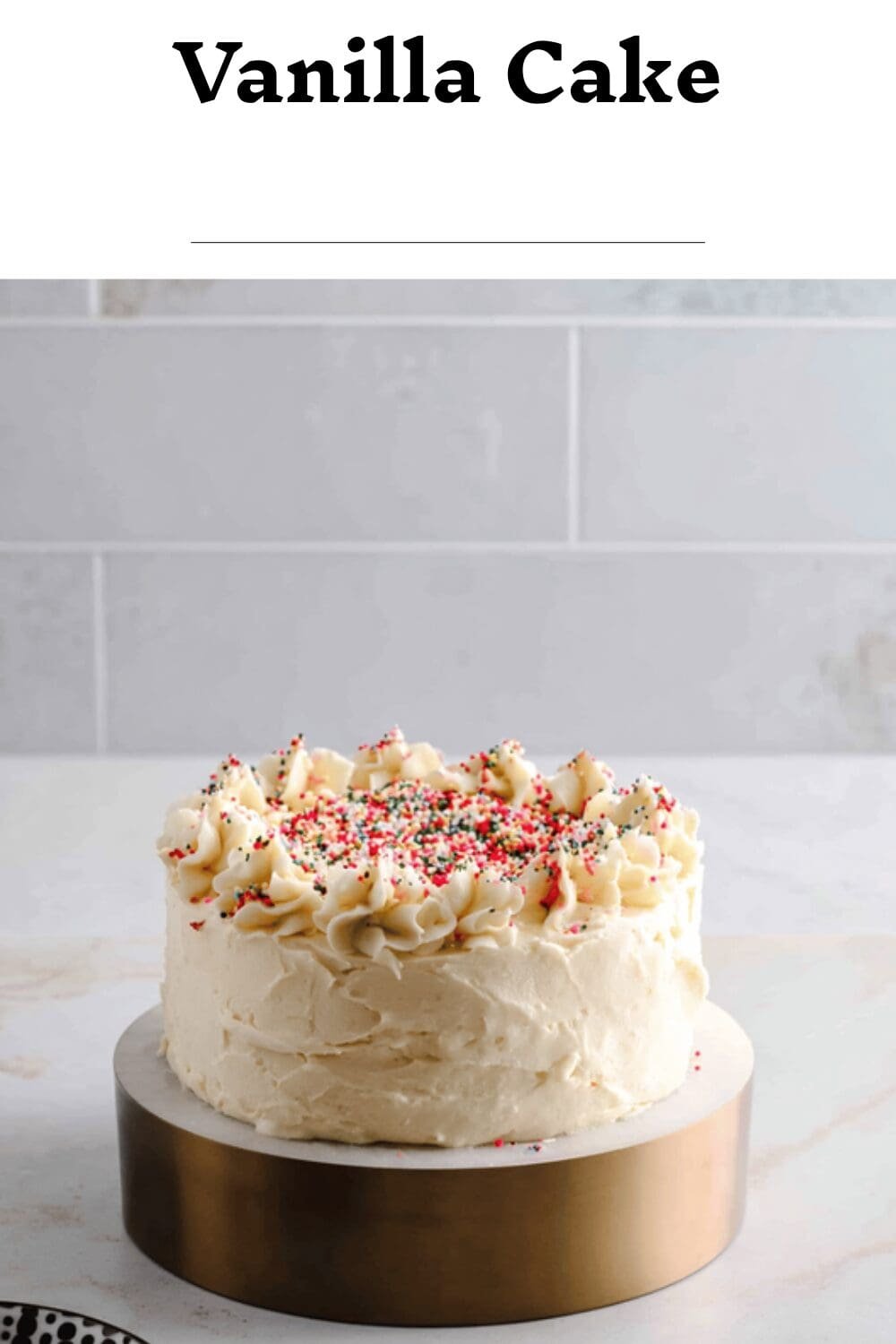
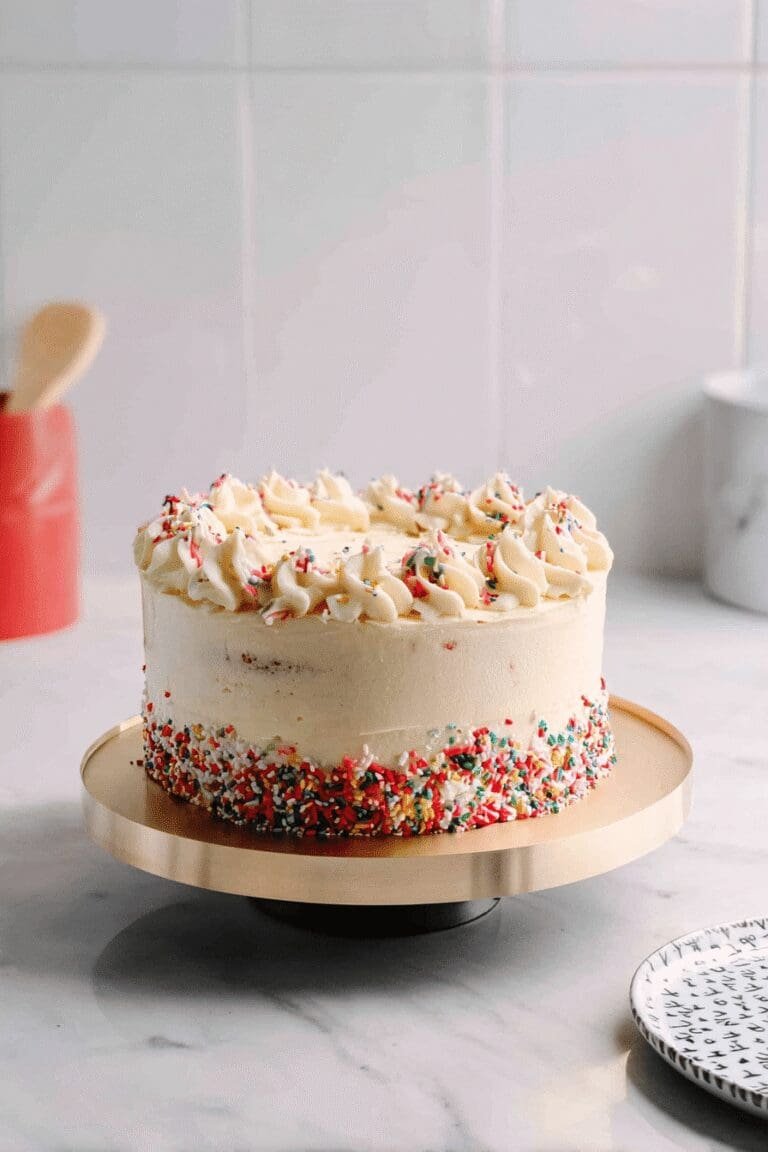
Bake for 30 minutes or until a toothpick inserted in the center comes out clean, resulting in a golden cake that’s moist and delicious. Let the cakes cool in their pans for 15 minutes, then invert them onto racks to cool completely ideally upside down for level layers. Once cooled, beat the softened butter for the frosting, gradually add the sifted icing sugar until fluffy, mix in the vanilla extract and enough milk for the right consistency, then frost and decorate as you like with cream, berries, or sprinkles.
| Preparation Step | Time Estimate | Tips |
|---|---|---|
| Prep | 20 minutes | Use room-temperature ingredients for better results |
| Cook | 30 minutes | Adjust time for pan size to ensure even baking |
| Cooling | 2 hours | Cool completely for easy frosting |

Dietary Substitutions to Customize Your Vanilla Cake
Adapting this vanilla cake for different needs is simple and keeps the flavor intact. You can swap eggs with a flaxseed mixture for vegan options, or use plant-based butters in place of dairy butter to maintain that rich taste. For those avoiding dairy, almond or soy milk works well, though full-fat milk gives the best texture and rise.
- Replace eggs with flax eggs (1 tablespoon ground flaxseed + 3 tablespoons water per egg) for vegan diets.
- Use plant-based butters or oils instead of unsalted butter for a dairy-free version.
- Substitute dairy milk with almond, soy, oat, or coconut milk for lactose intolerance.
- Add fruit purees like apple for extra moisture and flavor, or spices like cinnamon to mix things up.
These changes let you enjoy the cake while fitting your preferences, and it’s all about keeping it light and airy. For more substitution ideas, think about how these tie into other recipes on our site.
Mastering Vanilla Cake: Advanced Tips and Variations
Taking your vanilla cake to the next level involves a few smart techniques, like using room-temperature ingredients for even mixing and a tender crumb. Try folding the batter gently to keep it airy, and always use an oven thermometer to nail that precise baking temperature. These steps help avoid common pitfalls and make your cake turn out just right every time.
- Experiment with flavors by adding citrus zest or espresso powder for a fresh twist.
- Garnish with fresh berries or edible flowers to make it look as good as it tastes.
- Prepare layers ahead and freeze them for convenience wrap tightly and thaw when needed.
This recipe combines elements from Japanese sponge cakes with Western styles, giving you a moist, fluffy result that’s perfect for birthdays or cupcakes just adjust baking time for different pans.
How to Store Vanilla Cake: Best Practices
Keeping your vanilla cake fresh is easy with the right storage methods. Store it in an airtight container at room temperature for up to 4 days, as the frosting helps seal in moisture refrigerate if it’s a hot climate to prevent spoilage. For longer storage, wrap the layers tightly in plastic wrap and aluminum foil before freezing; they last up to 3 months and thaw overnight in the fridge.
If you need to reheat slices, warm them in the microwave for 10-15 seconds to bring back that soft texture. When prepping for meals, slice into portions and use freezer bags for quick access, making it ideal for busy professionals or families on the go. Follow these tips, and your cake will stay delicious without much effort.
FAQs: Frequently Asked Questions About Vanilla Cake
Can I use cake flour instead of all-purpose flour for vanilla cake?
Yes, you can use cake flour, but all-purpose flour tends to give a more pronounced butter and vanilla flavor with a slightly velvety texture. Cake flour may make the cake surface sticky the next day and can result in a less moist crumb. If you use cake flour, expect a lighter but less rich texture compared to all-purpose flour.
What kind of sugar is best for making vanilla cake?
Caster sugar or superfine sugar is ideal for vanilla cake because it dissolves quickly, resulting in a smooth batter. Regular granulated sugar can be used but might leave tiny brown specks on the cake base after baking. Avoid using coarse sugars, which won’t blend as well and might affect the cake’s texture.
Should eggs be at room temperature before mixing into vanilla cake batter?
Yes, using room temperature eggs helps them whip faster and better, incorporating more air for a lighter cake. If your eggs are cold from the fridge, warm them in a bowl of tap water for about 5 minutes before using. Fresh eggs also perform better by trapping air more effectively.
How do I know if my baking powder is still good for making vanilla cake?
To test baking powder, stir one teaspoon into hot water. If it fizzes immediately, it’s still active and safe to use. If there’s little or no fizz, the baking powder is likely expired and should be replaced to avoid a dense or flat cake.
Can I substitute non-dairy milk for cow’s milk in vanilla cake recipes?
It’s best to use full-fat cow’s milk for proper texture and rise. Low-fat milk can be used but may yield a slightly less fluffy cake. Non-dairy milks like soy or almond are not recommended as they alter the batter’s consistency and can negatively impact the cake’s texture and flavor.
Vanilla Cake
🍰 Vanilla Cake Recipe That Stays Moist and Delicious for Days guarantees a soft, fluffy texture that remains fresh for multiple days.
🎂 This cake combines traditional and modern techniques, perfect for layering and decorating any celebration dessert.
- Total Time: 2 hours 50 minutes
- Yield: 10 servings 1x
Ingredients
2 cups plain or all-purpose flour
2 1/2 teaspoons baking powder
1/4 teaspoon cooking salt (kosher salt)
4 large eggs at room temperature (50-55g each)
1 1/2 cups caster or superfine sugar (regular granulated sugar can be used as a substitute)
1/2 cup (115g) unsalted butter, cut into cubes
1 cup full fat milk
3 teaspoons vanilla extract
3 teaspoons vegetable or canola oil
225g unsalted butter, softened
500g sifted icing sugar or powdered sugar
3 teaspoons vanilla extract
2 to 4 tablespoons milk, to adjust consistency
Instructions
Let’s dive into making this vanilla cake, a process that’s as rewarding as it is straightforward. Start by preheating your oven to 180°C/350°F (160°C fan) and positioning the rack in the middle this ensures even baking and a golden finish. Grease and line two 8-inch cake pans to prevent sticking and set the stage for a perfect release.
Next, whisk the flour, baking powder, and salt together in a bowl and set it aside for easy access. In another bowl, beat the eggs for about 30 seconds, then gradually add the sugar over 45 seconds and continue beating for 7 minutes until the mixture triples in volume, turns pale, and looks glossy this step is crucial for that light, airy crumb. Now, gradually fold in the flour mixture in three parts, mixing just enough to combine without deflating the batter.
Heat the milk and butter together until the butter melts and the milk is hot but not boiling. Whisk about 1 1/2 cups of the batter into this hot mixture until it’s smooth and foamy, then pour it back into the remaining batter and mix briefly until everything blends seamlessly. Divide the batter evenly between the pans, give them a few taps on the counter to release air bubbles, and you’re ready to bake.
Bake for 30 minutes or until a toothpick inserted in the center comes out clean, resulting in a golden cake that’s moist and delicious. Let the cakes cool in their pans for 15 minutes, then invert them onto racks to cool completely ideally upside down for level layers. Once cooled, beat the softened butter for the frosting, gradually add the sifted icing sugar until fluffy, mix in the vanilla extract and enough milk for the right consistency, then frost and decorate as you like with cream, berries, or sprinkles.
Last Step:
Please leave a rating and comment letting us know how you liked this recipe! This helps our business to thrive and continue providing free, high-quality recipes for you.Notes
🥚 Use room temperature eggs for best aeration and volume.
🧁 Fold flour gradually and lightly to preserve batter airiness.
🍶 Use hot milk-butter mixture immediately to maximize cake rise and moistness.
- Prep Time: 20 minutes
- Cooling Time: 2 hours
- Cook Time: 30 minutes
- Category: Dessert, Cake
- Method: Baking
- Cuisine: Fusion (Japanese and Western)
Nutrition
- Serving Size: 1 slice
- Calories: 339
- Sugar: 31g
- Sodium: 97mg
- Fat: 13g
- Saturated Fat: 7g
- Carbohydrates: 51g
- Fiber: 1g
- Protein: 6g
- Cholesterol: 91mg