Why Cuban Sandwiches Remain a Classic Choice
Cuban Sandwiches have a lasting place in Florida food culture because they bring together simple ingredients, strong flavor, and a crisp pressed texture in one handheld meal. The sandwich is filling without being complicated, which makes it practical for home cooks, busy parents, students, and anyone who wants a hearty lunch with little fuss. When made well, the outside turns golden and crisp while the inside stays rich, savory, and balanced.
- Easy to prepare: The assembly is straightforward. Once the meats, cheese, bread, and mustard are ready, the sandwich cooks quickly in a plancha or panini press.
- Bold flavor: Roast pork, ham, Swiss cheese, dill pickles, and mustard create a savory, tangy, salty combination that stands apart from a basic hot sandwich.
- Flexible serving style: Tampa versions add salami, South Florida versions leave it out, and Key West-style variations may include lettuce, tomatoes, and mayonnaise.
- Good for many occasions: Cuban Sandwiches work well for lunch, game day, family meals, and packed meals for travelers or working professionals.
A well-pressed Cuban sandwich is known for its crisp bread, melted cheese, and layered meats that stay compact from the first bite to the last.
For readers who enjoy hearty pork dishes, you may also like this guide to pork roast, which pairs well with the flavor profile used in Cuban Sandwiches. If you want a wider look at pork as a main ingredient, Healthline offers a useful overview of pork nutrition and cuts.
Jump to:
- Why Cuban Sandwiches Remain a Classic Choice
- Essential Ingredients for Cuban Sandwiches
- Special dietary options
- How to Prepare the Perfect Cuban Sandwiches: Step-by-Step Guide
- First Step: Prepare the bread and fillings
- Second Step: Spread the mustard
- Third Step: Build the layers
- Fourth Step: Close and press the sandwich
- Fifth Step: Cook until crisp and melted
- Final Step: Slice and serve
- Dietary Substitutions to Customize Your Cuban Sandwiches
- Protein and main component alternatives
- Vegetable, sauce, and seasoning modifications
- Mastering Cuban Sandwiches: Advanced Tips and Variations
- Pro cooking techniques
- Flavor variations
- Presentation tips
- Make-ahead options
- How to Store Cuban Sandwiches: Best Practices
- FAQs About Cuban Sandwiches
- What is a Cuban sandwich?
- What are the ingredients for a traditional Cuban sandwich?
- Where did the Cuban sandwich originate?
- How do you make a Cuban sandwich at home?
- What’s the difference between a Cuban sandwich and a ham and cheese?
- Cuban Sandwiches
- Ingredients
- Instructions
- Last Step:
- Notes
- Nutrition
- Did you make this recipe?
Essential Ingredients for Cuban Sandwiches
The ingredient list for Cuban Sandwiches is short, but each item has a clear role. The bread holds the sandwich together, the mustard adds sharpness, the meats bring richness, and the Swiss cheese softens into a creamy layer during pressing. Traditional versions keep the sandwich simple and avoid extras that weaken the classic structure.
| Ingredient | Amount for 1 sandwich | Purpose |
|---|---|---|
| Cuban bread | 1 loaf or 1 piece cut into 8 to 12 inch lengths | Creates the proper crusty exterior and soft interior |
| Butter or olive oil | Light amount, for brushing | Helps the bread crisp during pressing |
| Yellow mustard | To taste | Adds tang and balances the richness of the meats |
| Ham | To taste, sometimes marinated | Provides salty, savory depth |
| Roast pork | To taste | Gives the sandwich its main roast flavor |
| Swiss cheese | To taste | Melts into the layers and adds mild richness |
| Dill pickles | To taste | Bring acidity and crunch |
| Salami | To taste, Tampa style only | Adds a deeper cured meat flavor |
Special dietary options
- Vegan: Use plant-based pork, vegan deli slices, dairy-free cheese, vegan mustard, and vegan butter on Cuban-style bread.
- Gluten-free: Replace Cuban bread with a gluten-free roll or loaf that can be pressed safely.
- Low-calorie: Use lean ham, a smaller amount of cheese, and a lighter hand with butter or oil.
For a broader sandwich meal idea that uses a similar savory approach, the slow cooker chicken cordon bleu recipe offers another filling option for lunch or dinner planning.
How to Prepare the Perfect Cuban Sandwiches: Step-by-Step Guide
First Step: Prepare the bread and fillings
Start by gathering all ingredients before assembly. Cuban Sandwiches come together best when everything is ready at the same time, since the bread should be pressed while the fillings are still cool and organized. Slice the Cuban bread in half horizontally, then cut it into 8 to 12 inch lengths if needed.
Lightly butter the outside of the bread or brush it with olive oil. This gives the crust a golden finish during pressing. Set out the ham, roast pork, Swiss cheese, pickles, mustard, and salami if you are making the Tampa-style version.
Second Step: Spread the mustard
Spread yellow mustard on both cut sides of the bread. Use enough to flavor the sandwich, but not so much that it runs out during pressing. The mustard should cover the surface in a thin, even layer. This step matters because it gives the sandwich its bright, sharp contrast against the rich meats and cheese.
Traditional Cuban Sandwiches keep the filling balanced, so the mustard should support the flavor rather than dominate it.
Third Step: Build the layers
Begin with a layer of ham, then add roast pork, Swiss cheese, and pickles. If you are making a Tampa version, add salami with the meats. The order matters because the cheese helps bind the layers once it melts. Keep the fillings even so the sandwich presses flat and cooks uniformly.
For South Florida style, leave out the salami. For traditional versions, avoid lettuce, tomatoes, and mayonnaise, since those ingredients change the texture and move the sandwich away from its classic form. Key West variations may include those additions, but they are not part of the standard Cuban Sandwiches many diners expect.
Fourth Step: Close and press the sandwich
Place the top half of the bread over the filling and press gently with your hands to help the sandwich hold together. Transfer it to a plancha or panini press. If you do not have a press, a heavy skillet or a foil-wrapped brick can help create the needed compression.
Heat the sandwich over medium heat until the bread becomes crisp and the cheese melts fully. Pressing is what turns the assembled ingredients into the familiar compact shape. A plancha gives even pressure across the entire surface, which helps the crust brown well and the fillings warm through.
Fifth Step: Cook until crisp and melted
Cook the sandwich until the exterior is golden and crisp. This usually takes only a few minutes per side in a hot press, though timing depends on the thickness of the bread and fillings. The goal is a firm outside with a warm, melted inside. If the bread browns too quickly, reduce the heat so the cheese has time to melt before the crust burns.
When the sandwich is ready, lift it carefully from the press and let it rest for a moment. This brief pause keeps the layers from sliding apart when you cut it. A proper Cuban Sandwiches result should feel tight, hot, and lightly compressed.
Final Step: Slice and serve
Cut the sandwich into diagonal halves for serving. The diagonal cut gives a cleaner presentation and makes the layers easier to see. Serve immediately while the bread is crisp and the cheese is still soft. Cuban Sandwiches are best eaten hot, when the contrast between the crunchy crust and the juicy filling is at its peak.
If you are serving a crowd, prepare multiple sandwiches in batches and keep the finished ones warm in a low oven for a short time. Avoid holding them too long, since the bread can lose its crisp texture.

Dietary Substitutions to Customize Your Cuban Sandwiches
Protein and main component alternatives
Some cooks need ingredient swaps because of dietary limits, ingredient access, or personal taste. The structure of Cuban Sandwiches makes that easier than it may seem. You can keep the layered, pressed format while changing the filling.
- For pork-free versions: Replace roast pork with roasted turkey, chicken, or a plant-based roast.
- For a lighter sandwich: Use lean ham and reduce the amount of cheese.
- For a vegetarian version: Use plant-based deli slices, meatless roast style strips, and dairy-free Swiss-style cheese.
- For Tampa-style flavor without pork salami: Use vegetarian salami or skip it and add extra cheese for body.
Vegetable, sauce, and seasoning modifications
Traditional Cuban Sandwiches do not include lettuce, tomatoes, or mayonnaise. Still, some home cooks prefer those additions, especially in Key West variations. If you want a more classic result, keep the filling limited to bread, mustard, meats, cheese, and pickles. If you want a lighter or more personalized version, the options below can help.
- Mustard variations: Use yellow mustard for the traditional flavor, or try a mild Dijon for a slightly sharper edge.
- Pickle changes: Dill pickles are standard, but thin bread-and-butter pickles will give a sweeter finish.
- Vegetable additions: Lettuce and tomato can be used in Key West-style versions, though they soften the bread faster.
- Fat options: Butter gives a rich crust, while olive oil creates a slightly lighter finish.
For readers interested in another meaty sandwich-style meal, the Instant Pot pork tenderloin recipe is a useful companion for meal planning and leftover use.
Mastering Cuban Sandwiches: Advanced Tips and Variations
Pro cooking techniques
The most important technique for Cuban Sandwiches is even pressing. A plancha works well because it distributes weight across the sandwich and gives the crust a uniform crisp finish. If you use a skillet instead, press the sandwich with another heavy pan to mimic the same effect. Keep the heat at medium so the bread browns without scorching before the cheese melts.
Marinating the ham or roast pork can add another layer of flavor. A simple citrus, garlic, and herb marinade gives the meat a stronger profile and fits well with the sandwich’s savory character. If you have leftover roast pork from another meal, this sandwich is one of the best ways to use it.
Flavor variations
Tampa-style Cuban Sandwiches include salami and are often considered the more regionally distinct version. South Florida versions leave out salami and stay closer to the leaner, simpler build. Key West-style versions may include lettuce, tomatoes, and mayonnaise, but these are not part of the classic form. The choice depends on whether you want regional authenticity or a softer, more customized sandwich.
The classic version stays focused on contrast: crisp bread, melted cheese, salty meats, sharp mustard, and tangy pickles.
Presentation tips
Slice the sandwich diagonally and serve it right away. If you want a fuller plate, add plantain chips, a small salad, or a simple pickle garnish. Keep the presentation clean so the layers show clearly when the sandwich is cut. That visual makes Cuban Sandwiches especially appealing for party hosts and food lovers.
Make-ahead options
You can prepare the meats and slice the cheese ahead of time, then assemble and press the sandwich just before serving. This works well for students, working professionals, and families who need a fast meal after a busy day. Cooked roast pork can be stored in the refrigerator and used later for more sandwiches.
How to Store Cuban Sandwiches: Best Practices
Cuban Sandwiches taste best fresh from the press, but leftovers can still be handled carefully. Because the bread is meant to be crisp, storage method matters more than it would for a soft sandwich.
- Refrigeration: Wrap leftovers tightly and refrigerate for up to 2 days. The bread may soften, but the sandwich will still be usable.
- Freezing: Freeze the cooked meat fillings separately when possible. Whole assembled sandwiches are less ideal for freezing because the bread can become soggy.
- Reheating: Warm leftovers in a skillet or press rather than a microwave. This helps restore the crisp crust.
- Meal prep: Prepare pork, ham, cheese, and pickles in advance, then press each sandwich just before eating.
If you are making sandwiches for a lunch plan, separate the wet ingredients from the bread until the last minute. That keeps the texture closer to the original style.
FAQs About Cuban Sandwiches
What is a Cuban sandwich?
A Cuban sandwich, also known as a Cubano, is a pressed sandwich featuring layers of roast pork, ham, Swiss cheese, dill pickles, and yellow mustard on Cuban bread. Originating in Florida among Cuban immigrants, it’s grilled in a plancha (flat press) until the bread is crispy and the cheese melts, creating a juicy, flavorful handheld meal. Tampa-style versions add salami, while Miami versions skip it. At about 800-1000 calories, it’s a hearty lunch option popular in delis and food trucks. For authenticity, use fresh mojo-marinated pork and authentic Cuban bread with a soft interior and crusty exterior—no substitutions like French bread.
What are the ingredients for a traditional Cuban sandwich?
Core ingredients include: Cuban bread (long loaf with sesame seeds optional), roasted pork (marinated in mojo with garlic, citrus, cumin), smoked ham, Swiss cheese, dill pickle slices, and yellow mustard. No mayo or lettuce—keep it simple. For four sandwiches: 1 lb roast pork, 8 oz ham, 8 Swiss slices, 16 pickle slices, 1/4 cup mustard, two 12-inch bread loaves. Prep tip: Slice bread lengthwise, spread mustard on both sides, layer meats, cheese, pickles, then press. Source meats from a butcher for best flavor; total cost around $20-30 for four servings.
Where did the Cuban sandwich originate?
The Cuban sandwich originated in Tampa, Florida, in the early 1900s, created by Cuban cigar workers and immigrants in Ybor City. They combined local ingredients like ham from nearby factories with traditional Cuban roast pork and bread from bakeries like La Segunda. It spread to Miami via the Tamiami Trail. Today, Tampa claims the original with salami, while Miami prefers no salami. Key fact: Over 100 years later, it’s Florida’s official state sandwich since 2012, with annual festivals drawing thousands.
How do you make a Cuban sandwich at home?
Slice Cuban bread lengthwise. Spread yellow mustard inside both halves. Layer: roast pork, ham, Swiss cheese, pickles. Close and brush exterior with butter. Heat a skillet or panini press to medium; weigh down with a heavy pan or foil-wrapped brick for 5-7 minutes per side until golden and cheese melts (internal temp 165°F). No press? Use two skillets. Serve hot with plantain chips. Pro tip: Marinate pork overnight in garlic, orange juice, lime, oregano, cumin, salt—roast at 325°F for 2-3 hours. Yields two servings in 30 minutes active time.
What’s the difference between a Cuban sandwich and a ham and cheese?
Unlike a basic ham and cheese, a Cuban sandwich adds roast pork for double meat richness, dill pickles for tang, yellow mustard for zing, and Swiss cheese instead of cheddar. It’s always pressed on Cuban bread for a crispy, compact texture—no soggy bread. Ham and cheese toasts loosely; Cubans fuse into one bite. Calorie-wise, Cubans pack 900+ vs. 400 for plain versions. Objection buster: Vegetarians can swap meats for plant-based pork and ham. Link to our roast pork recipe for full details. Perfect for game day over plain melts.
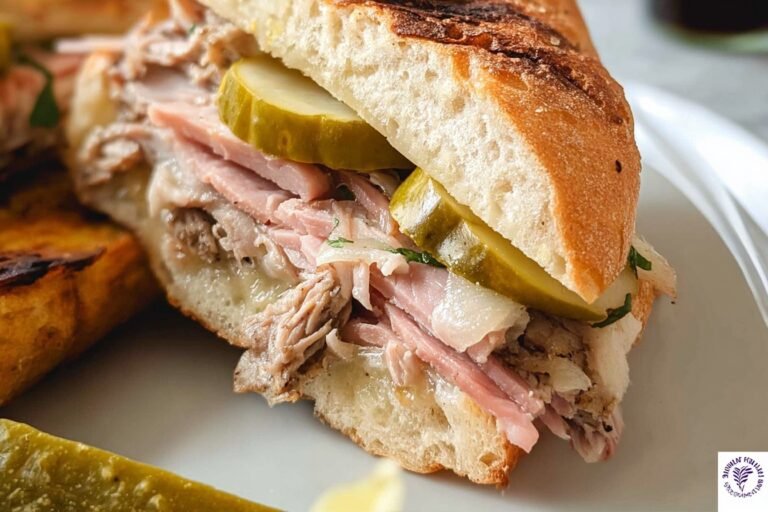
Cuban Sandwiches
🥪🍖 Crispy pressed layers of juicy roast pork, savory ham, melty Swiss, tangy pickles, and mustard – authentic Cuban explosion of sweet-salty bliss.
🇨🇺 Foolproof home version rivals Miami delis; quick press delivers golden crunch for lunches, parties, or comfort food cravings!
- Total Time: 20 minutes
- Yield: 4 sandwiches
Ingredients
– 1 loaf or 1 piece cut into 8 to 12 inch lengths Cuban bread for creating the proper crusty exterior and soft interior
– Light amount, for brushing butter or olive oil for helping the bread crisp during pressing
– To taste yellow mustard for adding tang and balancing the richness of the meats
– To taste, sometimes marinated ham for providing salty, savory depth
– To taste roast pork for giving the sandwich its main roast flavor
– To taste Swiss cheese for melting into the layers and adding mild richness
– To taste dill pickles for bringing acidity and crunch
– To taste, Tampa style only salami for adding a deeper cured meat flavor
Instructions
1-First Step: Prepare the bread and fillings Start by gathering all ingredients before assembly. Cuban Sandwiches come together best when everything is ready at the same time, since the bread should be pressed while the fillings are still cool and organized. Slice the Cuban bread in half horizontally, then cut it into 8 to 12 inch lengths if needed. Lightly butter the outside of the bread or brush it with olive oil. This gives the crust a golden finish during pressing. Set out the ham, roast pork, Swiss cheese, pickles, mustard, and salami if you are making the Tampa-style version.
2-Second Step: Spread the mustard Spread yellow mustard on both cut sides of the bread. Use enough to flavor the sandwich, but not so much that it runs out during pressing. The mustard should cover the surface in a thin, even layer. This step matters because it gives the sandwich its bright, sharp contrast against the rich meats and cheese. Traditional Cuban Sandwiches keep the filling balanced, so the mustard should support the flavor rather than dominate it.
3-Third Step: Build the layers Begin with a layer of ham, then add roast pork, Swiss cheese, and pickles. If you are making a Tampa version, add salami with the meats. The order matters because the cheese helps bind the layers once it melts. Keep the fillings even so the sandwich presses flat and cooks uniformly. For South Florida style, leave out the salami. For traditional versions, avoid lettuce, tomatoes, and mayonnaise, since those ingredients change the texture and move the sandwich away from its classic form. Key West variations may include those additions, but they are not part of the standard Cuban Sandwiches many diners expect.
4-Fourth Step: Close and press the sandwich Place the top half of the bread over the filling and press gently with your hands to help the sandwich hold together. Transfer it to a plancha or panini press. If you do not have a press, a heavy skillet or a foil-wrapped brick can help create the needed compression. Heat the sandwich over medium heat until the bread becomes crisp and the cheese melts fully. Pressing is what turns the assembled ingredients into the familiar compact shape. A plancha gives even pressure across the entire surface, which helps the crust brown well and the fillings warm through.
5-Fifth Step: Cook until crisp and melted Cook the sandwich until the exterior is golden and crisp. This usually takes only a few minutes per side in a hot press, though timing depends on the thickness of the bread and fillings. The goal is a firm outside with a warm, melted inside. If the bread browns too quickly, reduce the heat so the cheese has time to melt before the crust burns. When the sandwich is ready, lift it carefully from the press and let it rest for a moment. This brief pause keeps the layers from sliding apart when you cut it. A proper Cuban Sandwiches result should feel tight, hot, and lightly compressed.
6-Final Step: Slice and serve Cut the sandwich into diagonal halves for serving. The diagonal cut gives a cleaner presentation and makes the layers easier to see. Serve immediately while the bread is crisp and the cheese is still soft. Cuban Sandwiches are best eaten hot, when the contrast between the crunchy crust and the juicy filling is at its peak. If you are serving a crowd, prepare multiple sandwiches in batches and keep the finished ones warm in a low oven for a short time. Avoid holding them too long, since the bread can lose its crisp texture.
Last Step:
Please leave a rating and comment letting us know how you liked this recipe! This helps our business to thrive and continue providing free, high-quality recipes for you.Notes
🔥 Press firmly and evenly for that signature ultra-crispy crust.
🧀 Opt for high-quality Swiss for perfect melty pull.
🍖 Use homemade mojo-marinated pork for authentic Miami flavor boost.
- Prep Time: 10 minutes
- Cook Time: 10 minutes
- Category: Sandwiches
- Method: Panini Press
- Cuisine: Cuban
Nutrition
- Serving Size: 1 sandwich
- Calories: 700 kcal
- Sugar: 4g
- Sodium: 1800mg
- Fat: 35g
- Saturated Fat: 12g
- Unsaturated Fat: 20g
- Trans Fat: 0g
- Carbohydrates: 60g
- Fiber: 3g
- Protein: 40g
- Cholesterol: 120mg